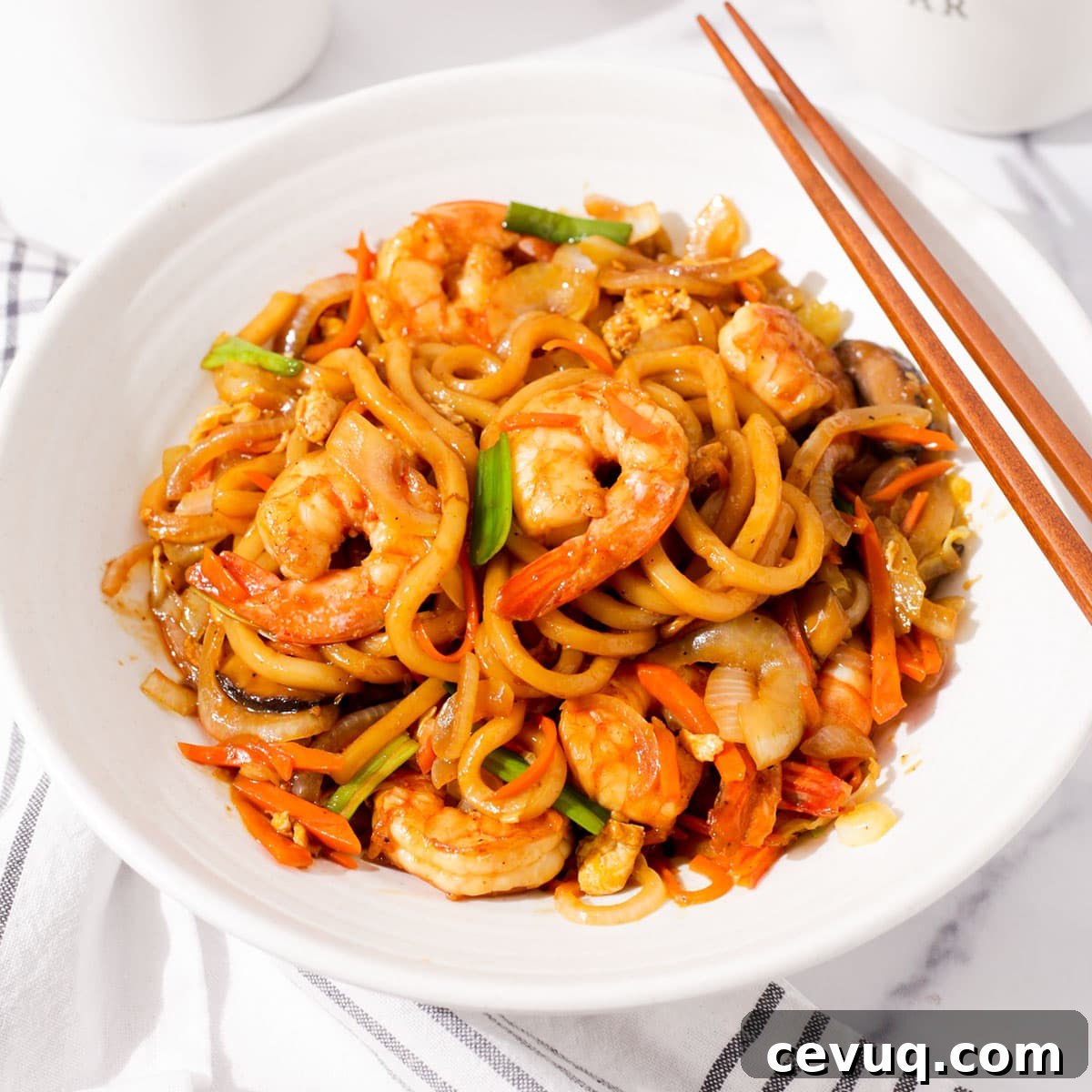
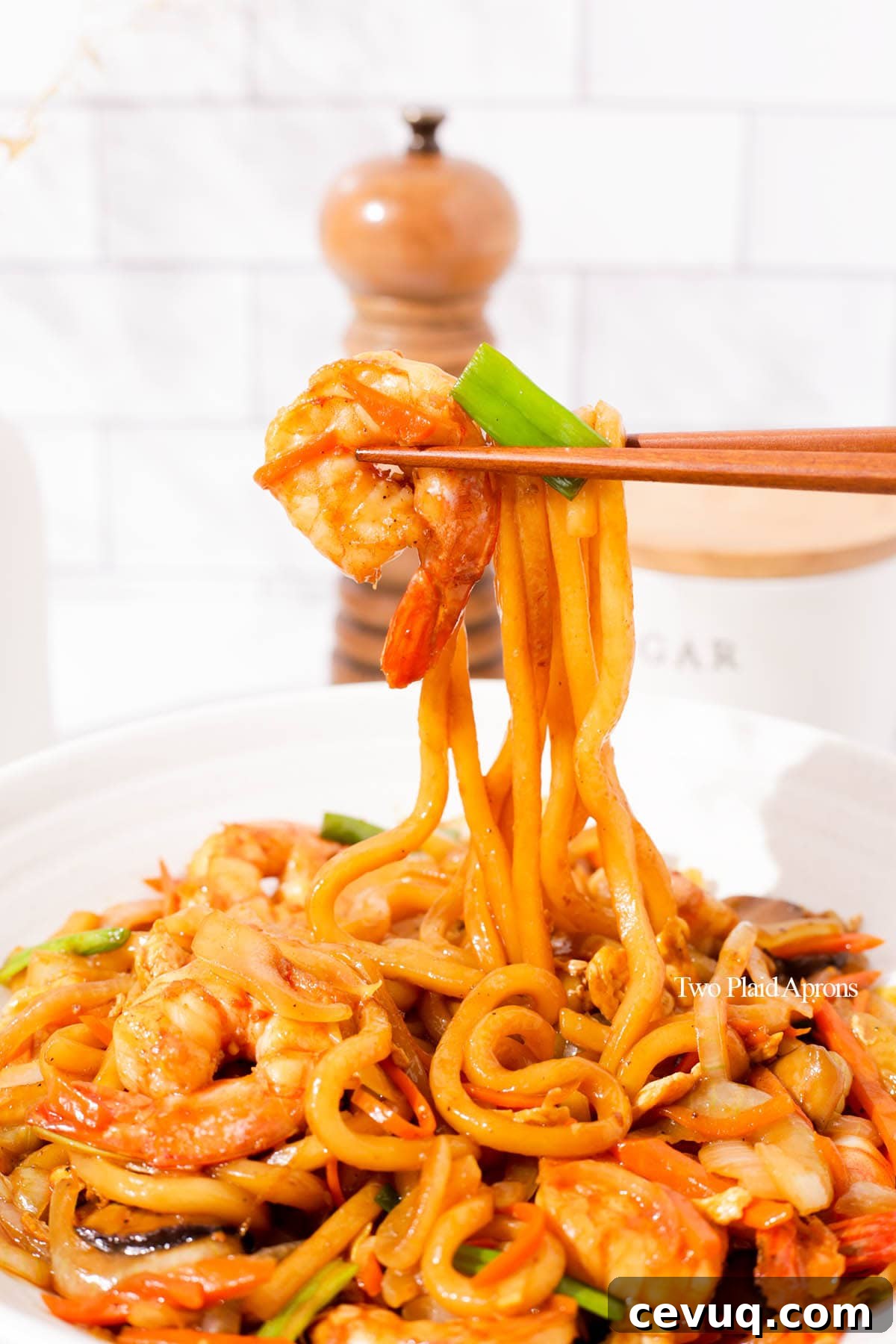
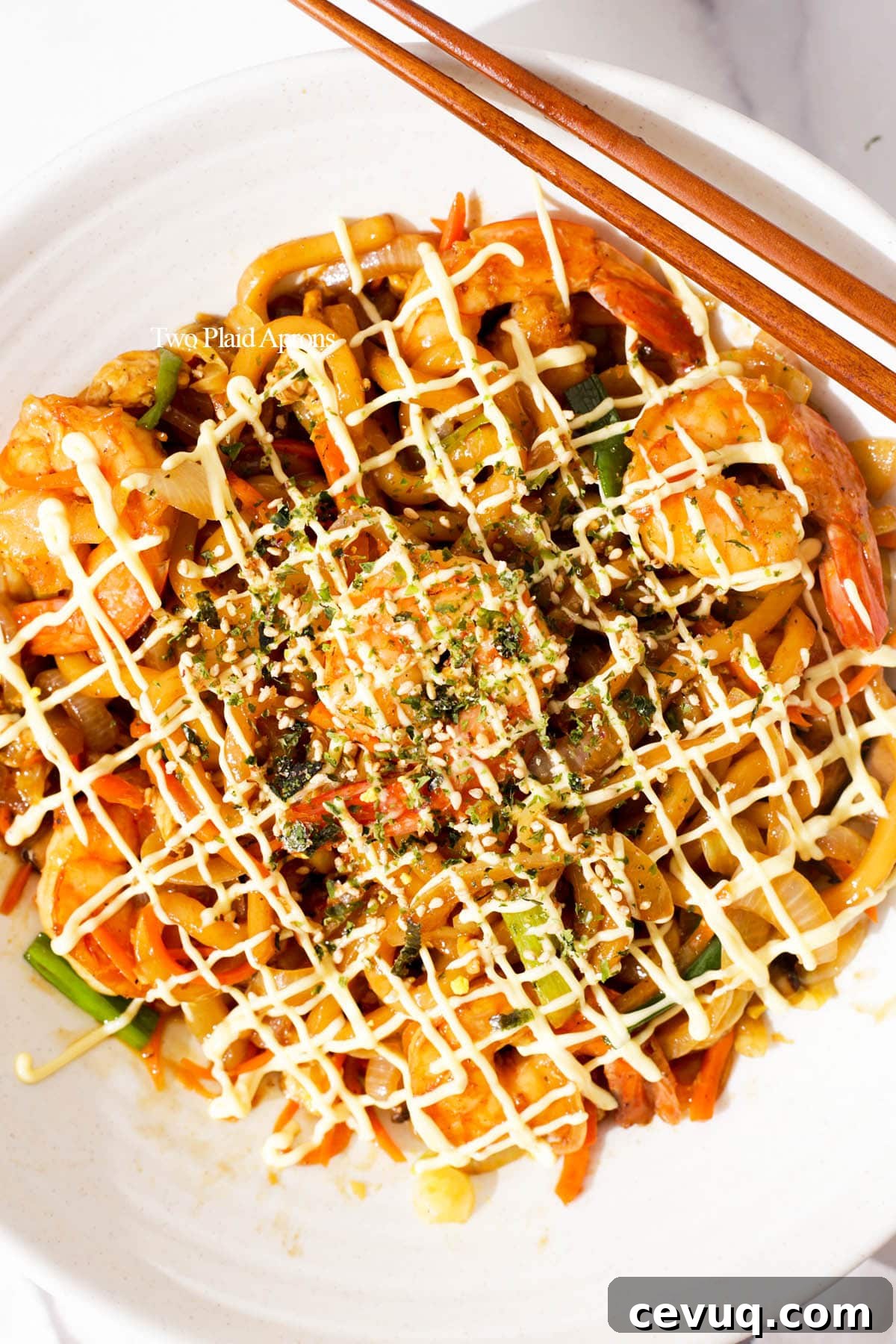
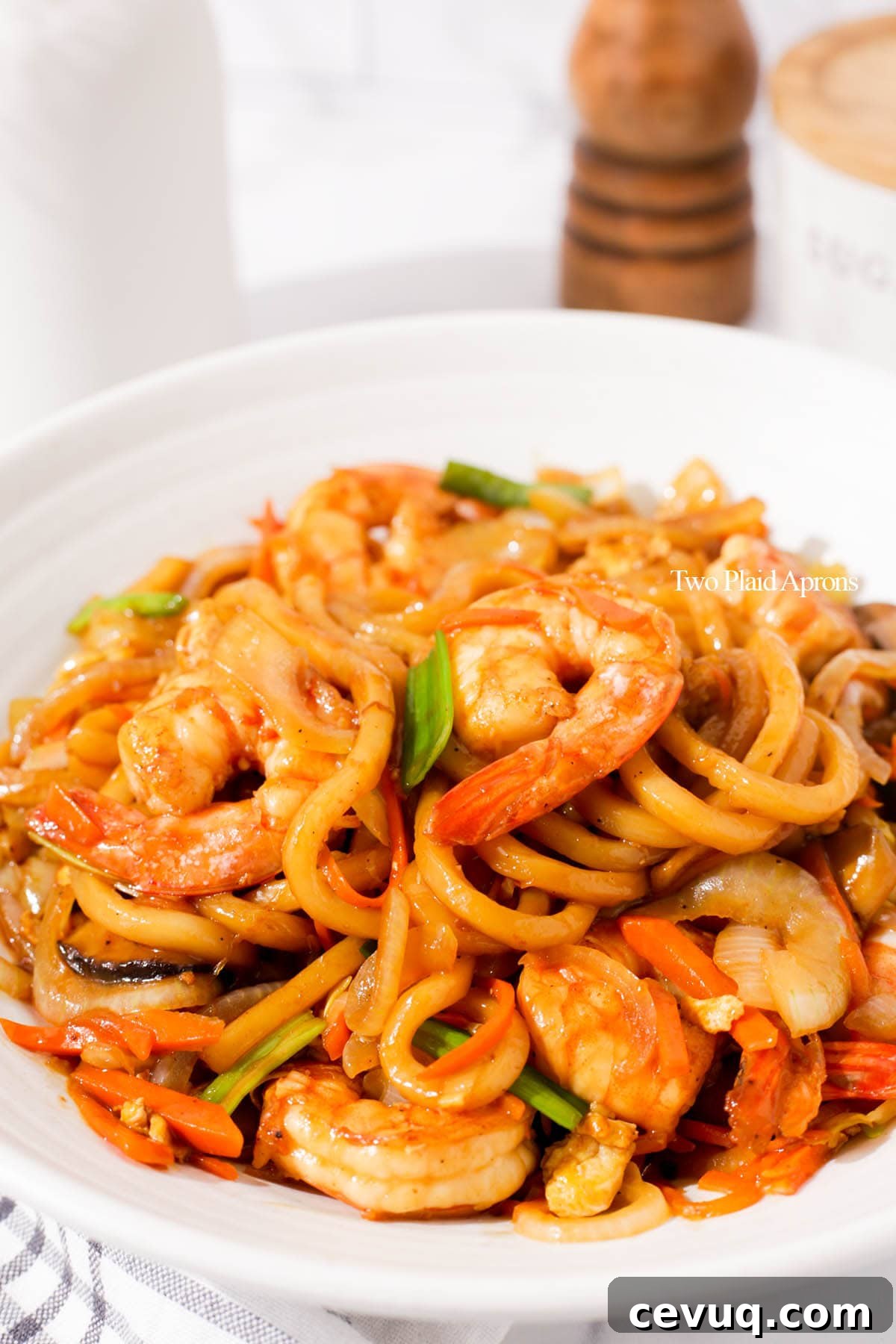
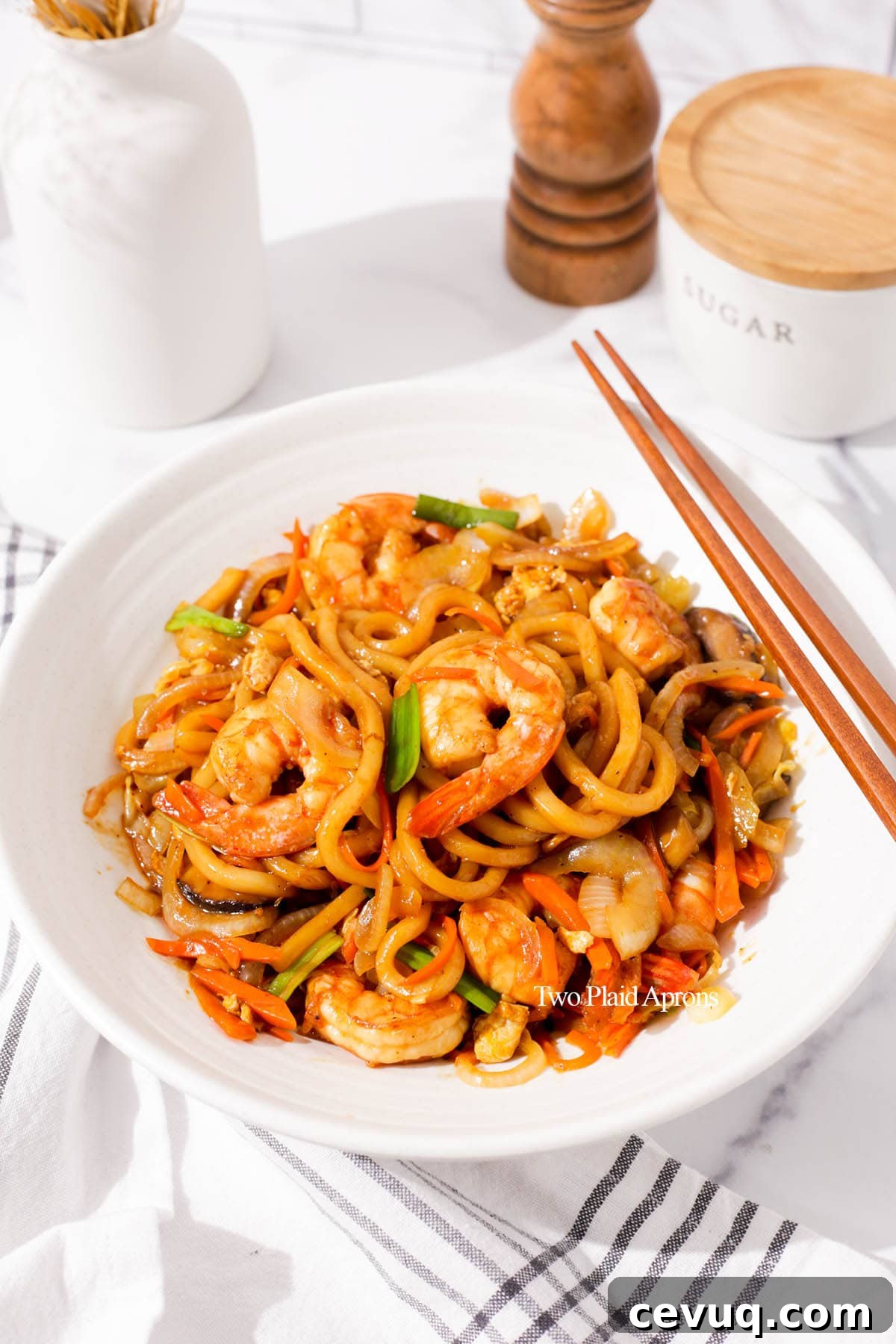
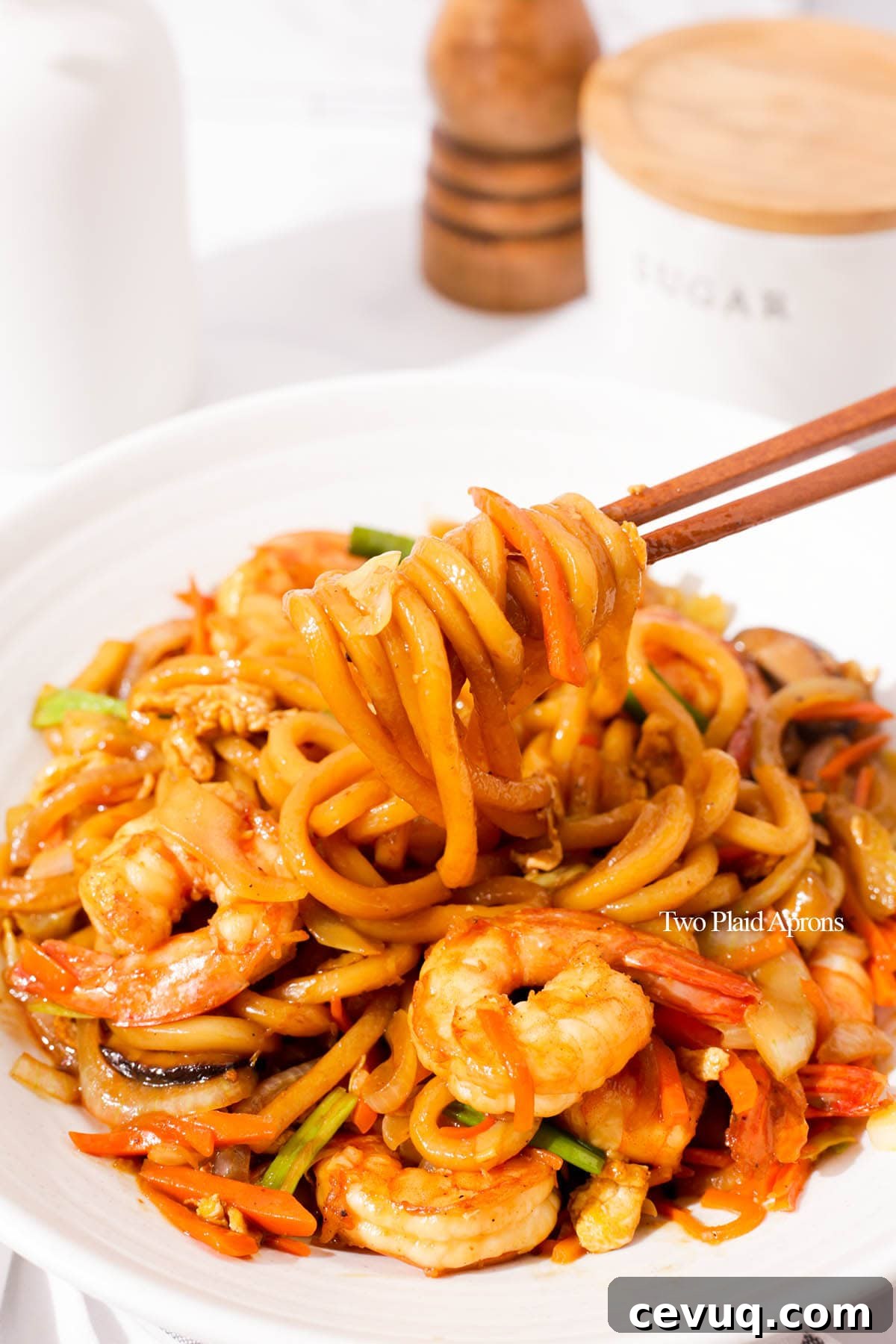
This shrimp yaki udon is quick and simple to prepare—ready in about 15 minutes. Savory with a touch of tang, it features bouncy, chewy udon noodles, tender shrimp and a mix of crisp vegetables. Finish with Kewpie mayo for extra creaminess.
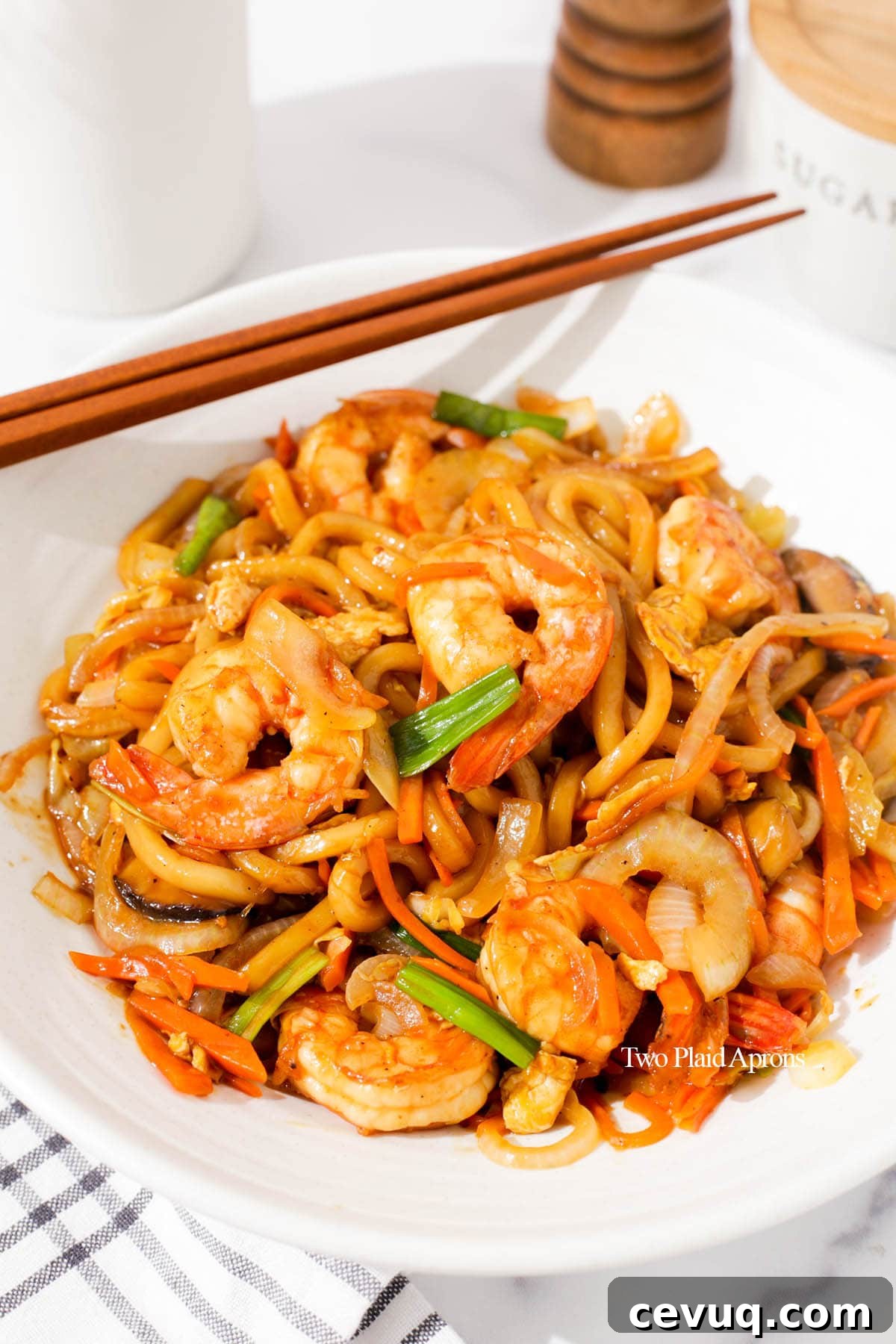
Shrimp yaki udon makes a perfect weekday lunch or dinner. Using frozen udon keeps this dish fast and convenient while still delivering great texture and flavor. It’s a reliable, satisfying meal when you want something both easy and nourishing.
For a fuller meal, serve with a warm bowl of miso soup. The combination of savory noodles and comforting broth is a favorite pairing.
What is yaki udon?
“Yaki” refers to quick cooking over direct heat—grilling, roasting, or stir-frying. “Udon” are thick Japanese wheat noodles with a chewy, bouncy texture that work well hot or cold.
Yaki udon is a stir-fried noodle dish made by tossing udon with a protein, vegetables, and a soy-based sauce. It’s fast to make and very adaptable to what you have on hand.
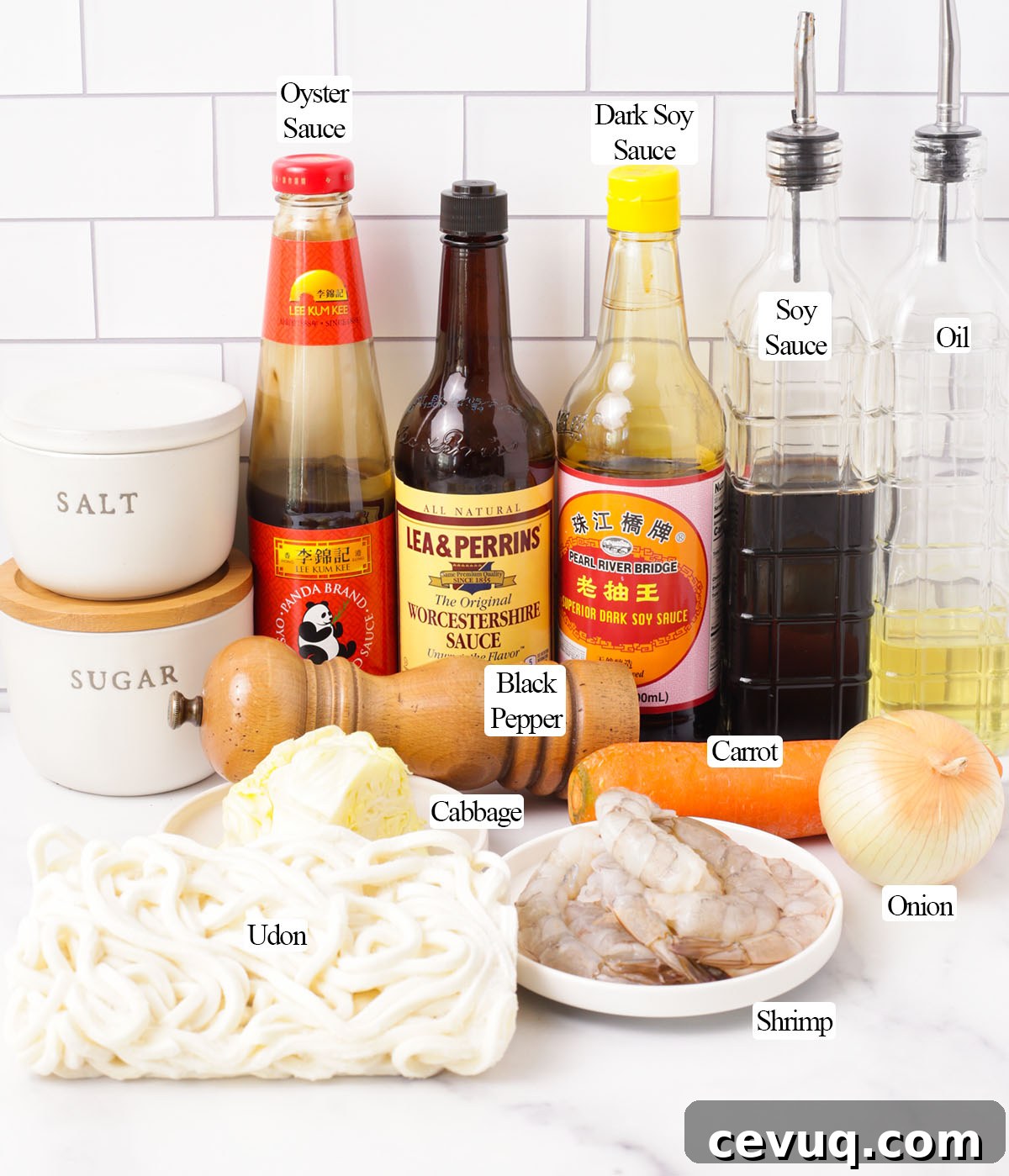
Ingredients
Please scroll down to the recipe card for exact ingredient quantities.
For the shrimp yaki udon:
- Frozen udon noodles – convenient, quick to cook, and great texture.
- Shrimp – any size works; peel and devein.
- Yellow onion, carrot, cabbage, mushrooms, celery, green onion – use your favorite mix of vegetables. They add sweetness and texture; the sauce amount assumes these veggies are included.
- Egg (optional) – adds aroma and a bit of richness.
- Salt and pepper – to season the shrimp.
- Kewpie mayo and furikake (optional) – great finishers; Kewpie adds creaminess.
- Neutral oil – for searing and stir-frying.
For the yaki udon sauce:
- Soy sauce – the sauce base.
- Worcestershire sauce – adds tang and depth.
- Oyster sauce – brings savory umami; substitute a vegetarian stir-fry sauce if desired.
- Dark soy sauce (optional) – adds color and gloss.
- Sugar – a small amount to balance flavors.
How to make shrimp yaki udon
1. Make the sauce. Whisk together soy sauce, oyster sauce, Worcestershire and sugar. Add dark soy if using. Set aside.
2. Cook the udon. Boil frozen udon according to package directions (about 3 minutes). Stir to separate, drain and rinse with cold water. Drain well.
🌟 Pro tip: If the noodles stick together, briefly rinse with water to loosen them, then drain thoroughly before stir-frying.
3. Season and sear the shrimp. Toss shrimp with a little oil, salt and pepper. Heat oil in a pan or wok over medium-high heat and sear shrimp 1–2 minutes per side until just cooked. Remove and set aside.
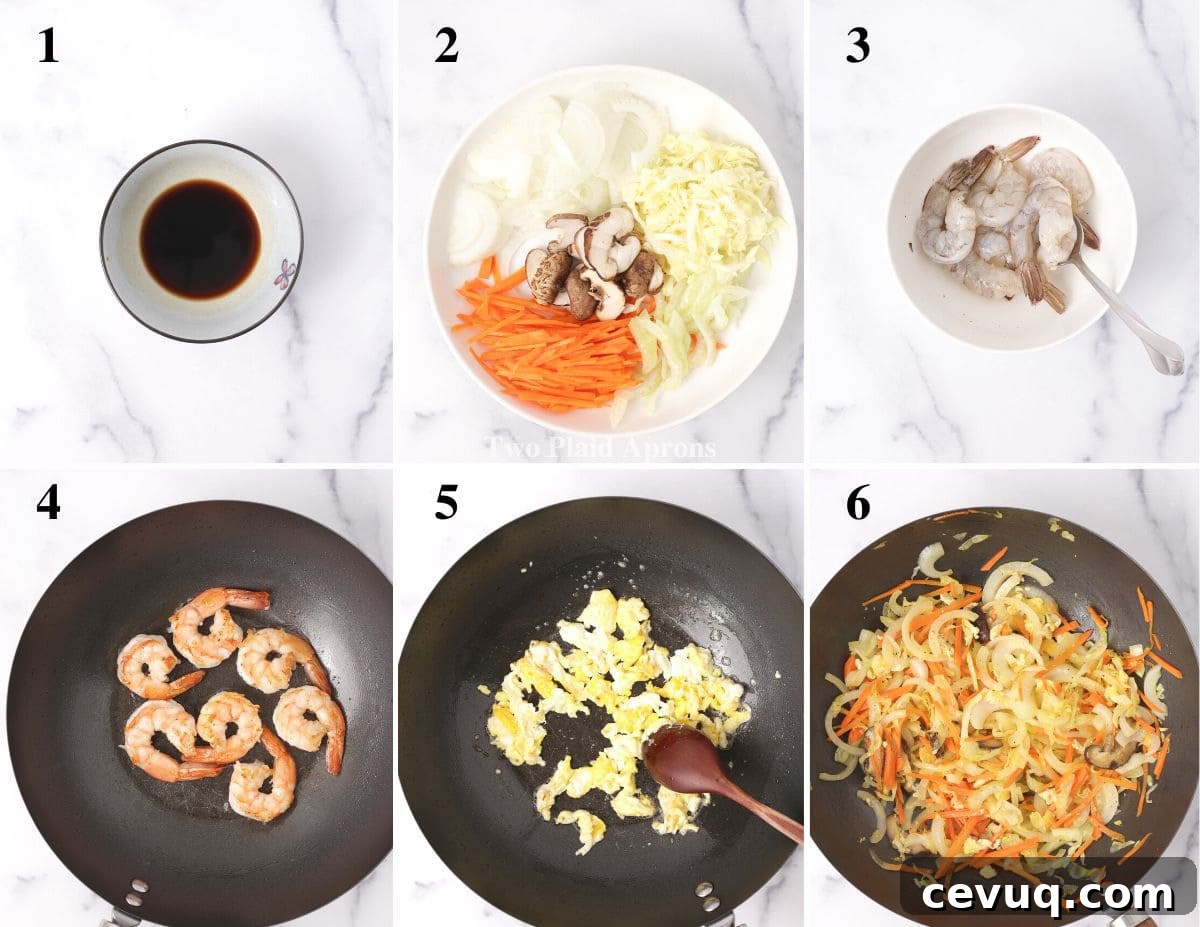
4. Scramble the egg. In the same pan over medium-high heat, add a tablespoon or two of oil. Crack in the egg and scramble briefly.
5. Stir-fry the vegetables. Add all vegetables except green onion and cook until just softened, about 2–3 minutes. Add a splash more oil if needed.
🌟 Pro tip: Cook vegetables until just tender to retain texture. Cook longer if you prefer them softer.
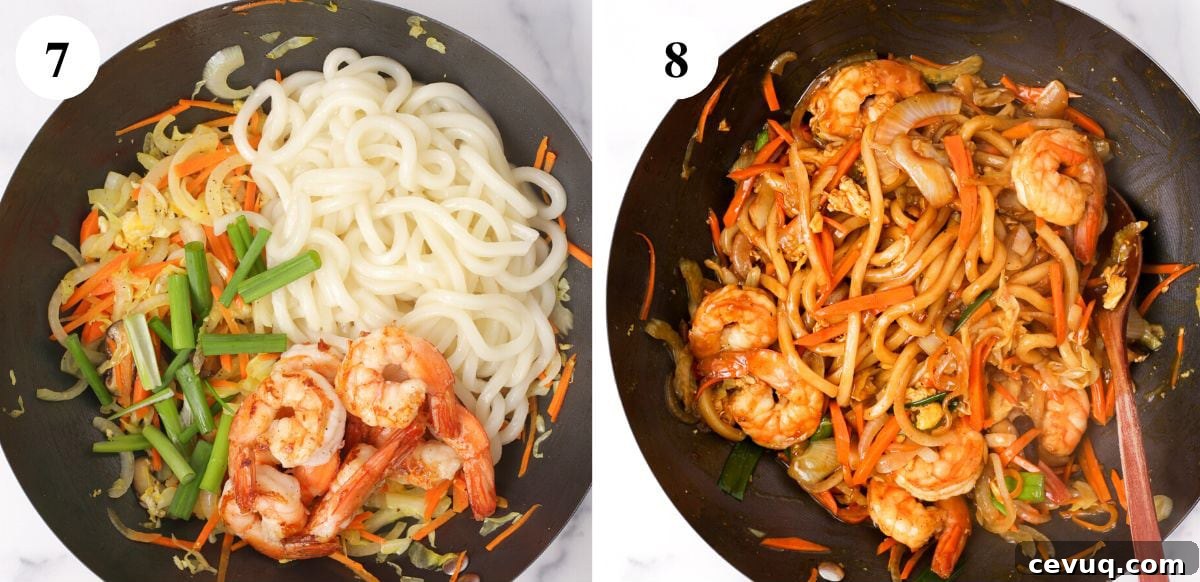
6. Combine noodles, shrimp and sauce. Add the cooked shrimp, udon and green onion to the pan. Toss to combine, then pour the sauce over everything and stir-fry until the noodles and ingredients are evenly coated and the color is uniform.
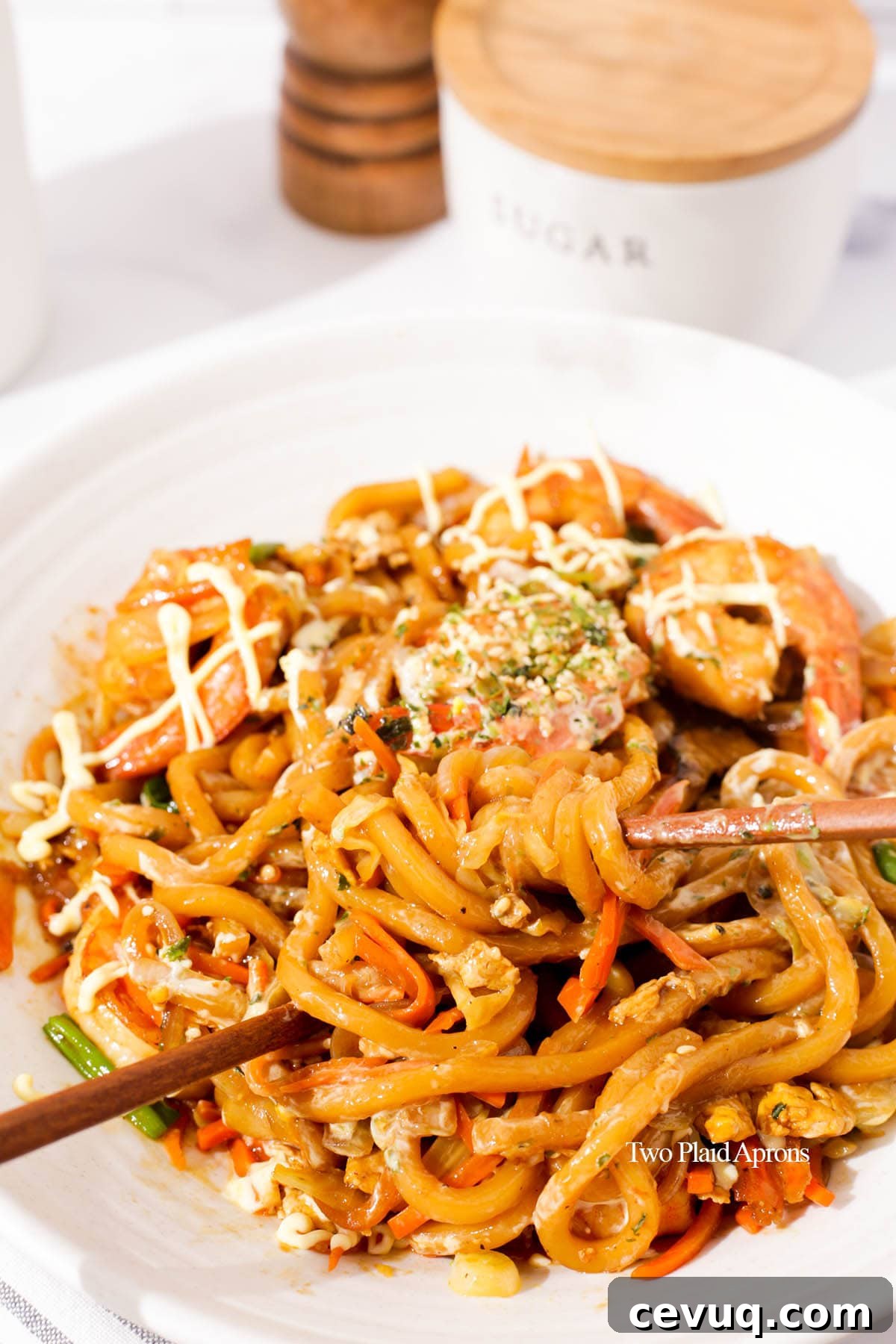
7. Serve. Transfer to bowls and finish with furikake and Kewpie mayo if desired. Serve immediately.
Recipe tips
- Swap vegetables freely. Yaki udon is flexible—use whatever vegetables you have. Keep in mind the sauce amount assumes a mix of noodles, shrimp and vegetables.
- Avoid overcooking veg. Cook vegetables until just tender to keep a pleasant crunch and contrast with the noodles.
Storage and reheating
Cool leftovers and store in an airtight container in the fridge for 3–4 days.
Reheat by sautéing in a pan over medium heat until warmed through, or microwave covered until hot.
FAQ
Both are soy-based stir-fried noodle dishes, but udon are thick Japanese wheat noodles, typically white and chewy. Lo mein uses Chinese egg noodles, which are thinner and yellow from the egg. The sauces and textures differ accordingly.
Yaki udon is very forgiving. Use any protein or vegetables you like—beef, chicken, tofu, or different vegetables all work well.
A vegetarian stir-fry sauce can replace oyster sauce for a similar savory base without the distinct oyster flavor. The final taste will be slightly different but still delicious.
If you make this recipe, feel free to share your photos on Instagram with the hashtag #twoplaidaprons—we love seeing your creations!
📖 Recipe
Shrimp Yaki Udon
5 mins
10 mins
15 mins
2 servings
Ingredients
For the sauce:
- 2 tablespoons soy sauce (light sodium)
- 1 tablespoon oyster sauce
- 2 teaspoons Worcestershire sauce
- 2 teaspoons granulated sugar
- 1 teaspoon dark soy sauce (optional for color)
For the shrimp:
- 6 ounces shrimp, peeled and deveined (about 8–10 jumbo; smaller shrimp work)
- 1 teaspoon oil
- ¼ teaspoon kosher salt
- Few cracks of black pepper
For the rest of the dish:
- 250 grams frozen udon noodles (usually 1 block)
- 1 large egg (optional)
- 1 small yellow onion, thinly sliced
- ½ large carrot, peeled and cut into thin matchsticks
- 3 mushrooms, thinly sliced (shiitake recommended)
- 1 rib celery, thinly sliced
- 1 stalk green onion, cut into 1-inch pieces
- Kewpie mayo (optional)
- Furikake (optional)
Instructions
- For the sauce: Combine soy sauce, oyster sauce, Worcestershire, sugar and dark soy (if using). Mix and set aside.
- Udon: Boil frozen udon for about 3 minutes or per package directions. Stir to separate, drain and rinse with cold water.
- Shrimp: Toss shrimp with oil, salt and pepper.
- Heat oil in a pan or wok over medium-high. Sear shrimp 1–2 minutes per side until just cooked. Remove and set aside.
- In the same pan, add a tablespoon or two of oil. Crack and scramble the egg briefly.
- Add all vegetables except green onion and stir-fry 2–3 minutes until just softened.
- Add shrimp, udon and green onion. Toss, then pour in the sauce and stir-fry until everything is evenly coated.
- Serve immediately. Top with furikake and Kewpie mayo if desired.
Notes
- Vegetables: Swap or omit vegetables to your preference, but they add important texture and flavor.
- Kewpie mayo and furikake: Optional toppings that add creaminess and extra umami—recommended if you like a richer finish.
Recommended equipment
- Saucepan
- Measuring spoons
- Mesh strainer
- Wok or large skillet
Nutrition
easy recipe, Japanese noodle dish, noodle recipe