
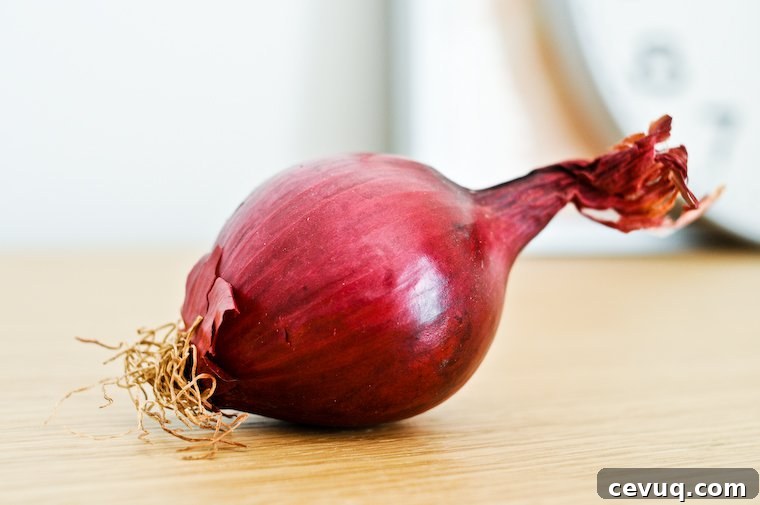
Of all the small kitchen annoyances cooks tolerate, few prompt as many tactics as peeling and chopping onions—and the inevitable teary “tear gas” effect.
The scientific explanation is well established: cutting an onion releases volatile compounds that form syn-propanethial-S-oxide, a gas that irritates the eyes and triggers a blinking and tearing reflex intended to wash the irritant away. In simpler terms, chopping onions releases an eye-irritating vapor that makes you cry—another reminder of how cleverly the human body protects itself.
Not all onions have the same effect—usually, the fresher the onion, the less it makes you cry—and people differ in sensitivity. That helps explain the mountain of tips and tricks that circulate: many aim to limit the gas’s release, others try to stop it from reaching the eyes, and some focus on preventing irritation after exposure.
Some cooks rinse peeled onions under cold water or chop them submerged; others chill or briefly freeze onions before cutting. Techniques vary: some slice from the top down, others from the root up. Breathing methods differ too—through the mouth or nose—and some hold a sip of water in their mouth. A few claim that chewing gum or wearing contact lenses reduces tearing; others swear by swimming goggles or lab-style eye protection. Some maintain extremely sharp knives to minimize cell damage, while others simply keep their face well away from the board. Romantic souls light a candle nearby, and some accept that a good cry is part of cooking.
I’ve tried a few methods myself—usually relying on contacts as a shield or resignedly letting the tears flow—and I’d picked up many of these ideas from years of reading cooking magazines. What I had not encountered, however, was a particularly unusual tip suggested recently by a fellow blogger: hold a slice of bread in your mouth while you chop.
Initially skeptical—and briefly checking the calendar to make sure it wasn’t a prank—I decided to test it. I placed a small chunk of bread in my mouth while chopping and, although the setup felt a bit silly, I was surprised and pleased to find it worked remarkably well.
The likely explanation is straightforward: the bread absorbs some of the volatile irritants before they reach the eyes. Some people report a similar effect from holding a sugar lump in the mouth. There’s also a practical side effect: concentrating on not drooling makes you focus on your breathing and posture, which can help you stay calm while chopping.
It’s unlikely this technique will appear on mainstream cooking shows soon, but in home kitchens we set our own rules about what’s acceptable. If holding a piece of bread quietly in your mouth keeps you tear-free and lets you get through a recipe without drama, it’s a harmless, clever hack worth trying.