
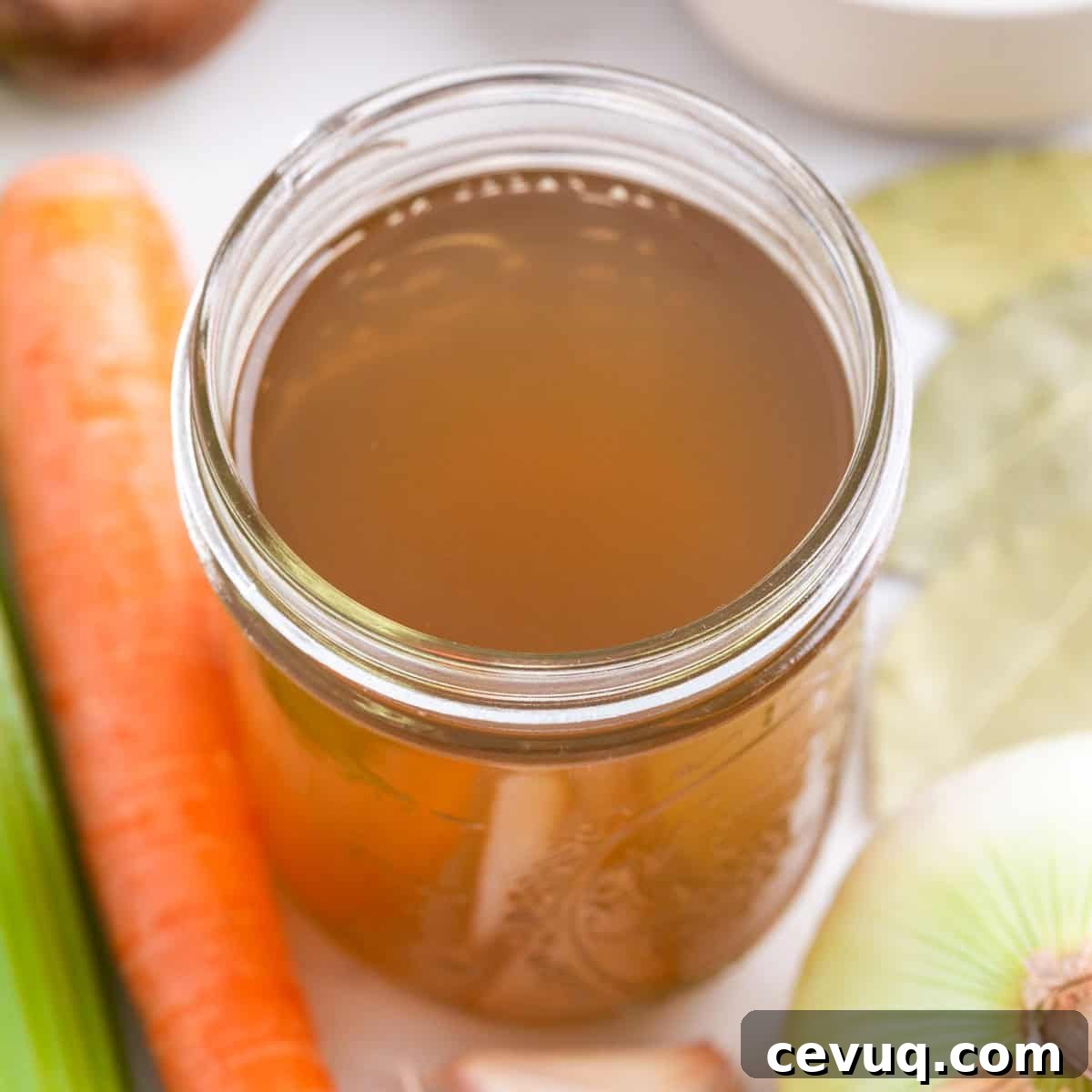
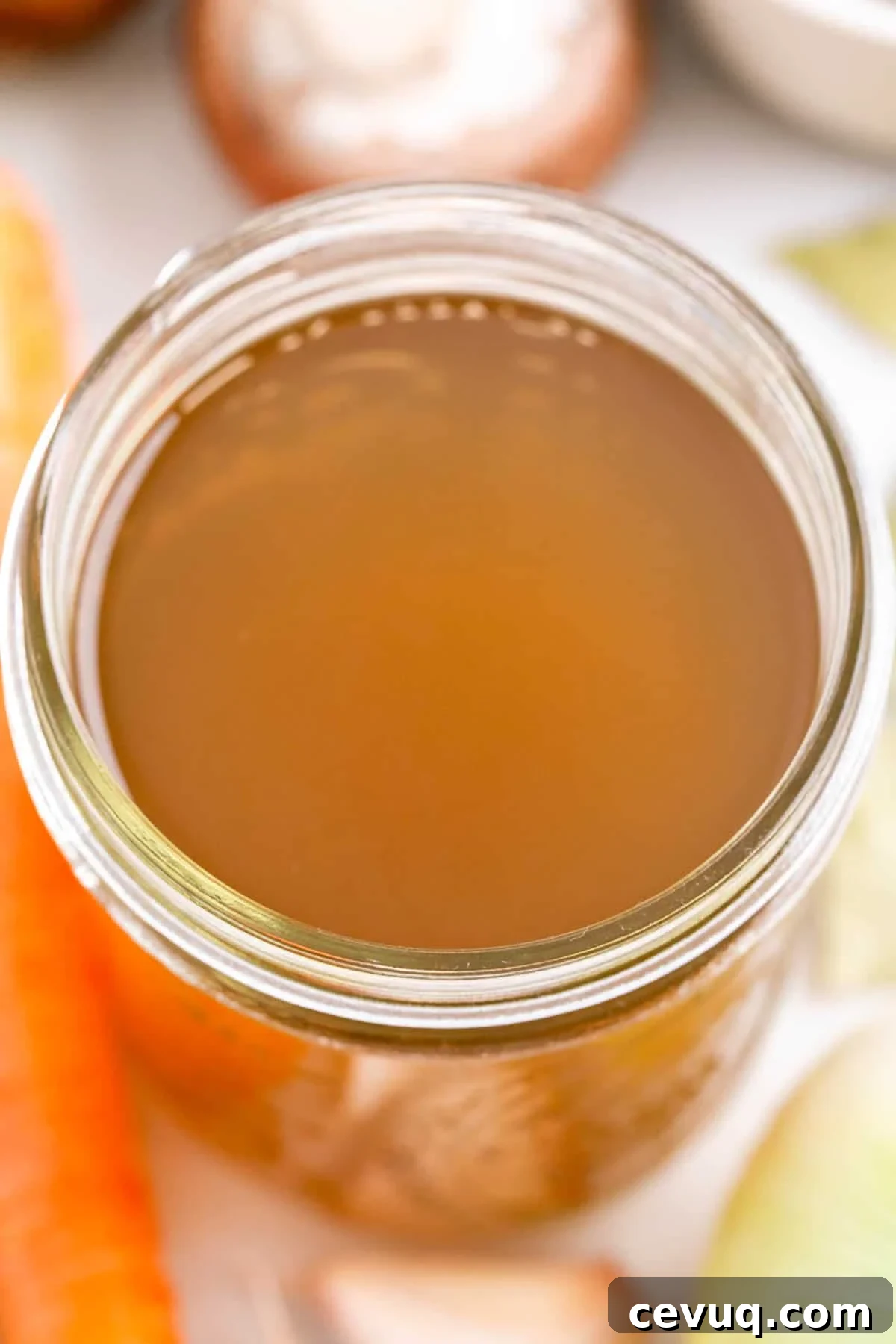
This homemade vegetable broth is easy to make, oil-free, and packed with savory flavor. Using just a few everyday ingredients and one pot, you can create a broth that tastes far better than most store-bought versions. I make it often with whatever vegetables I have on hand — it’s a practical, flavorful base for soups, stews, grains, and many other dishes.
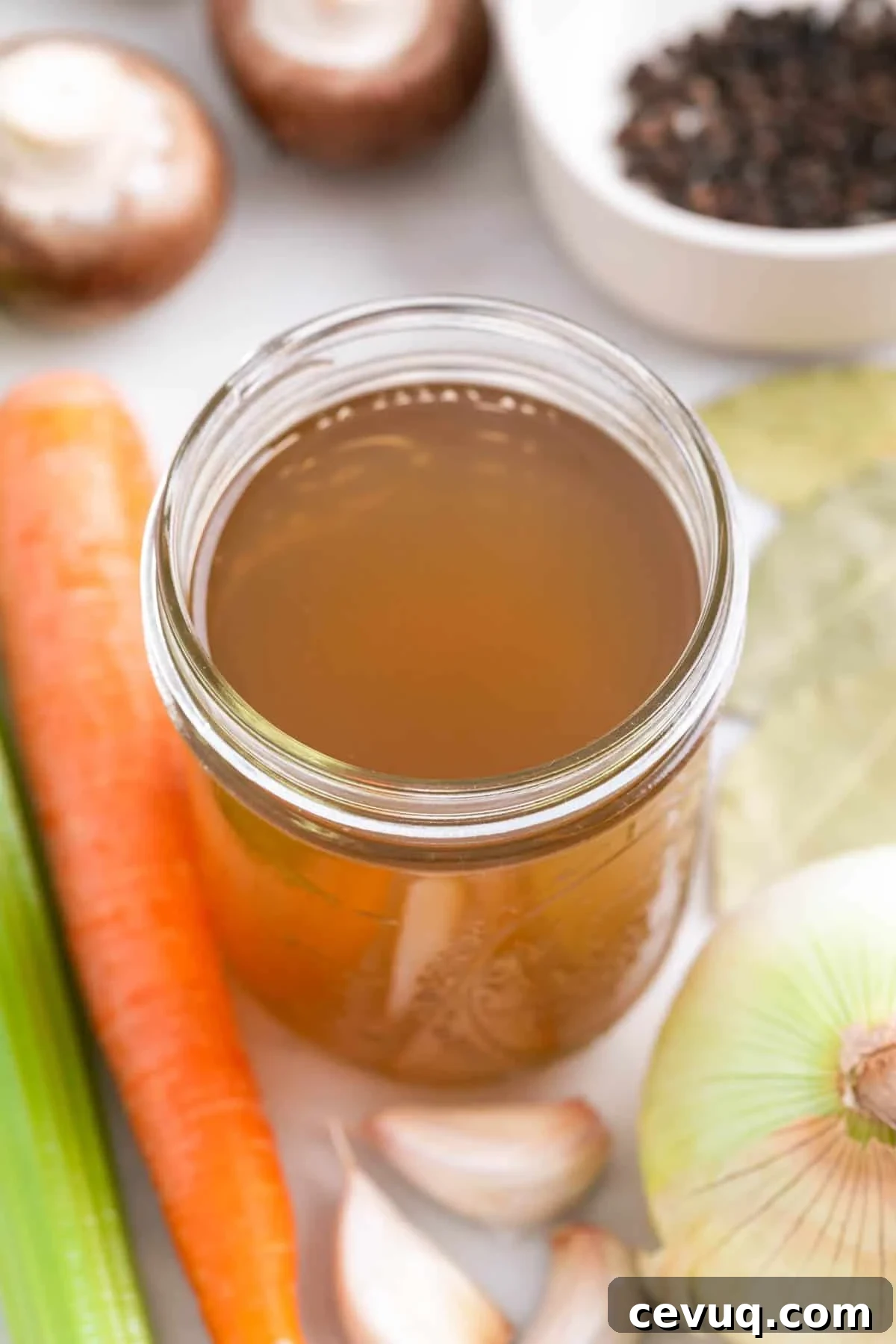
There’s no need to sauté first — simply add the ingredients to a pot, bring them to a boil, then reduce to a gentle simmer. The result is a light, low-fat broth that you can easily make low sodium by reducing or omitting the salt.
Use this broth as the base for soups and stews, to cook grains like rice or quinoa, or to add depth to sauces and pan sauces. It’s ideal for meal prep: make a large batch and refrigerate or freeze portions to have on hand during the week. This simple staple elevates everyday recipes with minimal effort.
Why You’ll Love This Homemade Vegetable Broth
Highlights:
- Super simple: Add everything to a pot and simmer — no sautéing required.
- Light but flavorful: Clean, savory taste that enhances many recipes.
- Everyday ingredients: Uses common vegetables and pantry staples.
- Easy to customize: Adjust or skip salt for a low-sodium broth.
- Meal prep friendly: Make a big batch, refrigerate or freeze for later use.
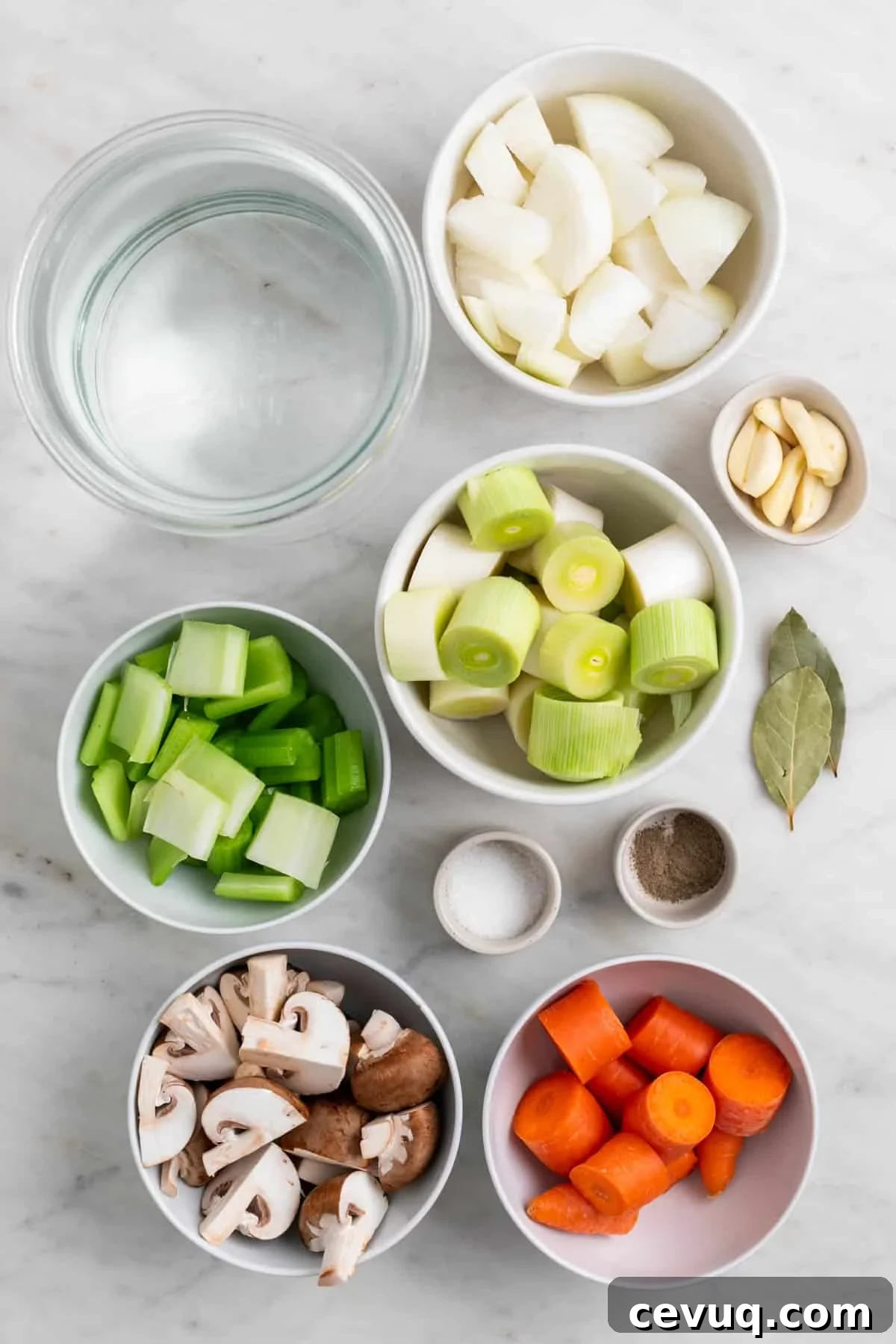
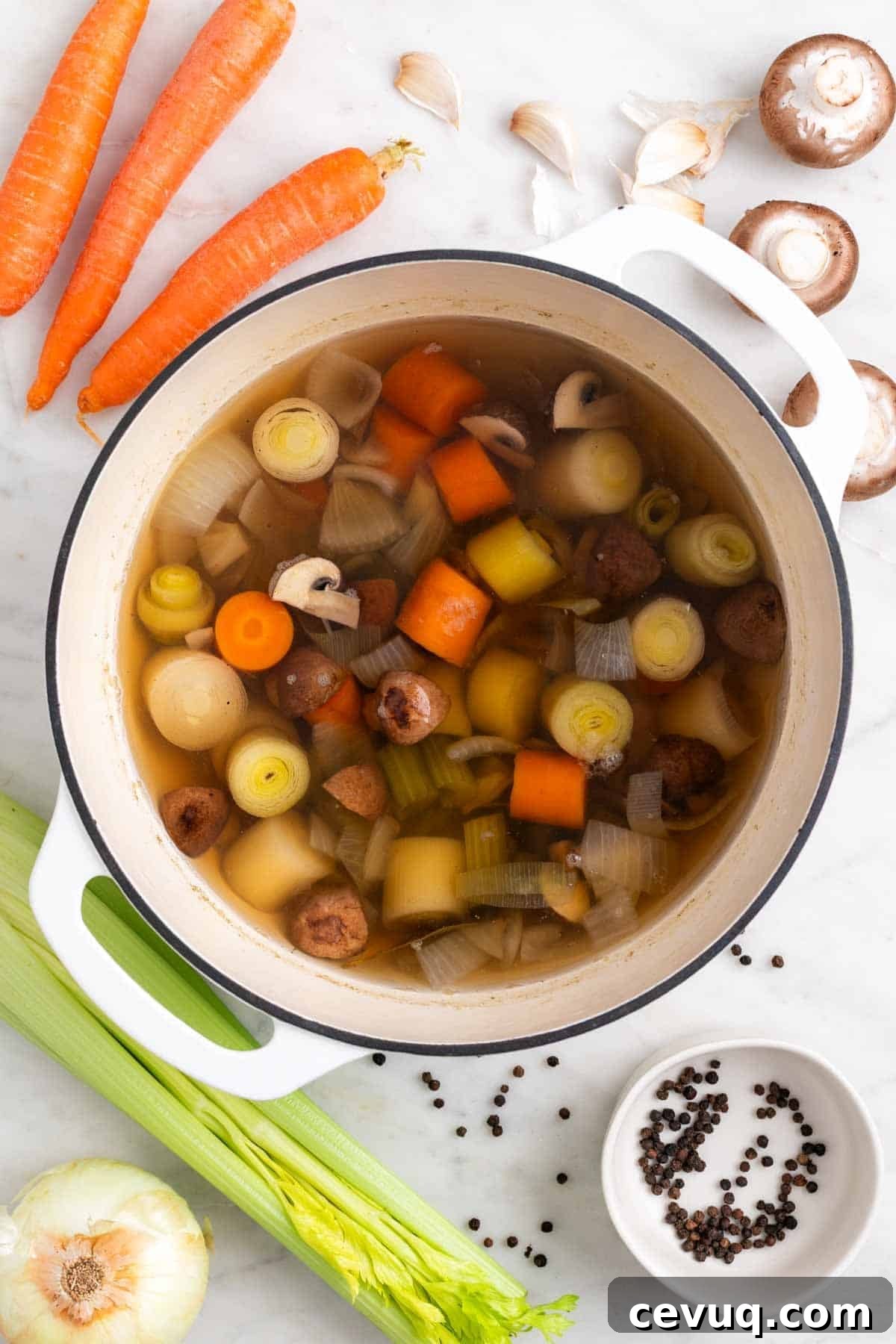
Homemade Vegetable Broth Ingredients
- Onion: Yellow onion is ideal, but white or red are fine.
- Carrots: No need to peel if well washed; peel if you prefer.
- Celery: Adds depth and that classic broth flavor.
- Leek: Use the white and light green parts; substitute with extra onion if needed.
- Garlic: Leave whole or lightly crushed to release flavor.
- Mushrooms: Add umami; any variety works, or omit if unavailable.
- Bay leaves: Optional, for extra depth.
- Water: Add to taste depending on how concentrated you want the broth.
- Salt: Optional; adjust or skip for low sodium.
- Black pepper: Optional, for a subtle hint of spice.
See the recipe card below for exact measurements.
How to Make Vegetable Broth
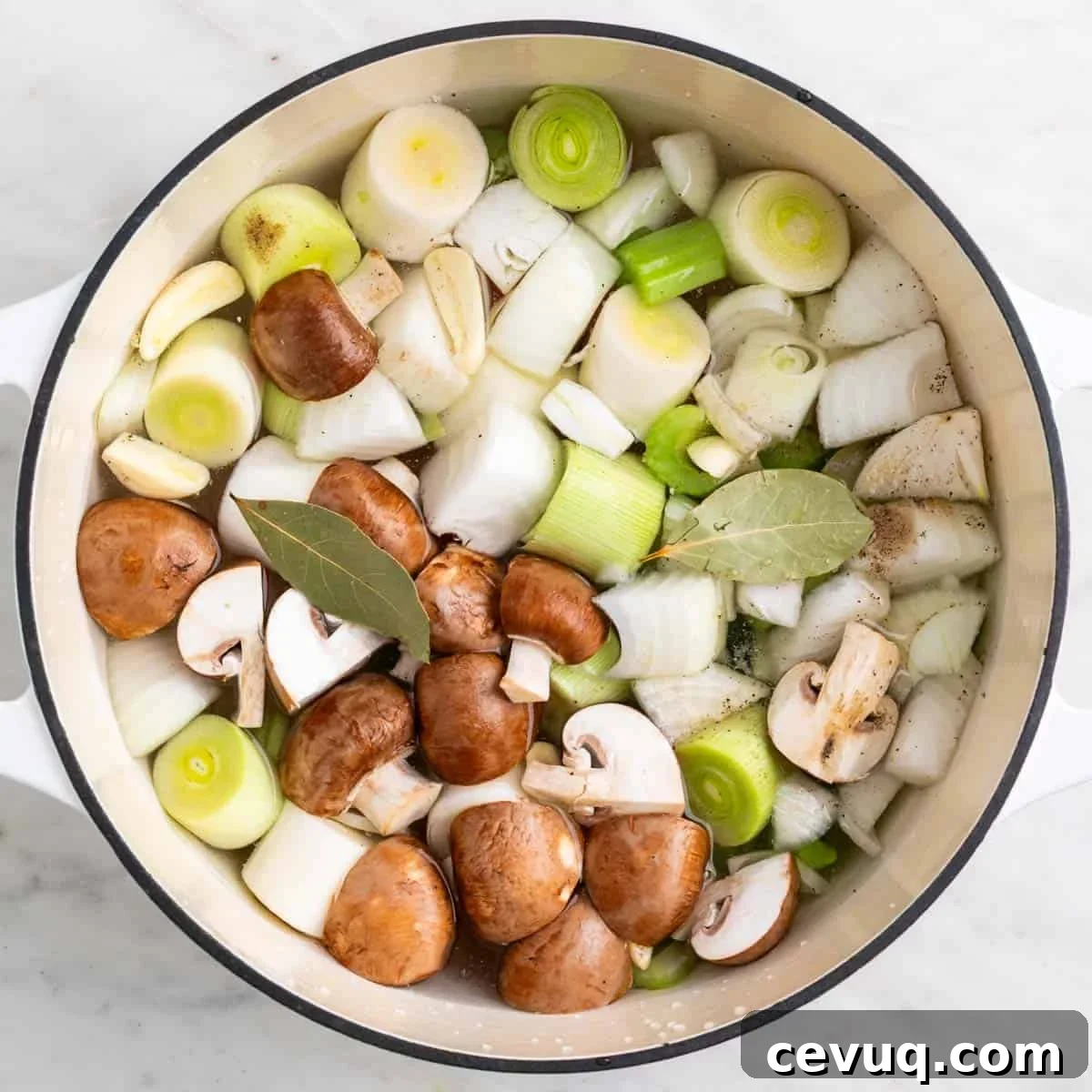
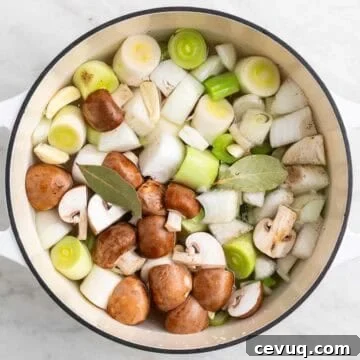
- Place all ingredients in a large pot.
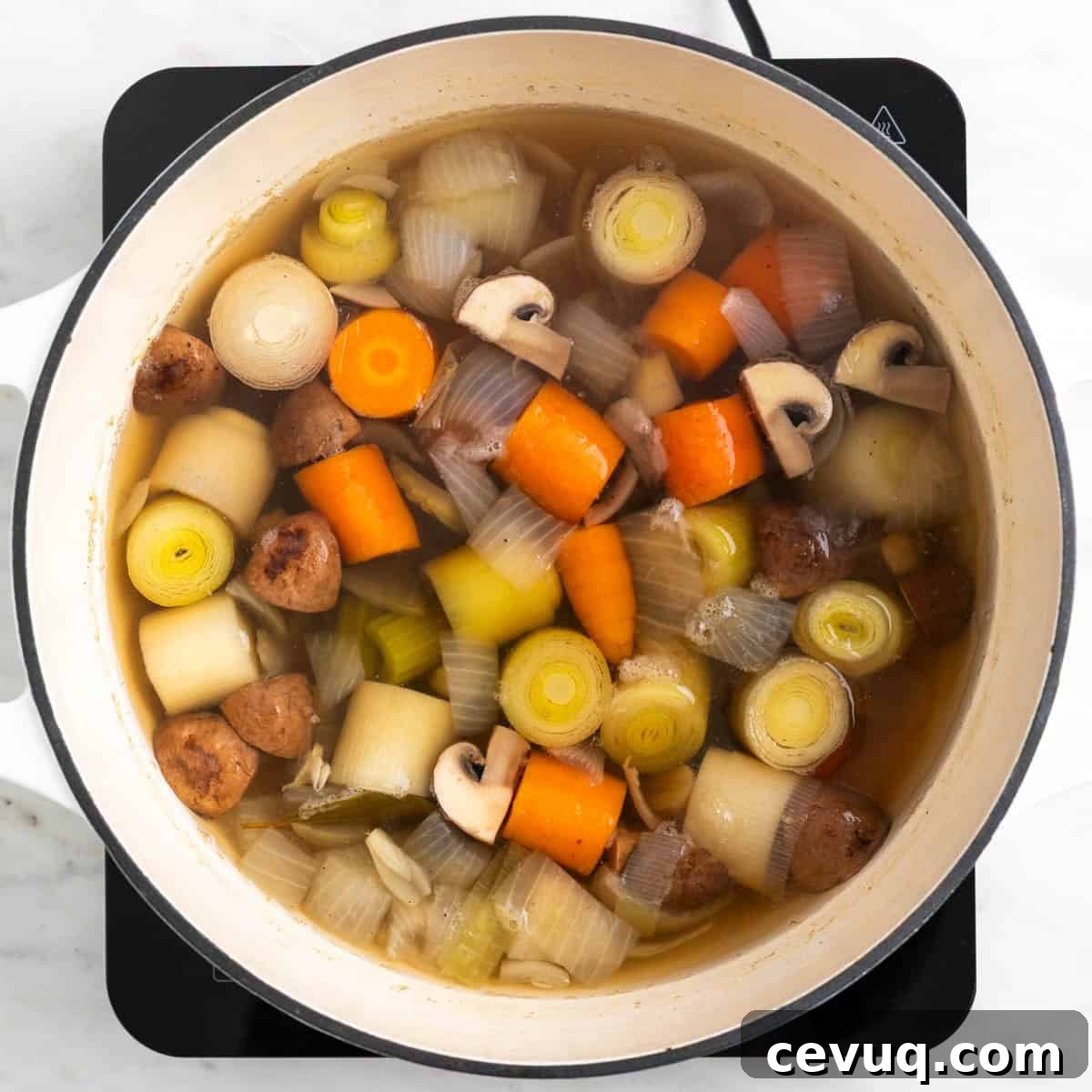
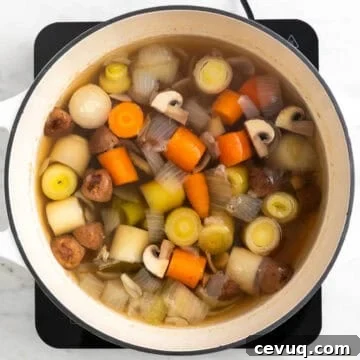
- Bring to a boil over high heat, then reduce to a gentle simmer. Partially cover and cook for 30 minutes to 1 hour depending on desired intensity. Keep it at a gentle simmer rather than a rolling boil.
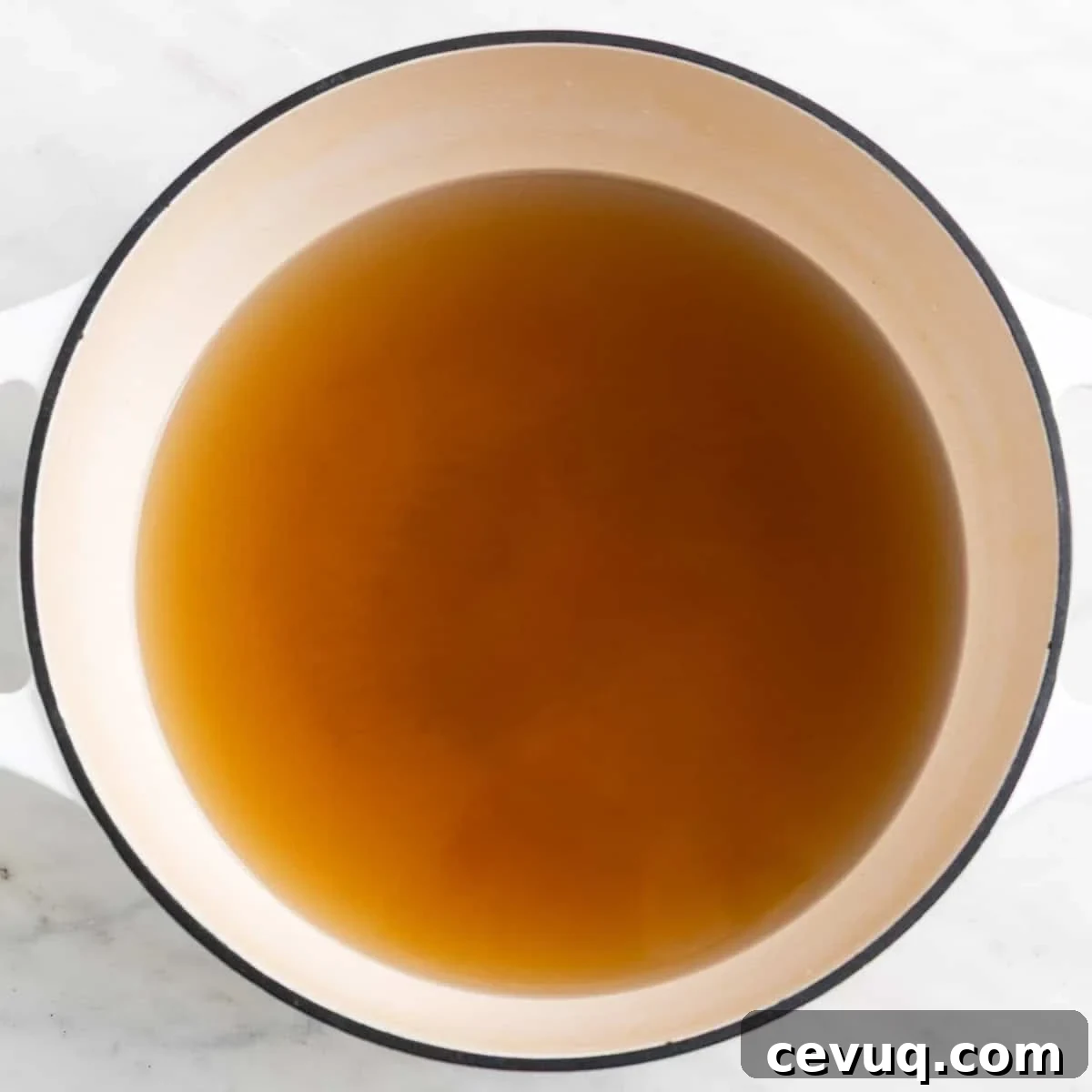
- Strain the broth, removing vegetables and bay leaves.
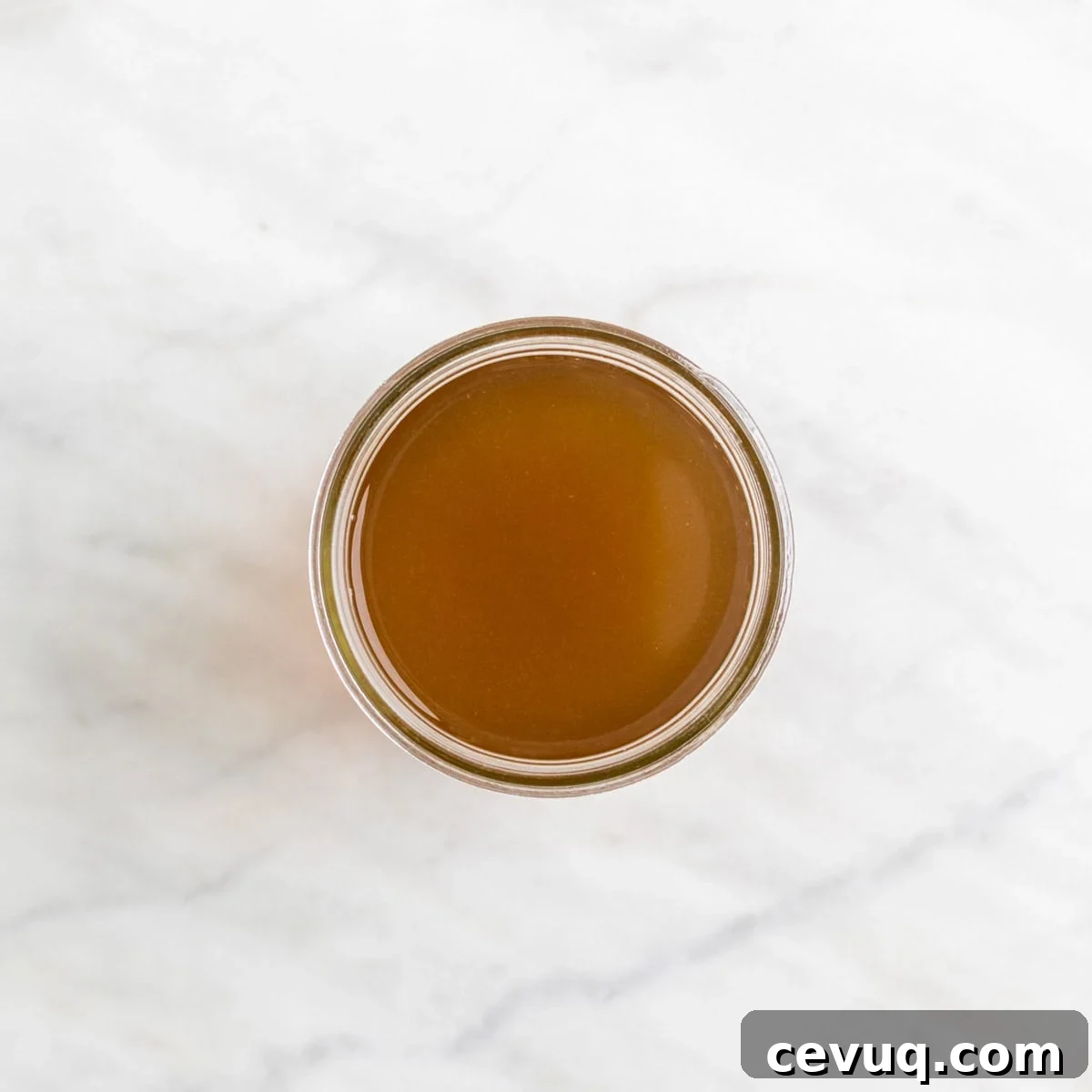
- Allow the broth to cool slightly, then use immediately or store for later use.
Tips for the Best Results
- Rough chop is fine: Larger pieces are easier to strain and don’t need precise cutting.
- Use what you have: This recipe is flexible — swap or add vegetables based on what needs using.
- Keep salt light: Season lightly so you can adjust flavor later in recipes.
- Simmer gently: A gentle simmer develops a cleaner, better flavor than a vigorous boil.
- Longer cooking increases depth: Thirty minutes is sufficient, but up to an hour yields a richer broth.
- Strain thoroughly: Use a fine mesh strainer or cheesecloth for a clearer broth.
Ways to Use It
Simple ways to incorporate the broth into everyday cooking:
- Soups: Base for vegetable, lentil, or creamy soups.
- Stews: Use in hearty one-pot meals and stews.
- Grains: Cook rice, quinoa, or other grains in it for added flavor.
- Legumes: Cook beans, lentils, or chickpeas to infuse flavor.
- Sauces: Build flavorful pan sauces or gravies.
- Risottos: Use for depth and richness in risotto-style dishes.
- Pasta: Replace water with broth for more savory pasta dishes.
- Stir-fries: Add a splash to deglaze the pan or make a light sauce.
- Mash: Use instead of milk or butter for lighter mashed vegetables.
- Meal prep: Keep on hand to quickly enhance meals during the week.
How to Store and Reheat Leftovers
- Fridge: Cool completely and store in an airtight container for 4–5 days.
- Freezer: Freeze up to 3 months in freezer-safe containers or ice cube trays for small portions.
- Thaw: Move to the fridge overnight or warm directly in a pot over low heat.
- Reheat: Warm on the stove over medium heat or microwave in short intervals, stirring between.
- Tip: If the broth tastes stronger after storage, dilute with a splash of water to adjust intensity.
Frequently Asked Questions
No. For this method you can add everything to the pot, bring it to a boil, then simmer. It’s an easy, oil-free approach that still yields good flavor.
Simmer longer for deeper flavor, add extra aromatics like garlic or fresh herbs, or reduce the broth slightly to concentrate it.
Reduce or omit the added salt. This gives you more control when the broth is used in recipes that already contain salty ingredients.
Yes. Fresh herbs like parsley, thyme, or rosemary work well. You can also add fennel, green onion tops, mushroom stems, corn cobs, tomato ends, or a small piece of dried seaweed (such as kombu) for more umami. Whole spices like peppercorns or coriander seeds add complexity — avoid overly bitter or overpowering ingredients.
The vegetables will be soft and mostly flavorless after simmering. They can be blended into soups or purees, mixed into rice or stews, or discarded. Because most flavor has been extracted, many people prefer not to use them on their own.
Recipes That Use This Vegetable Broth
- Vegan Vegetable Soup
- Vegan Lentil Soup
- Vegan Chili
- Vegan Mushroom Stroganoff
- Vegan Meatballs
- Vegan Risotto
- Vegan Paella
Love it? Leave a rating!
Homemade Vegetable Broth
Ingredients
- 1 onion, roughly chopped
- 2 carrots, roughly chopped
- 2 celery stalks, roughly chopped
- 1 leek, roughly chopped
- 4 garlic cloves, peeled and halved
- 4 mushrooms, quartered
- 2 bay leaves
- 8 cups water
- 1 teaspoon salt, optional
- ¼ teaspoon black pepper
Instructions
-
Add all the ingredients to a large pot.

-
Bring to a boil over high heat, then reduce to a gentle simmer. Partially cover and cook for at least 30 minutes, up to 1 hour for more depth. Avoid rapid boiling.
-
Strain the broth and discard the solids and bay leaves.
-
Let cool, then use or store for later.


Notes
- Cool completely before storing.
- Refrigerate in an airtight container for 4–5 days.
- Freeze in appropriate containers or ice cube trays for up to 3 months.
- Thaw in the fridge overnight or warm directly on the stove.
- Reheat gently over medium heat until warmed through.
Nutrition