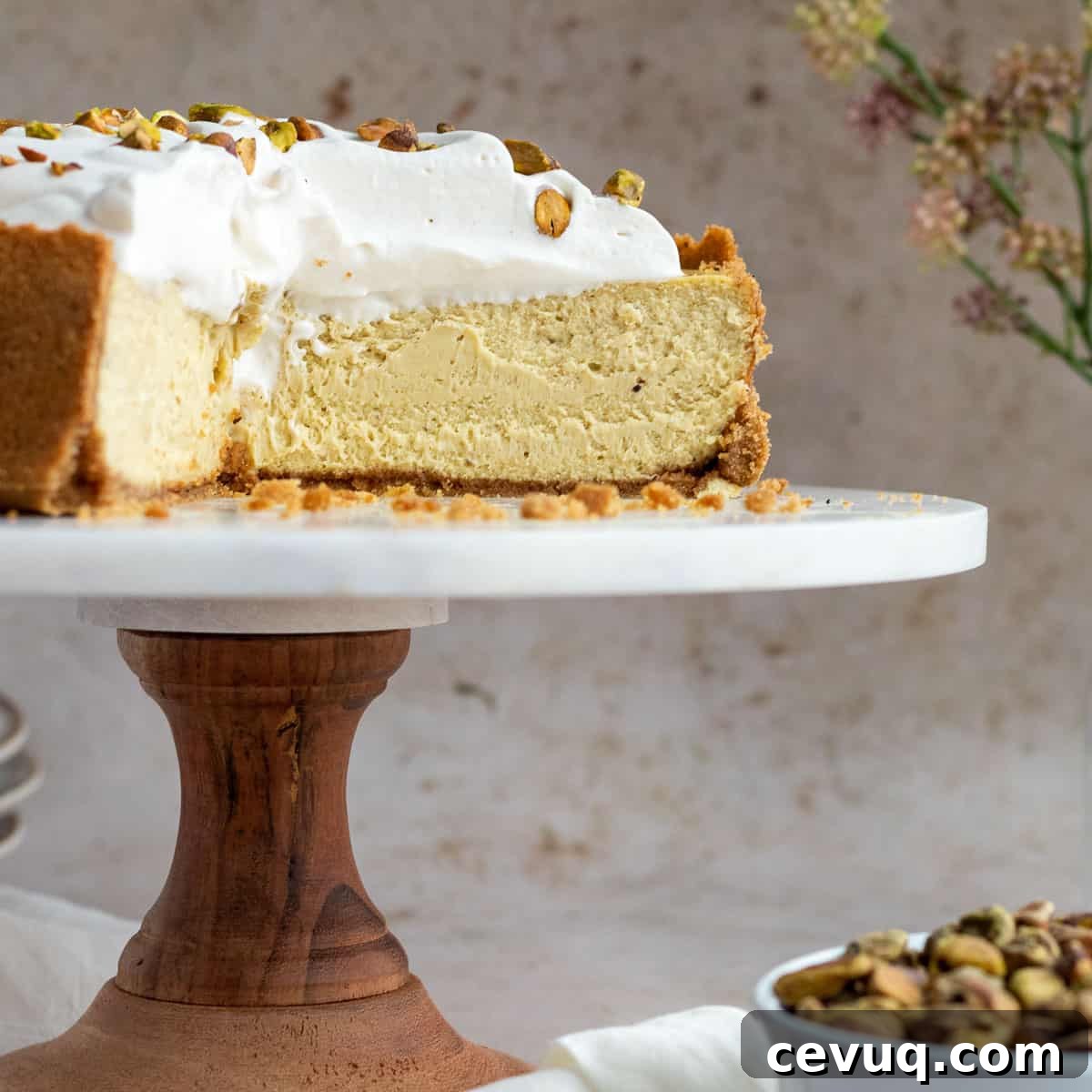
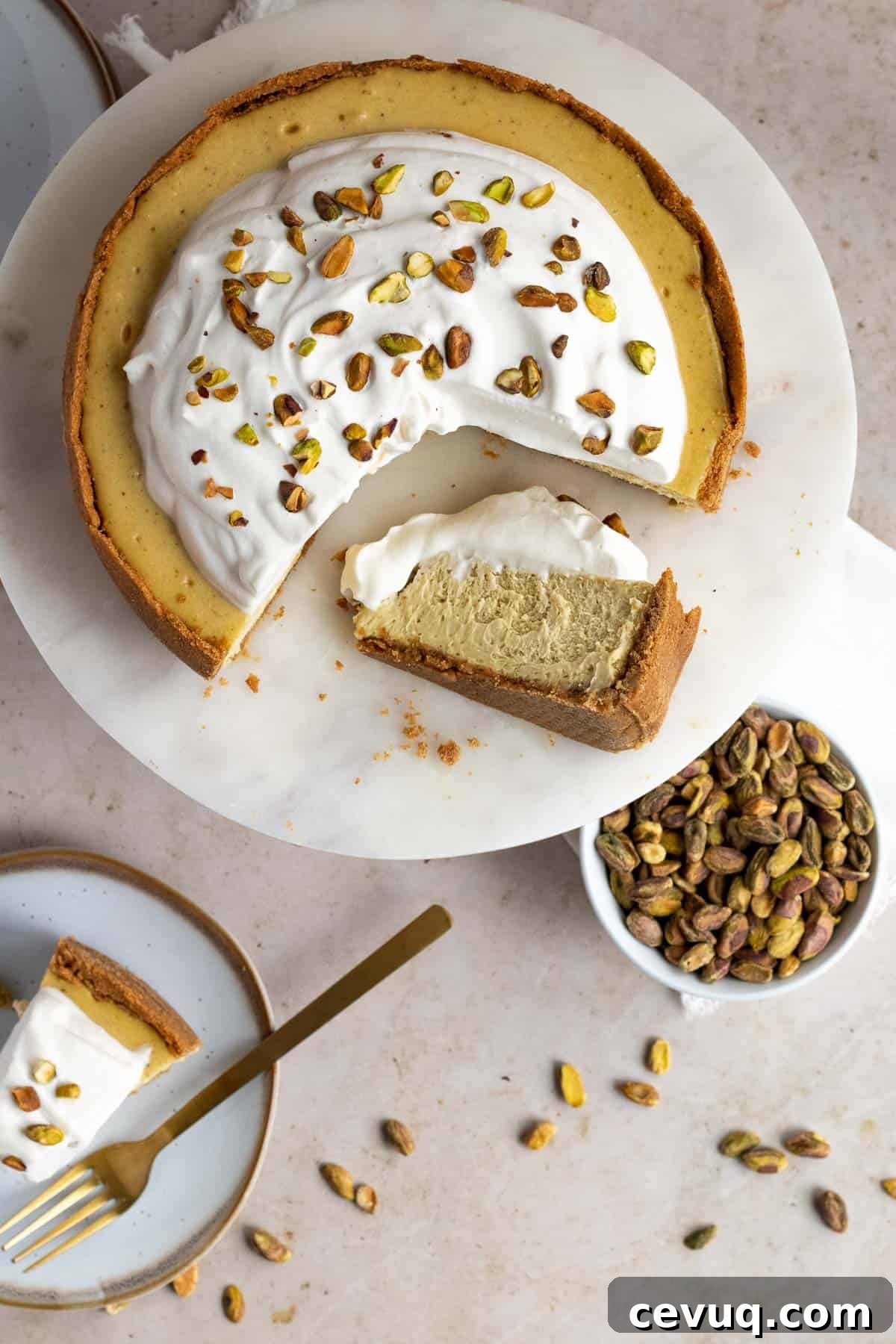
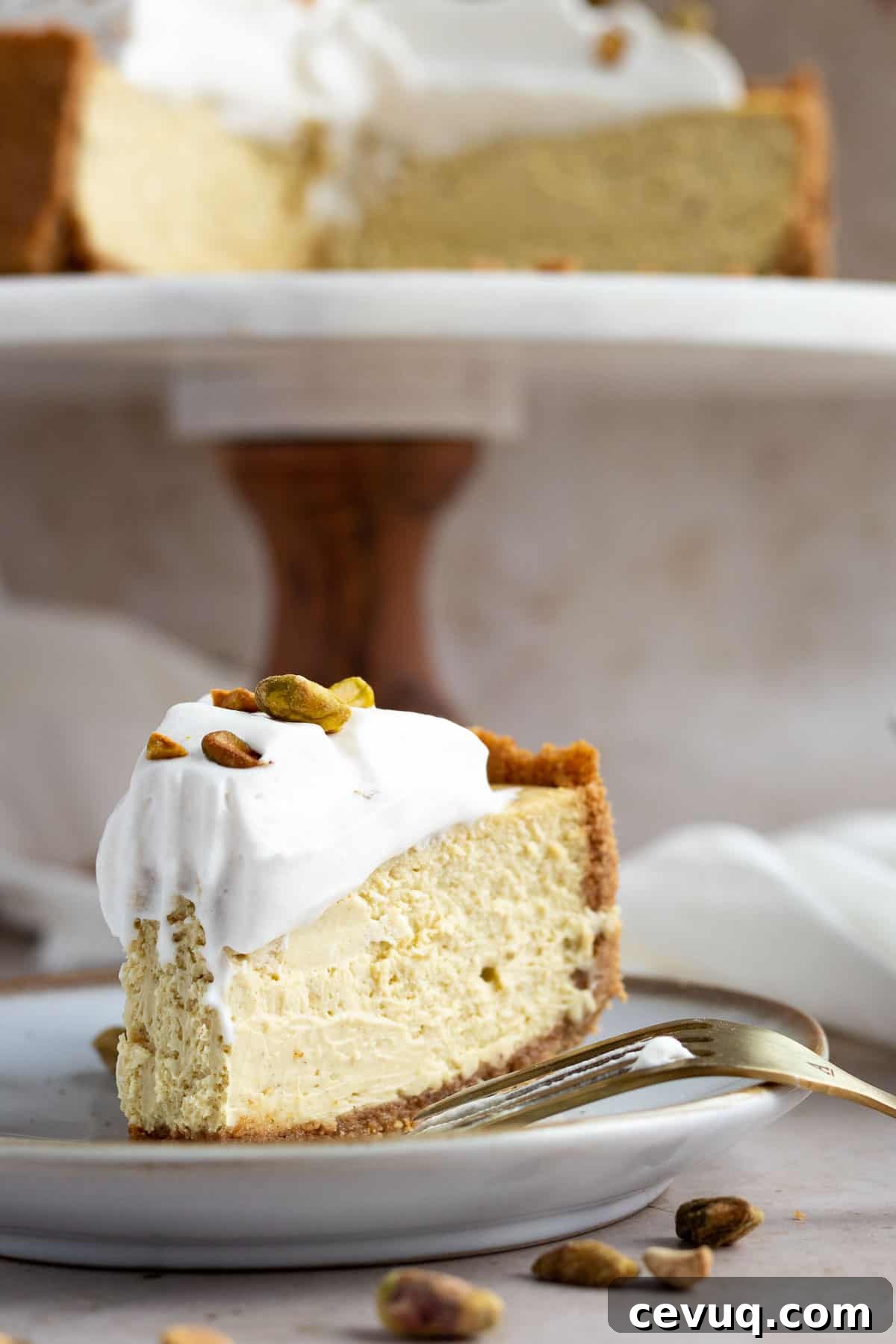
Enjoy a luscious pistachio cheesecake that combines rich, creamy filling with a nutty pistachio flavor and a brown-butter graham cracker crust. The cheesecake filling is enriched with pistachio butter for a subtle, balanced sweetness, while the brown butter adds depth and a toasty aroma to the crust—perfect for entertaining or a special treat.
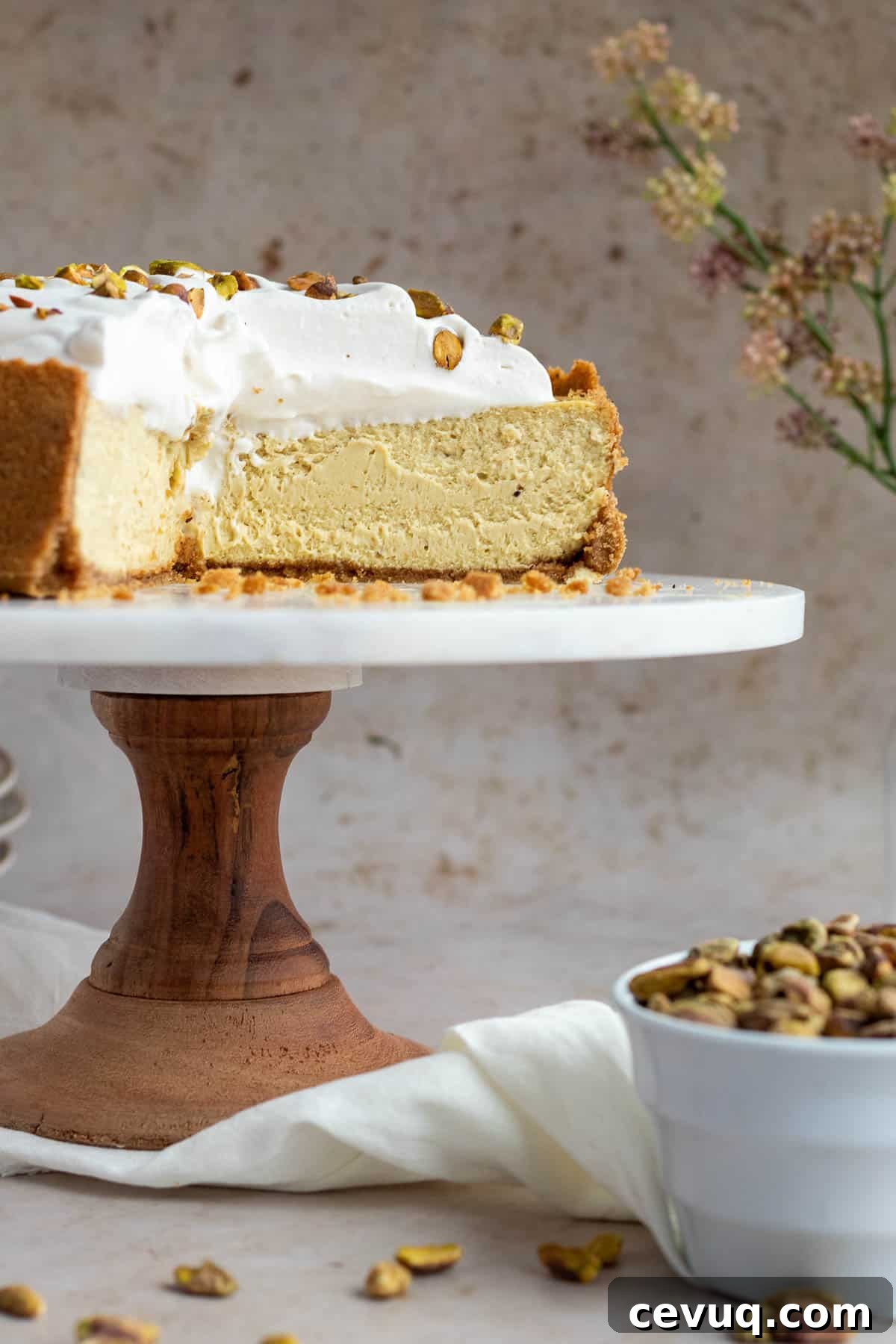
What is pistachio butter?
Pistachio butter is a smooth, flavorful spread made by grinding pistachios into a paste. Like peanut butter, it can be as simple as pistachios and a pinch of salt. The result is nutty, slightly sweet, and incredibly satisfying.
You can make pistachio butter at home with a high-powered blender or food processor. Using shelled pistachios saves time, though unshelled nuts can be used if you don’t mind the extra work. Store-bought pistachio butter is available in some grocery stores and online; if you buy a jar, stir it well before adding it to the cheesecake, since the natural oil may separate on top.
Ingredient highlights
Key ingredients that make this cheesecake outstanding:
- Brown Butter – Browning the butter brings out a toasty, nutty flavor that complements the pistachios. It’s mixed with graham cracker crumbs to build the crust.
- Cream Cheese – Use full-fat cream cheese for the best texture and flavor. Make sure it’s at room temperature to avoid lumps in the filling.
- Pistachio Butter – Adds the signature pistachio flavor. Stir a jar well before measuring to reincorporate any settled oil.
- Eggs – Large eggs act as the binder and give the cheesecake its creamy, custard-like structure.
- Kosher Salt – A pinch of salt balances and enhances the sweetness. If using table salt, reduce the amount by half.
- Heavy Cream – Adds richness and a silky texture. You can substitute sour cream for a tangier profile if preferred.
Necessary and helpful equipment
Some equipment will make the process easier and help ensure a flawless cheesecake:
- 9-inch springform pan – The removable sides make it simple to release the cheesecake without damaging its edges.
- Heavy-duty foil – Wrap the springform pan to protect it from water during the water bath. Use two layers for extra insurance.
- Stand mixer with paddle attachment – The paddle mixes the filling smoothly while minimizing incorporated air. If you don’t have a stand mixer, a hand mixer works—just mix at a lower speed.
- Roasting pan – A large roasting pan holds the springform pan for the water bath so the cheesecake bakes evenly and resists cracking.
Tips for a perfect cheesecake
- Room temperature ingredients: Ensure cream cheese and eggs are at room temperature to avoid lumps and overmixing.
- Use a water bath: Baking the cheesecake in a water bath creates a humid oven environment that helps the cake bake evenly and reduces cracking. Place the wrapped springform in a roasting pan and pour hot water about halfway up the sides of the pan.
- Slow cooling: After baking, turn the oven off and crack the door open. Leave the cheesecake in the warm oven for one hour, then cool on the counter for 30 minutes before refrigerating for at least four hours or overnight.
- Fixing cracks: If the cheesecake cracks, the flavor remains the same—cover with whipped cream and chopped pistachios to conceal any imperfections.
- Paddle attachment: Use the paddle attachment or a low hand-mixer speed to avoid whipping excess air into the batter, which can cause cracks.
How to know when the cheesecake is done
Start checking for doneness at about 75 minutes. The cheesecake should have set edges (about 1–2 inches) and a slightly jiggly center that doesn’t move like a liquid. If you use an instant-read thermometer, the center should register about 150–155°F (65–68°C). Avoid overbaking to preserve a smooth, creamy texture; the cake will continue to firm as it cools and will be fully set after chilling overnight.
How to freeze a cheesecake
To freeze, chill the cheesecake completely in the refrigerator for at least 4 hours or overnight. Do not add whipped cream before freezing. Remove the cake from the springform pan and place it on a sturdy round cake board or plate. Freeze uncovered for about an hour until firm, then wrap tightly in plastic wrap and aluminum foil. Properly wrapped, it will keep for 1–2 months. Thaw overnight in the refrigerator before serving. You can also freeze individual slices wrapped the same way for easy portions.
Pistachio Cheesecake with a Brown Butter Graham Crust
This recipe yields a classic, crowd-pleasing cheesecake with a nutty twist. Prep time is about 20 minutes, bake time around 1 hour 30 minutes, chilling time at least 4 hours, and total time roughly 6 hours. It serves 12 slices.
Ingredients
Crust
- 2 cups graham cracker crumbs (about 16 full sheets)
- 1/3 cup packed brown sugar
- 8 tablespoons unsalted butter, cubed (to be browned)
Filling
- 4 (8-ounce) packages cream cheese, full fat and softened
- 3/4 cup pistachio butter
- 1 cup granulated sugar
- 4 large eggs, room temperature
- 1 teaspoon vanilla extract
- 1/2 teaspoon kosher salt
- 1/2 cup heavy whipping cream
Topping
- 1 cup heavy whipping cream
- 3 tablespoons powdered sugar
- 1 teaspoon vanilla extract
- 1/2 cup chopped pistachios
Instructions
Graham cracker crust
- Preheat the oven to 350°F (175°C).
- Melt the butter in a small saucepan over medium-low heat. Continue stirring until the butter turns golden brown and smells nutty, 5–7 minutes. Watch it closely to prevent burning. Cool slightly.
- Crush the graham crackers in a food processor or a sealed bag with a rolling pin.
- Mix the graham cracker crumbs, brown sugar, and brown butter until well combined.
- Press the mixture into the bottom and slightly up the sides of a 9-inch springform pan, using your fingers or the base of a glass to compact it.
- Bake the crust for 10 minutes. Cool on a wire rack and reduce the oven temperature to 325°F (163°C).
Cheesecake filling
- Prepare the springform pan for a water bath by wrapping it in two layers of heavy-duty foil, folding the edges up at least 3/4 of the way up the sides. For extra protection, an oven bag over the foil can be used.
- In a stand mixer fitted with the paddle attachment (or with a hand mixer), beat the softened cream cheese and sugar on medium until smooth, about 2–3 minutes, scraping the bowl as needed.
- Add the pistachio butter and blend until combined. Add the eggs one at a time, mixing well after each, then add the vanilla and salt and mix to combine.
- Mix in the heavy cream until incorporated, about 30 seconds.
- Pour the batter over the cooled crust in the prepared pan.
- Place the springform pan in a large roasting pan and transfer to the oven. Carefully pour very hot water into the roasting pan until it reaches about halfway up the sides of the springform pan, taking care not to get water between the foil and pan.
- Bake at 325°F for 80–90 minutes. The cheesecake is done when the edges are set and the center still has a slight jiggle. An internal temperature of 150–155°F (65–68°C) indicates doneness.
- Turn off the oven and prop the door open slightly. Let the cheesecake cool in the oven for 1 hour.
- Remove the roasting pan and carefully lift the cheesecake out of the water. Remove the foil and cool on a wire rack for 30 minutes.
- Refrigerate the cheesecake, covered with foil or plastic wrap, for at least 4 hours or preferably overnight. Before serving, top with fresh whipped cream and sprinkle with chopped pistachios.
Whipped cream
- Combine 1 cup heavy whipping cream, 3 tablespoons powdered sugar, and 1 teaspoon vanilla extract. Whip with a stand mixer or hand mixer until soft peaks form. Use to top the chilled cheesecake and garnish with chopped pistachios.