
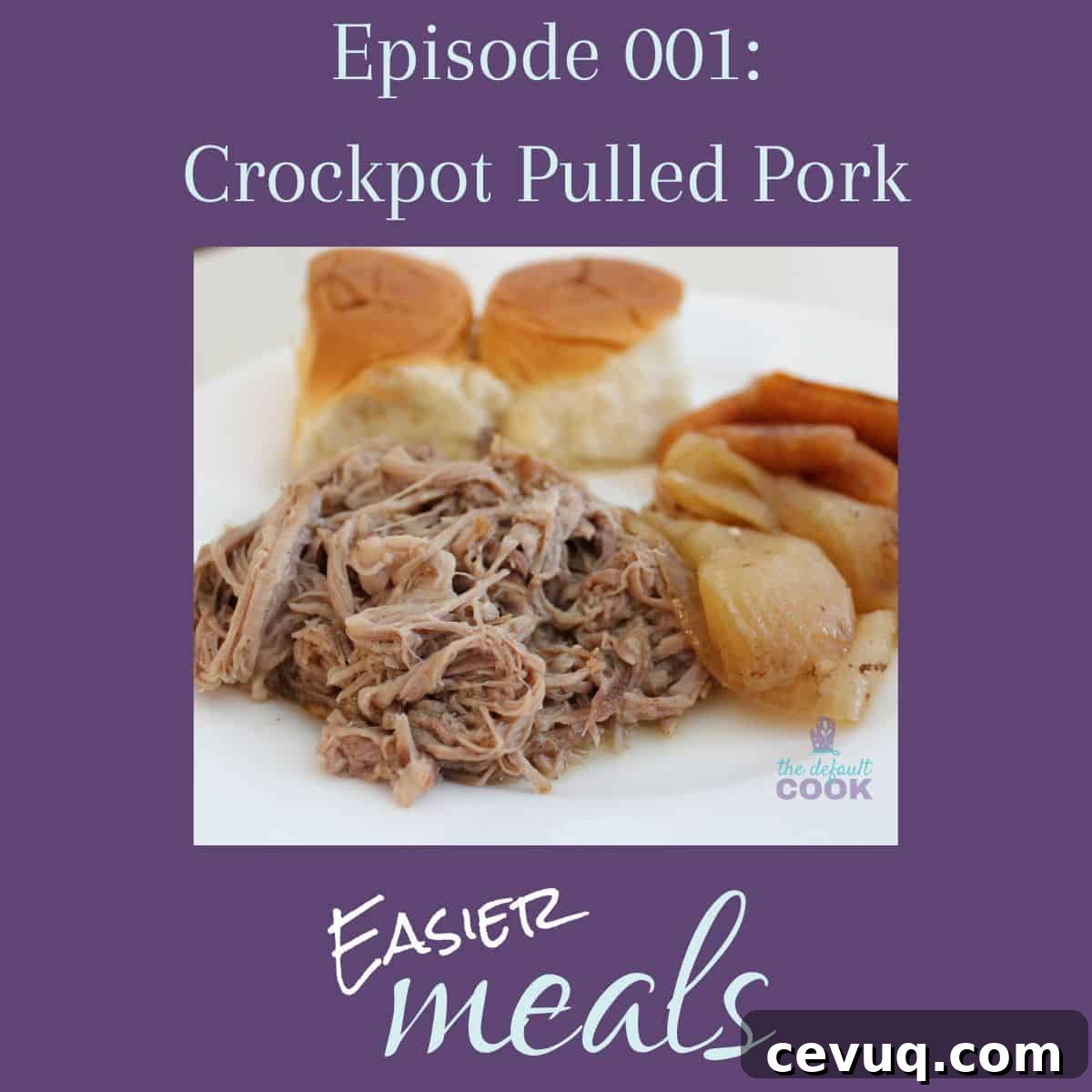
In the very first episode of Easier Meals we demonstrate how to make Easy Crock Pot Pulled Pork using straightforward techniques and pantry-friendly ingredients.
Anne guides you step-by-step through preparing the pork on a bed of vegetables, and offers clear options for adapting the recipe depending on the size of the roast and the cut you choose. She explains which cuts work best for slow cooking, how to handle a roast that’s too large for your crock pot, and how to scale the recipe whether you’re cooking for two or a crowd.
This pulled pork is versatile: serve it with roasted or steamed vegetables for a simple, balanced meal; pile it into sandwiches for a classic comfort-food option; or repurpose leftovers into tacos, quesadillas, or salads for quick, flavorful lunches and dinners. The slow-cooked pork becomes tender and shreddable, soaking up the spice rub and seasonings so each bite is flavorful without requiring complicated techniques.
Choosing the right cut: For the most tender, shreddable pulled pork, shoulder (also labeled as Boston butt or pork butt) is the top choice because of its marbling and connective tissue that break down over long, gentle cooking. Picnic shoulder and rump roasts also work well. If you prefer a leaner option, sirloin or leaner roasts can be used, but expect a firmer texture and a shorter shredding window. Anne covers how to adjust cooking times and liquid to accommodate different cuts.
What to do if the roast won’t fit: If your roast is too large for the crock pot, Anne suggests trimming excess fat to improve fit, slicing the roast into two pieces, or arranging the meat on a bed of vegetables and rotating it halfway through the cook to ensure even heating. You can also use a heavy-duty roasting pan in the oven at a low temperature as an alternative slow-cooking method.
Flavor and seasoning tips: The recipe relies on a simple but balanced seasoning blend that enhances the pork without masking its natural flavor. Use the quantities below as a guideline for a 3 lb roast. Note that some ingredients, like apple cider vinegar, are used in small amounts to add brightness and tenderize the meat, so do not scale every ingredient linearly—small acidic components often need to remain in moderation.
Seasoning quantities listed are intended for a 3 lb roast (either as the total amount for a single smaller roast like sirloin, or per side when seasoning a larger shoulder or rump that will be cooked in sections):
- 1 tablespoon apple cider vinegar (do not scale up)
- 1 teaspoon salt
- ½ teaspoon pepper
- 1 ½ teaspoons paprika
- ¼ teaspoon cayenne pepper
- 2 teaspoons garlic powder
- 2 tablespoons cinnamon
- ½ cup brown sugar
Preparation overview: Pat the roast dry, rub the seasoning evenly over the surface, and place the meat on a bed of sturdy vegetables such as onions, carrots, and celery to lift it off the bottom of the crock and add aromatic flavor. Add a small amount of liquid—stock, water, or a splash of apple cider vinegar mixed with water—to create a moist cooking environment. Cook on low for several hours until the meat is fork-tender and easily shreds. Remove excess fat, shred the pork with two forks, and toss with some of the cooking juices to keep it moist.
Serving suggestions: For a classic presentation, pile the shredded pork onto hamburger buns and top with coleslaw or pickles. For a lighter meal, serve the pork over roasted vegetables or a bed of leafy greens. Leftovers reheat well and can be transformed into tacos, burritos, nachos, sandwiches, or used as a savory addition to grain bowls.
Storage and reheating: Cool leftover pulled pork quickly and refrigerate in an airtight container for up to four days, or freeze for longer storage. Reheat gently on the stovetop or in the oven with a splash of broth or cooking liquid to restore moisture. If frozen, thaw overnight in the refrigerator before reheating.
With minimal hands-on time and flexible serving options, this Easy Crock Pot Pulled Pork is ideal for weeknight dinners, meal prep, or feeding a crowd. Anne’s practical advice in the episode helps you adapt the method to your equipment and the roast you have on hand, so you can enjoy reliably tender, flavorful pork every time.