Salt is one of the most commonly used seasonings in home and professional kitchens. Because it appears in so many recipes, cooks often wonder whether salt can be burned or damaged by heat. This article explains how salt behaves under high temperatures, whether it can melt or change color, which varieties stand up best to intense heat, and what happens if salt is heated far beyond normal cooking temperatures.
Table of Contents
Can You Burn Salt?
Ordinary table salt will not burn during normal cooking. Sodium chloride has a very high melting and decomposition temperature—its melting point is around 1474°F (801°C)—far higher than typical stovetop or oven temperatures. Unless you use an extremely hot source such as a blowtorch or industrial furnace, salt will not catch fire or produce smoke in a kitchen setting.
What Is Salt Made Of?
Table salt is composed primarily of sodium and chloride ions, forming the ionic compound sodium chloride (NaCl). The ions carry opposite charges and bond together into a stable crystalline lattice. That ionic structure and the strong electrostatic forces between ions are why salt remains solid and stable at temperatures where many organic compounds would burn or decompose.
Salt is a universal seasoning because it enhances and balances flavors in a wide range of dishes. Different salt varieties—table salt, kosher salt, sea salt, and Himalayan salt—vary in texture and trace mineral content, which can subtly affect taste and appearance but do not change salt’s high thermal stability.
Because sodium chloride is chemically stable and has such a high melting point, it won’t ignite or burn under normal cooking conditions. If you pour a large amount of salt onto an open flame, the flame will likely be smothered rather than fed by the salt.
Can You Melt Salt?
Yes—salt can melt, but only at temperatures far above what we use in everyday cooking. The melting point of sodium chloride is roughly 1474°F (801°C). At that temperature the crystalline lattice breaks down and the solid becomes a molten liquid. Achieving and maintaining that heat requires specialized equipment; ordinary stoves, grills, and ovens do not reach those levels.
Melting salt is not a practical culinary technique. Once molten, salt’s physical structure changes and it no longer behaves like the crystalline granules you sprinkle on food. Molten salt is used industrially (for heat transfer or thermal storage) and occasionally for artistic purposes, but it has little or no application in cooking.
If you were curious, testing a tiny amount in an industrial environment would show melting, but for kitchen use it’s best to treat salt as a stable, nonburning seasoning.
What Happens When Salt Reacts With Heat?
When salt is exposed to very high temperatures, it can undergo physical changes such as becoming translucent or slightly yellowish as the crystal structure and electron energy levels shift. These color changes are related to how the material emits or scatters light at high temperatures rather than a sign of combustion. If the heated salt cools quickly, it can revert to a solid crystalline state without major chemical transformation.
Salt mixed with other ingredients may also appear to change color due to interactions with those ingredients or to the scattering of light by dissolved or suspended particles. Additionally, salts that contain trace minerals—like pink Himalayan salt—may display different hues when heated because of those mineral impurities.
Which Type Of Salt Is Better In High Heat?
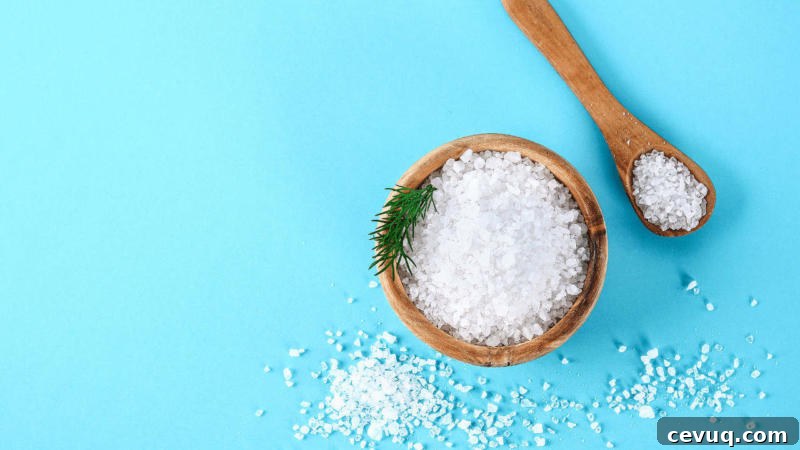
For cooking methods that use intense but not extreme heat—grilling, searing, or roasting—coarser salts such as kosher or coarse sea salt are often preferred. Larger grains take longer to dissolve and give a different texture and burst of flavor than fine table salt. That texture can be desirable on finishing or grilling surfaces where a little crunch and a focused salty hit are intended.
Using coarse salt on a hot surface can result in the salt remaining intact longer and not dissolving immediately into the food. Fine salts dissolve faster and distribute more evenly. From a thermal stability standpoint, all common edible salts withstand normal cooking temperatures, but coarse-grained salts are a practical choice when you want visible crystals and slower dissolution.
Can You Reform Melted Salt?
Reforming or recrystallizing melted salt is possible in controlled laboratory or industrial settings. Rapid cooling and controlled crystallization allow molten salt to solidify into crystalline grains again. This recrystallization process is used in chemistry and materials work, but it isn’t a practical concern for everyday cooking because reaching the molten state requires specialized equipment.
Artists and designers who work with molten salt do sometimes melt and then reform it for creative pieces, but for most cooks there is no need to attempt melting or recrystallizing salt.
Frequently Asked Questions About Can You Burn Salt
Does Salt Explode?
Salt does not explode under normal conditions. As an ionic compound, its ions are held in a strong lattice by electrostatic forces. It does not have the fragile chemical bonds that would break apart violently from ordinary heat or pressure used in cooking.
Can You Use Melted Salt for Cooking?
Melted salt is not suitable for cooking in the way we normally use salt. When molten, its properties change and it no longer interacts with food in the same way. Molten salt has industrial and artistic applications, but it’s not used as a seasoning.