- Navigating a Gluten-Free, Plant-Based Diet: A Beginner’s Guide
- My Gluten-Free Journey: What I Wish I Knew at the Start
- Gluten Intolerance, Sensitivity, and Allergy: What’s the Difference?
- What Is Gluten, Really?
- Going Gluten-Free on a Plant-Based Diet: The Unique Challenge
- Learn to Read Ingredient Labels Like a Pro
- What About Oats?
- Cross-Contamination: The Invisible Threat
- Hidden Sources of Gluten: Why You Might Still Have Symptoms
- Can Gluten-Free Foods Still Contain Gluten?
- What to Do If Unsure About Gluten in Ingredients?
- Your New Best Friends: Naturally Gluten-Free Foods
- Planning Your Gluten-Free, Plant-Based Life
- Eating Out on a Gluten-Free Diet
- Building a Support System
- Starting Gluten-Free & Plant-Based: Your Essential Checklist
Navigating a Gluten-Free, Plant-Based Diet: A Beginner’s Guide
Deciding to follow a gluten-free lifestyle can feel daunting, especially when you also prefer plant-based meals. You may find yourself re-reading labels, rethinking favorite recipes, and wondering whether you’re doing everything correctly. This guide is designed to help you move through that transition with confidence, offering practical advice, clear explanations, and strategies that make a gluten-free, plant-based life manageable and enjoyable.
Whether you’re eliminating gluten for medical reasons or by choice, and whether you’re fully plant-based or mostly so, the information below covers the essentials: how gluten affects the body, how to spot hidden gluten, how to plan meals, and how to live well while avoiding contamination. The goal is to give you the tools you need to stay healthy and feel supported every step of the way.
My Gluten-Free Journey: What I Wish I Knew at the Start
My own experience began when I developed an unexplained burning sensation in my mouth. I had an autoimmune condition already, and after reading about possible links between gluten and this symptom, I removed gluten and noticed improvement in a few weeks. That relief was welcome, but I later realized I had missed an important step: testing for celiac disease before eliminating gluten.
Testing for celiac disease requires that gluten still be in your diet; stopping gluten beforehand can cause false negatives. Another thing I learned was that low vitamin D can be associated with autoimmune issues and symptoms like burning mouth syndrome, so checking nutrient status can be just as important as investigating gluten. If you’re starting this journey, consult your healthcare provider about testing and nutrient checks so your decisions are informed and safe.
Gluten Intolerance, Sensitivity, and Allergy: What’s the Difference?
Understanding the difference between celiac disease, non-celiac gluten sensitivity, and wheat allergy matters because each one requires a different approach.
Celiac Disease
Celiac disease is an autoimmune condition in which gluten provokes an immune response that damages the small intestine. Even small amounts can cause harm over time, so people with celiac disease must follow a strict, lifelong gluten-free diet.
Non-Celiac Gluten Sensitivity (NCGS)
NCGS involves symptoms similar to celiac—bloating, fatigue, brain fog—without the same intestinal damage. The cause is not fully understood, but many people find symptom relief when they remove gluten from their diets.
Wheat Allergy
A wheat allergy is an allergic reaction to proteins in wheat and can range from mild to life-threatening. Those with wheat allergy must avoid wheat specifically, though they may sometimes tolerate other gluten-containing grains depending on the allergy.
If you suspect any of these conditions, get medical advice and testing before making dietary changes that could affect diagnostic accuracy. Accurate diagnosis helps you adopt the safest and most effective eating plan.
What Is Gluten, Really?
Gluten is a group of proteins found primarily in wheat, barley, and rye. It gives baked goods their elasticity and chewiness and helps doughs rise. Because of its functional properties, gluten also appears in many processed foods and products you might not expect—soy sauce, sauces and dressings, some plant-based meat alternatives, soups, and even certain supplements or cosmetics.
If you’re avoiding gluten for general wellness, trace amounts may not always cause symptoms. However, for people with celiac disease or significant sensitivity, even small exposures can add up and trigger reactions. Learning where gluten hides and how to avoid cross-contamination is essential for protecting your health.
Going Gluten-Free on a Plant-Based Diet: The Unique Challenge
Combining a plant-based diet with gluten-free restrictions can be challenging because many plant-based convenience foods and meat substitutes contain wheat or gluten-based ingredients. Seitan, for example, is made from wheat gluten and must be avoided. Veggie burgers, some sauces, and many grain-based products can also include gluten.
At first it felt like many of my favorite foods were off-limits, but shifting focus toward naturally gluten-free plant foods and learning to prepare meals from scratch made the transition far easier. With planning and exploration, you can enjoy a wide variety of satisfying, nutrient-rich meals that fit both preferences.
Learn to Read Ingredient Labels Like a Pro
Becoming skilled at reading ingredient lists is one of the most practical steps you can take. Gluten can appear under many names and in unexpected products. Common gluten-containing ingredients to watch for include malt (from barley), brewer’s yeast, modified food starch (which can be wheat-derived), and hydrolyzed wheat protein.
You may also see scientific names like Triticum vulgare (wheat), Hordeum vulgare (barley), or Secale cereale (rye). If a product isn’t clearly labeled gluten-free, take a moment to scan the ingredients and, when in doubt, contact the manufacturer before consuming.
Developing the habit of checking labels will protect your health and soon becomes a simple, automatic part of shopping.
What About Oats?
Oats are naturally gluten-free but are frequently contaminated during processing. If you have celiac disease or high sensitivity, choose certified gluten-free oats and observe how your body responds.
Cross-Contamination: The Invisible Threat
Cross-contamination occurs when gluten-free foods touch surfaces or utensils that have been in contact with gluten. For people with celiac disease or serious sensitivity, even tiny amounts can cause symptoms.
Common sources of cross-contamination include toasters, shared cutting boards, knives, jars of spreads where crumbs can transfer, countertops that aren’t cleaned thoroughly, and sponges or dishcloths used on gluten-containing dishes. To reduce risk, use dedicated tools when possible, clean surfaces carefully before preparing food, and store gluten-free items separately.
These precautions are simple but highly effective in preventing accidental exposure and maintaining your well-being.
Hidden Sources of Gluten: Why You Might Still Have Symptoms
Check Your Medications
Some medications and over-the-counter products may contain wheat-derived ingredients. If packaging doesn’t list all components, ask the manufacturer or consult your pharmacist to confirm whether a medication is gluten-free.
Check Your Personal Care Products
Hair and skin products sometimes contain hydrolyzed wheat protein or other wheat derivatives. While gluten is not absorbed through intact skin, products used on or near the mouth—like lip balms or lipsticks—can be ingested. Choose certified gluten-free personal care items when possible and read ingredient lists carefully.
Check Your Dietary Supplements
Vitamins, probiotics, and herbal supplements may contain gluten or be processed in facilities that handle gluten. Look for gluten-free labeling or contact the manufacturer to verify the product’s status.
Can Gluten-Free Foods Still Contain Gluten?
Products labeled gluten-free can still contain trace amounts due to cross-contamination, though regulated thresholds apply. Certified gluten-free products are typically tested to ensure gluten is below 20 parts per million (ppm), a level considered safe for most people with celiac disease. Items labeled “gluten-free” without third-party certification are regulated and must also meet the 20 ppm threshold in many countries, but certification offers extra reassurance.
“Naturally gluten-free” describes foods like fruits, vegetables, rice, and quinoa that don’t contain gluten by nature but may be processed in shared facilities. Also remember that “wheat-free” does not necessarily mean gluten-free: barley or rye could still be present. Always read labels carefully and, if necessary, reach out to the manufacturer for clarification.
What to Do If Unsure About Gluten in Ingredients?
If a product lacks a clear gluten-free label or certification and you’re uncertain about the ingredients, contact the manufacturer. Many companies provide specific guidance about whether their products are gluten-free and if they are made on shared equipment. Packaging may also include precautionary statements like “may contain traces of gluten,” “made on a line that also handles wheat,” or “not suitable for people with celiac disease.” These statements indicate a known risk of cross-contamination, and if you have severe sensitivity, it’s best to avoid such products unless you can get confirmation of safety.
Your New Best Friends: Naturally Gluten-Free Foods
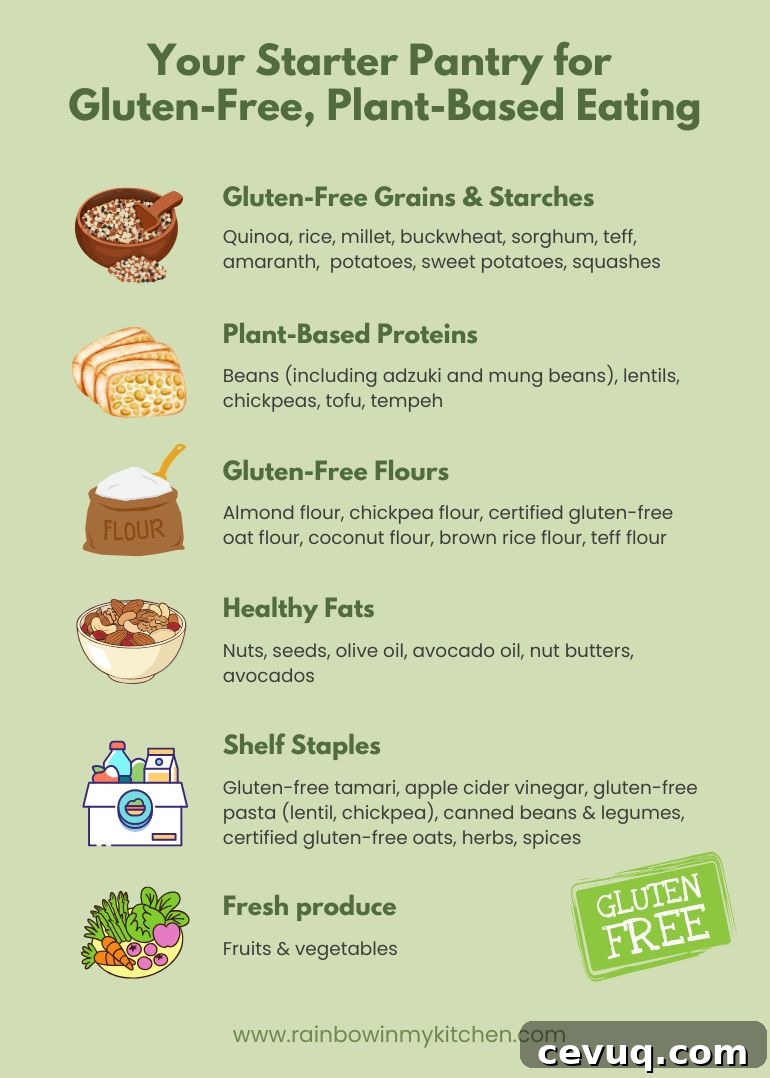
Centering your meals around whole, naturally gluten-free foods simplifies the transition and reduces risk. These foods are nutritious, versatile, and well suited to a plant-based diet:
Proteins
Beans, lentils, tofu, tempeh, nuts, seeds, and pastas made from chickpeas or lentils.
Grains and Starches
Quinoa, rice, millet, amaranth, buckwheat, sorghum, teff, potatoes, sweet potatoes, and winter squash.
Fruits and Vegetables
All fresh produce is naturally gluten-free and rich in vitamins, minerals, and fiber.
Healthy Fats
Avocados, olive oil, coconut oil, and natural nut butters.
When you build meals from these ingredients, cooking becomes creative rather than restrictive. Experimenting with flavors and textures will help you enjoy a satisfying and balanced diet.
Planning Your Gluten-Free, Plant-Based Life
Making gluten-free, plant-based living sustainable requires planning and simple routines. Here are practical habits that help maintain balance and reduce stress:
Start With a Plan
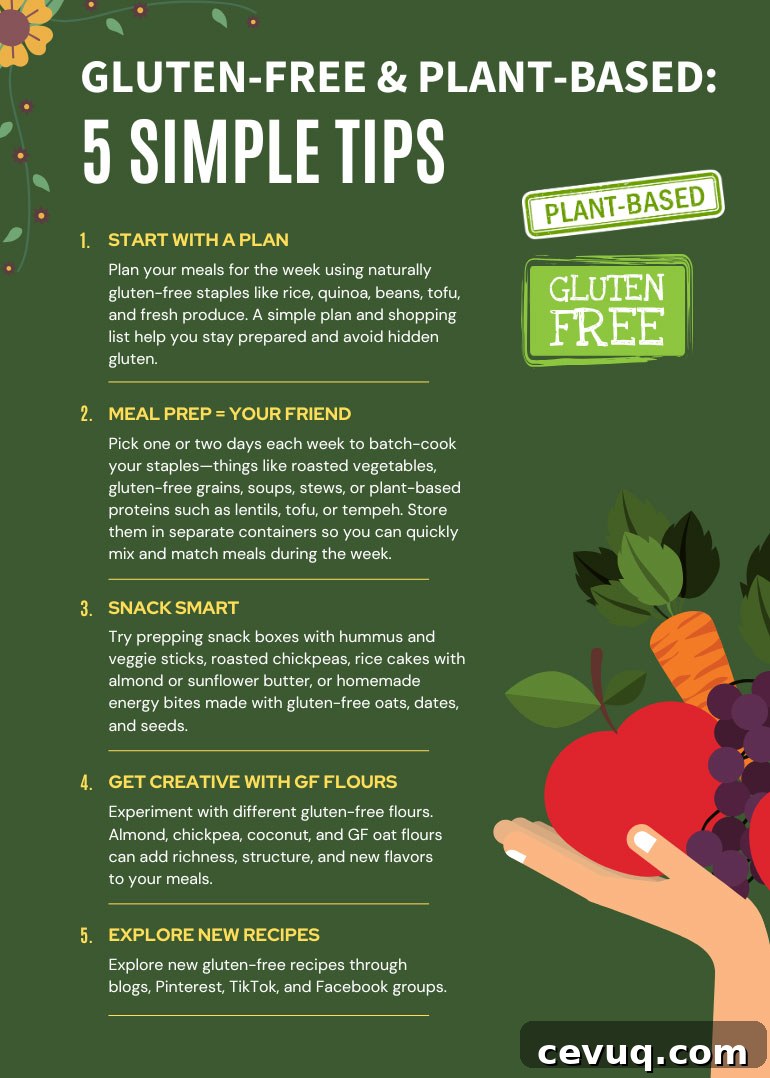
Plan weekly meals using staples like rice, quinoa, beans, tofu, and fresh produce. Create a shopping list so you always have essentials at home, and take a moment to check labels before buying new products. Meal planning saves time, reduces impulse purchases, and helps you avoid accidental gluten exposure.
Meal Prep = Your Friend
Batch-cook grains, roasted vegetables, soups, stews, and plant-based proteins once or twice a week. Store them in separate containers so you can mix and match meals easily. Having prepared, safe options on hand reduces the chance of grabbing something potentially unsafe when hunger strikes.
Snack Smart
Keep gluten-free snacks ready to prevent low-blood-sugar mistakes. Ideas include hummus with vegetables, roasted chickpeas, rice cakes with nut butter, or homemade energy bites made with certified gluten-free oats, dates, and seeds. Prepared snacks help you stay on track and satisfy cravings healthfully.
Get Creative with Gluten-Free Flours
Experimenting with different gluten-free flours expands your cooking options. Almond flour, chickpea flour, coconut flour, and certified gluten-free oat flour each bring unique textures and flavors. Trying blends can yield excellent results for baked goods, pancakes, flatbreads, and savory fritters.
Exploration in the kitchen makes this lifestyle enjoyable and helps you recreate favorite dishes in gluten-free versions.
Explore New Recipes
Look for recipes that spotlight gluten-free grains and legumes: lentil pasta with creamy sauces, chickpea pancakes, quinoa bowls, and oat-based desserts are all satisfying choices. Trying new dishes keeps meals interesting and demonstrates how varied a gluten-free, plant-based diet can be.
Eating Out on a Gluten-Free Diet
Dining out requires extra vigilance but is entirely possible with a bit of preparation. Check menus online and call ahead to ask how a restaurant handles gluten-free requests and cross-contamination. Ask whether they use separate prep areas, utensils, or pans. If staff cannot confirm safety, choose dishes that are clearly gluten-free or skip eating there to protect your health. When you explain that gluten-free preparation is a medical necessity, many restaurants will take the extra care needed.
Building a Support System
Transitioning to a gluten-free lifestyle can feel isolating, so finding a support network helps. Join online communities, follow experienced creators and registered dietitians, or connect with local groups for product tips, recipes, and encouragement. If you have celiac disease or other health concerns, consider working with a dietitian who specializes in gluten-free nutrition to ensure you meet your nutrient needs. Sharing your journey with friends and family can also foster understanding and practical support.
Joining a community reminds you that you’re not navigating this change alone and that others can share helpful strategies and encouragement.
Starting Gluten-Free & Plant-Based: Your Essential Checklist
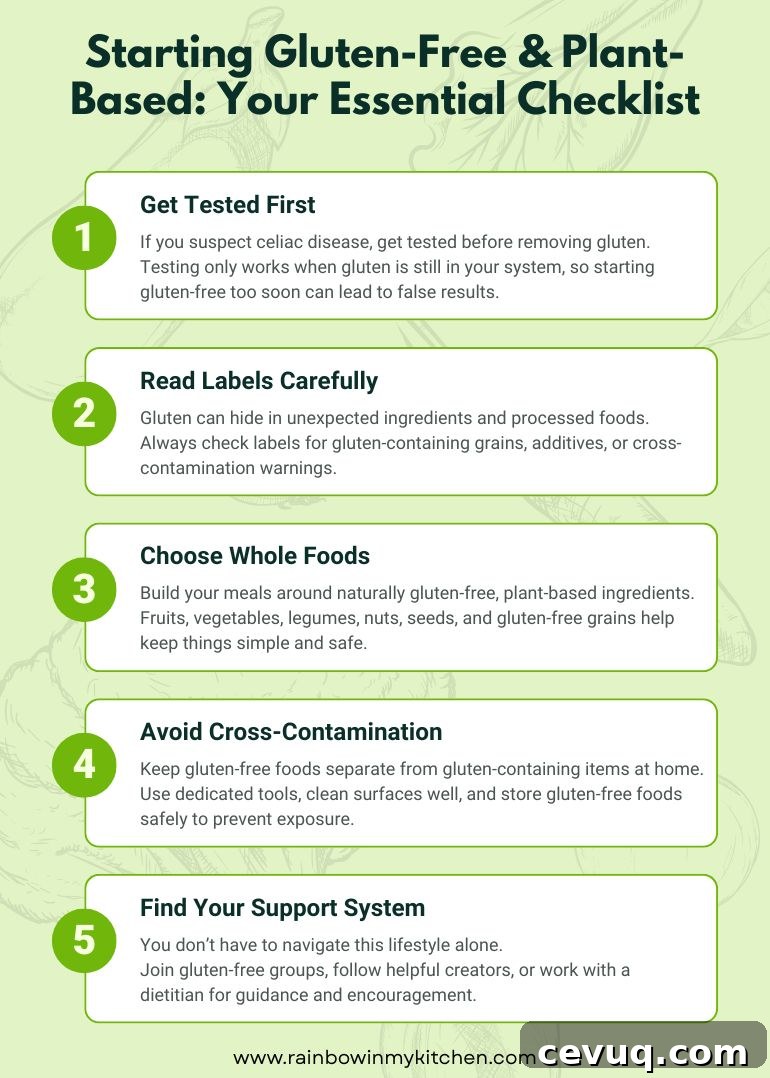
Adopting a gluten-free, plant-based lifestyle takes time and patience, but with the right approach it becomes intuitive and nourishing. Keep these core actions in mind as you begin:
1. Get Tested First
If you suspect celiac disease, complete testing before removing gluten so results remain accurate.
2. Read Labels Carefully
Look for gluten-containing grains, additives, and precautionary statements. When in doubt, contact manufacturers.
3. Choose Whole Foods
Base meals on naturally gluten-free, plant-based ingredients—vegetables, legumes, nuts, seeds, and gluten-free grains—to simplify eating and maintain nutrition.
4. Avoid Cross-Contamination
Use dedicated utensils and clean surfaces to prevent accidental exposure. Store gluten-free foods separately.
5. Find Your Support System
Connect with online groups, professionals, and friends who understand the lifestyle and can help with tips, recipes, and encouragement.
Take it step by step. Over time you’ll find favorite recipes, discover new ingredients, and feel confident managing a gluten-free, plant-based life that supports your health and well-being.
Are you starting your gluten-free journey? What’s been your biggest challenge? Share your story below—I’d love to hear it.