
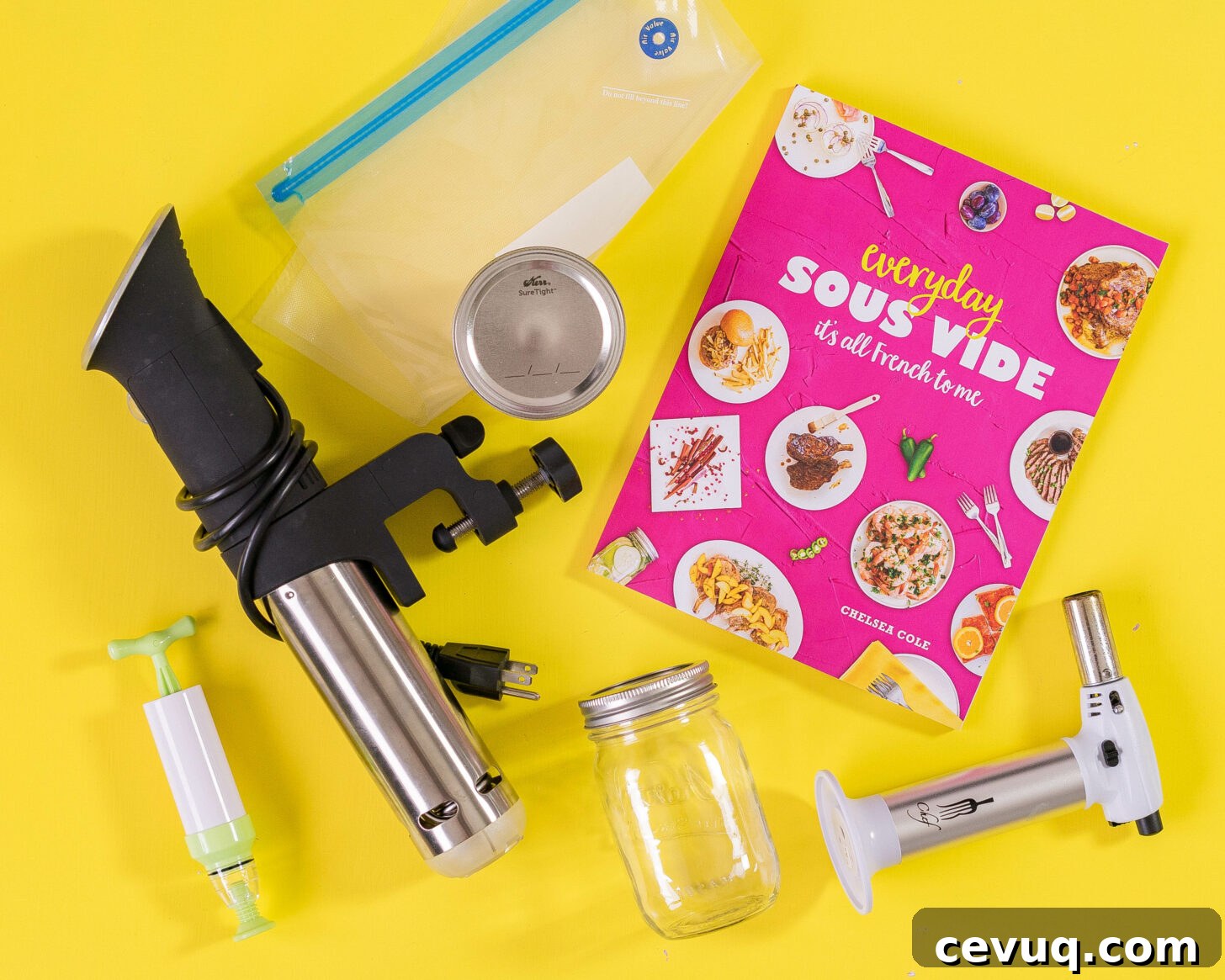
Here are my top tools, accessories, and resources for sous vide cooking to help you become confident with precision cooking.
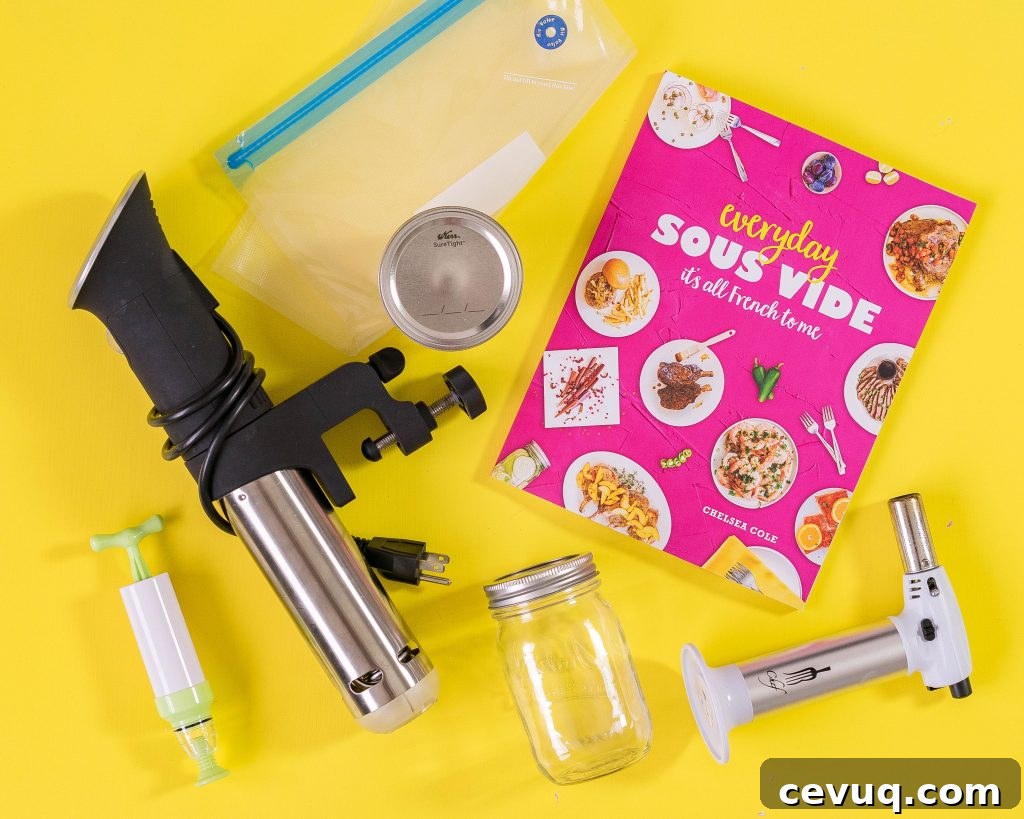
Some links may be affiliate links. This does not change the price you pay but may provide a small commission. I only recommend products I’ve used or trust.
The single essential item for sous vide is an immersion circulator (a sous vide machine). You can get started with just that, though a few additional tools make the process easier and more consistent.
Below I’ve grouped my favorite products and accessories by importance: must-haves, nice-to-haves, and optional splurges. I’ve removed repetition and focused on practical recommendations to help you choose what’s right for your kitchen.
Must Have Sous Vide Equipment
Sous Vide Machines
There are three common styles of sous vide equipment:
- Water ovens
- Immersion circulators
- All-in-one multi-cookers
Water ovens combine container and circulator in one unit. They can be convenient, but they tend to be bulky, expensive, and hard to store. Unless you have dedicated space and prefer an integrated unit, most home cooks do better with an immersion circulator.
Immersion circulators are compact, affordable, and easy to store. They clip to a pot or container and circulate water to maintain precise temperatures. I use immersion circulators for almost every cook because they’re reliable and portable. You don’t need a “professional” model for most home cooking; consumer models handle large cooks well without the price or size of prosumer gear.
Reliable immersion circulators to consider include:
- Vesta Precision Imersa Elite
- Anova Culinary Nano
- Breville Joule
- PolyScience Creative Immersion Circulator
Immersion circulators are my preferred sous vide machines for home cooks.
All-in-one pressure cooker / multi-cookers may advertise a sous vide mode, but they generally do not circulate water properly. Because sous vide relies on even, stable temperatures throughout the bath, multi-cookers are not ideal for precision cooking.
Nice to Have Sous Vide Equipment
Vacuum Sealers
Removing air from bags improves heat transfer and prevents floating. There are several ways to remove air; if you’re unsure, read a guide on air removal methods before choosing bags or a sealer.
Stand-alone vacuum sealers are the simplest and most consistent way to seal food for sous vide. Compact models without unnecessary extras are often preferable if counter or storage space is limited.
Recommended vacuum sealers include:
- Vesta Vac n Seal
- FoodSaver Vacuum Sealer
Handheld Vacuum Sealers
Handheld or portable vacuum devices are useful for delicate foods and allow greater control over suction. They’re helpful for delicate proteins or items that can be damaged by strong vacuum pressure.
Water Bath Container
When starting out, a large stockpot works fine for sous vide. Long term, consider a dedicated, heat-safe container that you can reserve for sous vide cooks. Clear containers make monitoring easy during long cooks.
Commercial food storage containers (Cambro-style) are popular choices and are common at restaurant supply stores. A clear plastic container with a lid is convenient—silicone lids are ideal because they adapt better around an immersion circulator. It’s fine if the lid doesn’t seal perfectly around the circulator; you can adjust it as needed.
Jars
Jars are excellent for desserts, egg bites, infusions, pickles, and other items that benefit from an upright container. Standard canning jars work, but jars like Weck are useful because they rely less on metal parts that can rust and they make lid management simpler.
When cooking in jars, secure lids only fingertip-tight to allow air to escape during the cook. This helps avoid pressure issues while still keeping contents contained.
Cast Iron Skillets
After sous viding, finishing proteins with a hot sear develops flavor and texture. A cast iron skillet is a reliable way to get a strong, even sear. Preheat the pan, use a high smoke-point fat such as ghee, and sear on high heat for a crisp, flavorful crust.
You don’t need to overspend on cast iron—buy a quality pan that fits your budget. Enameled or specialty cast iron brands are nice, but a basic well-seasoned skillet will perform very well.
Very Nice to Have Sous Vide Equipment
These items are optional but can expand what you can do or make things more convenient.
Chamber Vacuum Sealers
Chamber vacuum sealers are more expensive but can vacuum-seal liquids and marinades without the bag collapse issues regular sealers face. They’re a great tool for frequent cooks who want maximum flexibility, but they represent a significant investment.
Grills and Smokers
A very hot grill or cast iron searing surface is useful for finishing sous vide proteins. If you have space, a grill that reaches high temperatures is ideal for quick, intense searing. Smokers are great for adding smoked flavor before or after sous viding; compact models can work well if space is limited.
Miscellaneous Accessories
Some smaller accessories add convenience and help get better results:
- Cast iron grill press — useful for pressing proteins for a fast, even sear
- Culinary torch — ideal for caramelizing sugar on desserts like crème brûlée
- Silicone-coated sous vide magnets — hold bags submerged by clamping them between inside and outside magnets without rusting
Food and Ingredients
- Higher-quality meat yields better flavor and texture. If you can source grass-fed or dry-aged cuts, they often elevate sous vide results.
- Ghee or other high smoke-point fats are excellent for finishing sears; they allow very high pan temperatures without burning.
- Pre-made spice blends save time and consistently enhance seasoning—choose blends you enjoy and experiment.
Other Educational Sources
- Structured courses and guides that combine recipes with technique and science are helpful for learning the why behind sous vide methods.
- Professional associations and online communities offer demonstrations, events, and expert tips that can deepen your knowledge.
- Cookbooks and recipe collections focused on sous vide are great for inspiration and practical timing guides.
- Explore recipe archives that focus on sous vide techniques to practice and refine your skills.
With a reliable immersion circulator, a sensible container, and a few finishing tools, you’ll be well on your way to consistent, delicious sous vide meals. Start simple, learn a few core times and temperatures, and add tools as you find they help your routine.