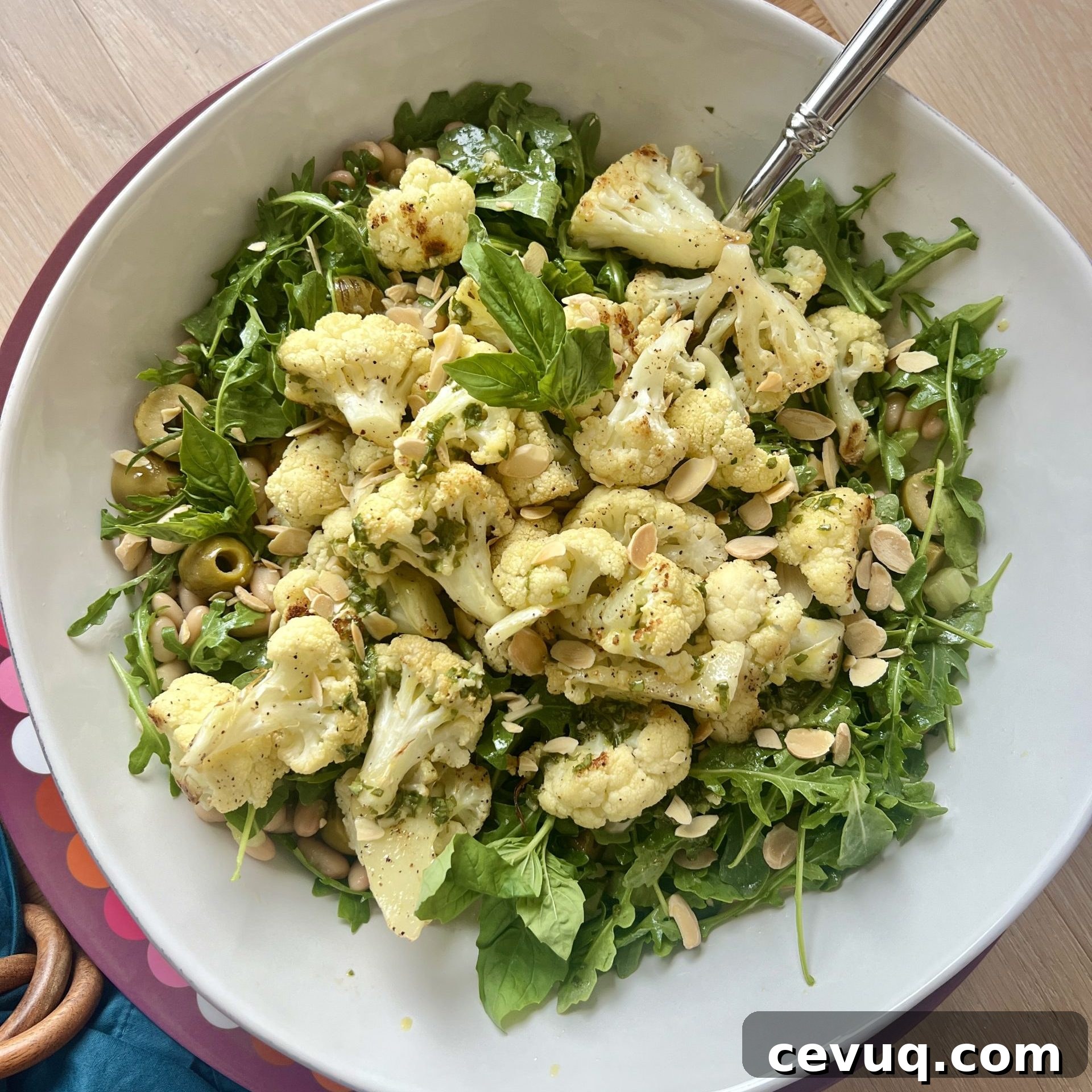
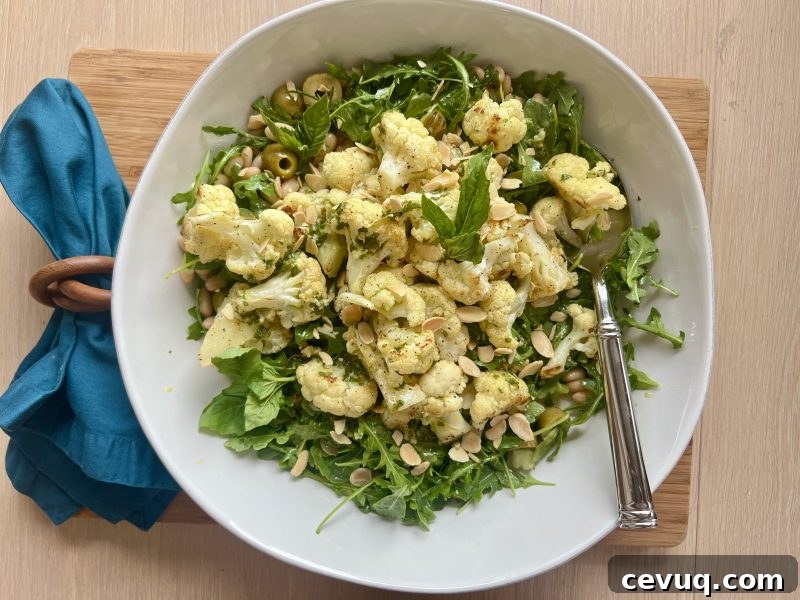
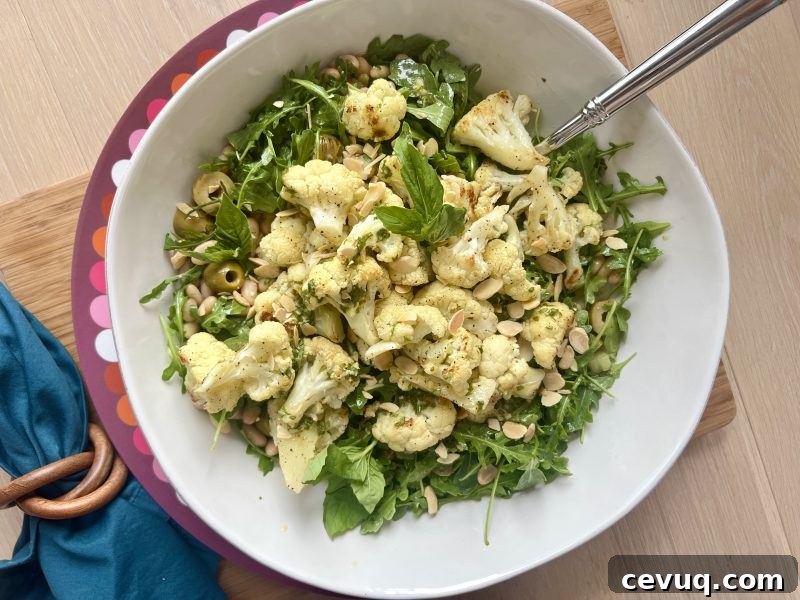
This flavorful roasted cauliflower salad combines peppery arugula, creamy white beans, crisp celery, briny olives, crunchy almonds, and a bright lemon-basil vinaigrette. It’s a satisfying main-course salad or a hearty side that pairs well with grilled fish, shrimp, chicken, beef, hard-boiled eggs, or crumbled feta. Each serving delivers valuable nutrients—vitamin E, choline, magnesium, lutein and zeaxanthin—that support brain health, plus about 6 grams of fiber to support digestive health.
A FEW WORDS ON FIBER:
A fiber-rich eating pattern supports overall health and helps prevent or ease many problems, from heart disease and some cancers to bothersome constipation. Yet most American adults consume only about 10 to 15 grams of fiber per day. Current dietary guidance recommends around 25 grams daily for women and 38 grams for men.
Dietary fiber—also called roughage or bulk—refers to parts of plant foods that the body can’t digest. Fruits, vegetables, whole grains, legumes, nuts, and seeds all provide fiber. Fiber has a range of benefits: it enhances satiety and helps regulate body weight, supports steady blood sugar levels and lowers the risk of type 2 diabetes, reduces cardiovascular disease risk, promotes regular digestion, and feeds the beneficial bacteria that make up the gut microbiome. A well-nourished microbiome supports immune function and can reduce chronic inflammation.
If you’re aiming to reach fiber goals—especially the 25-gram target for many women—focus on adding whole-food sources such as beans, lentils, whole grains, nuts, seeds, fruits, and vegetables. Below are some fiber-rich options and the approximate fiber they provide to help you plan balanced meals.
Fiber in Foods
- ¼ cup pumpkin seeds: 6 grams
- 1 tablespoon chia seeds: 5 grams
- 1 cup raspberries: 8 grams
- 1 cup blueberries: 4 grams
- 1 medium apple: 4.5 grams
- ½ cup cooked lentils: 8 grams
- 1 cup edamame (shelled): 8 grams
- ½ cup canned cannellini beans: 8 grams
- 1 cup green peas: 7 grams
- 1 cup walnuts: 5 grams
- 1/3 medium avocado: 4 grams
- 1 cup collard greens: 4 grams
- 1 cup cauliflower: 2.2 grams
- 1 cup Raisin Bran: 7 grams
A FEW WORDS ON DIET AND BRAIN HEALTH:
Choosing foods that support brain health matters. One eating pattern that emphasizes brain-supporting nutrients is the MIND diet, which blends aspects of the Mediterranean and DASH diets. It focuses on foods rich in vitamin E, antioxidants, and omega-3s—nutrients linked to cognitive resilience. Research suggests that following the MIND pattern can lower the risk of Alzheimer’s disease and slow brain aging when practiced consistently.
The MIND approach is not a cure-all, but adopting its principles—daily vegetables, berries, whole grains, nuts, beans, fish, and moderate poultry—can be a meaningful part of a brain-healthy lifestyle.

Roasted Cauliflower Salad with Arugula, White Beans, and Celery
Serve as a main-meal salad or as a substantial side. This recipe yields 4 to 6 servings. For an extra gram of fiber per serving, add 3/4 cup shelled edamame.
Pin Recipe
Ingredients
- 1 medium cauliflower — about 2 pounds, cut into 2-inch florets (about 7 cups)
- 2 tablespoons extra virgin olive oil
- Generous ¼ teaspoon kosher salt
- ¼ teaspoon black pepper
- 4 cups arugula
- One 15-ounce can white beans, drained and rinsed
- ½ cup thinly sliced celery
- ½ cup pitted green olives, about 10, halved
- 2 to 3 tablespoons toasted sliced almonds
- Basil leaves for garnish
Dressing
- 4 tablespoons extra virgin olive oil
- 2 tablespoons lemon juice
- 2 tablespoons finely chopped fresh basil leaves
- 1 teaspoon Dijon mustard
- 1 teaspoon honey
- 1 small garlic clove, minced
- Kosher salt and black pepper to taste
Method
- Position a rack in the center of the oven and preheat to 425°F (220°C). Line a rimmed baking sheet with parchment paper.
- In a large bowl, toss the cauliflower florets with 2 tablespoons of olive oil, the kosher salt, and black pepper. Spread the florets in a single layer on the prepared baking sheet. Roast, turning once, until golden and tender, about 20 to 24 minutes.
- While the cauliflower roasts, make the dressing. In a jar with a tight-fitting lid, combine 4 tablespoons olive oil, 2 tablespoons lemon juice, chopped basil, Dijon mustard, honey, and the minced garlic. Shake well and season with salt and pepper to taste.
- To assemble, arrange the arugula, white beans, sliced celery, and halved olives in a large shallow bowl. Drizzle half the dressing over the salad and toss gently. Add the warm roasted cauliflower and the remaining dressing, then toss lightly to combine.
- Top the salad with toasted sliced almonds and garnish with fresh basil leaves. Serve immediately, or refrigerate the dressing separately and toss just before serving for the freshest texture.
Notes
Each serving provides approximately 6 grams of fiber. When increasing fiber in your diet, do it gradually to allow your body and gut microbiome time to adjust and to reduce the chance of digestive discomfort.
Tried this recipe?
Let us know how it turned out!
This roasted cauliflower salad is bright, texturally interesting, and nutrient dense—an excellent way to add more fiber, plant-based protein, and brain-supporting nutrients to your meals. It works well for weeknight dinners, weekend gatherings, and makes great leftovers for lunches.