
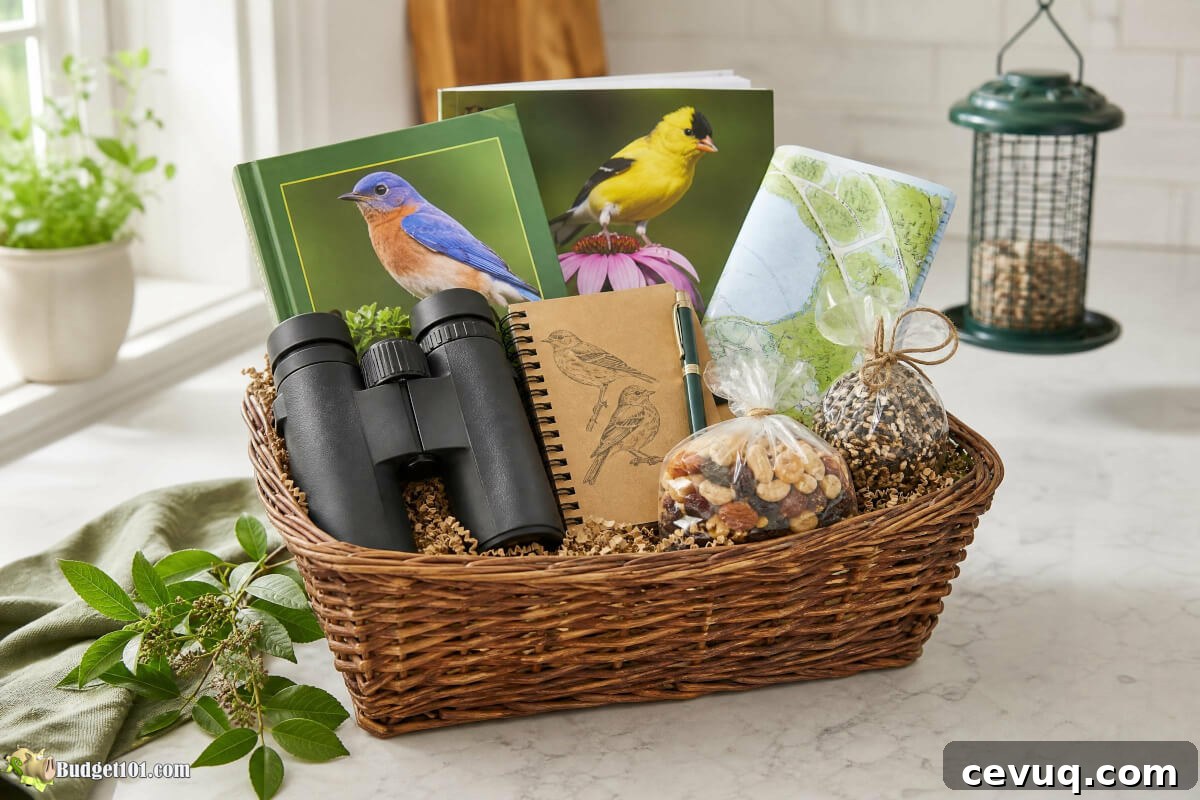
A bird-watching gift is most appreciated when it’s genuinely useful in the field instead of just being a pretty package. This guide covers the essentials for spotting, identifying, and recording birds, then suggests a few practical extras for trail outings and backyard observation. The result feels thoughtful without becoming clutter—an easy, useful present for any bird lover.
Assembling the set yourself usually gives better value than many prepackaged kits. Ready-made bundles that include binoculars, a guide, and a journal often cost $180 or more, while smaller themed boxes can still run around $45 but may lack the practical field basics you can choose yourself. Making your own kit means you can scale to your budget and swap items—regional guides, a preferred notebook, or higher-quality binoculars—without paying for unnecessary filler.
You only need one distinctive container and a handful of core items: binoculars, a field or nature guide, a logbook, a pen, local maps, trail mix, and bird treats to hang outside. Before you start assembling, test the container to ensure taller items fit upright so the finished gift looks intentional and well arranged rather than crammed.
- 🧺 What to Put in a Bird-Watching Gift
- 🎁 How to Assemble the Gift
- 🛠️ Customization Ideas
- ⚠️ Tips That Make It Better
- 🛍️ Need Help Finding Everything?
- 📌 Pin It
- ❓ FAQ
What to Put in a Bird-Watching Gift
Pack a meaningful collection of practical items into a single container. Start with the essentials:
- Binoculars — the most field-ready item in the kit
- A field guide — regional bird guides work best; wildlife or wildflower guides suit broader outdoor interest
- A logbook and a reliable pen for recording sightings
- Local maps to encourage immediate outings
- Sealed trail mix or another easy snack
- Hanging bird treats for backyard enjoyment
Begin by choosing binoculars and a guide, since those determine the size of your container. If you pick the basket first and then try to fit binoculars or a large guide inside, the finished gift can look awkward or feel cramped even when the contents are useful.
The logbook and pen turn this from a decorative basket into a tool the recipient will actually use over time. Including maps gives the gift an instant purpose: a nearby wildlife refuge, state park, or favorite trail the recipient can visit right away instead of letting items remain unopened.
Back to Menu
How to Assemble the Gift
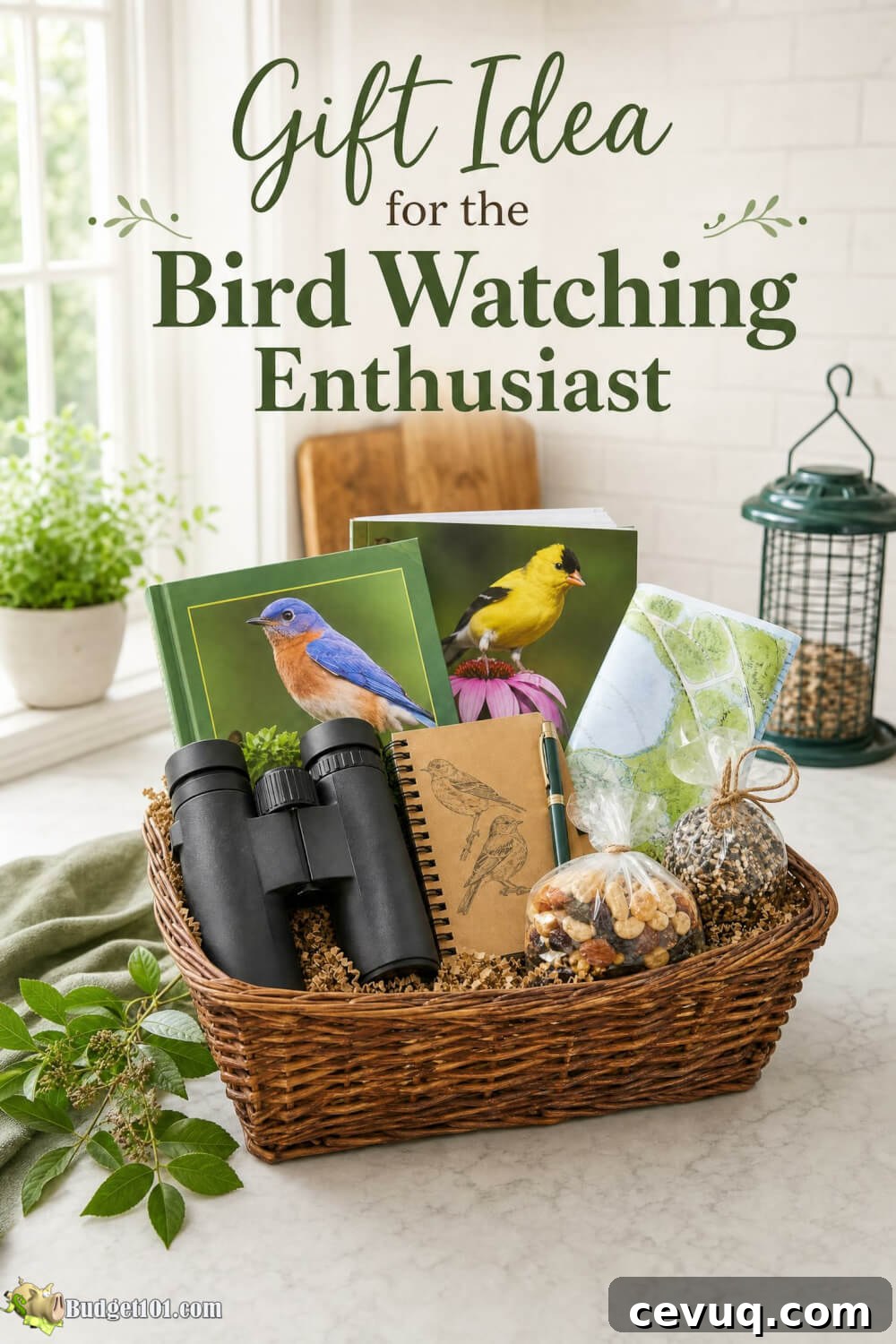
- Pick a container with a firm base and enough height for your guide and binoculars.
- Place the largest items in the back first—usually the guide and binoculars—to give the arrangement structure.
- Position the logbook and pen so they’re visible and easy to remove.
- Fold or roll maps neatly and slide them in without bending the guide’s spine.
- Add trail mix and bird treats last to fill gaps and balance the layout.
Pay attention to food packaging: sealed snacks work best. Keep bird treats and trail mix away from paper goods to avoid transferring oils, dust, or residues that could stain guide covers, notebooks, or maps. If you plan to wrap the basket, leave enough room so cellophane or decorative picks don’t press on binoculars—the optics should stay protected.
Back to Menu
Customization Ideas
You can tailor the kit to the recipient’s interests without changing the core concept.
- For beginners: choose a simple regional guide and an easy-to-use logbook.
- For hikers: pick a compact guide and foldable maps that fit in a daypack.
- For backyard birders: emphasize hanging treats and pair them with a wildlife or wildflower guide.
- For journalers: upgrade to a high-quality notebook and a smooth-writing pen.
- For special occasions: finish with tasteful wrapping or a handwritten note to personalize the gift.
Think about how the person likes to watch birds. A backyard observer may prefer a guide that covers multiple backyard species or seasonal plants, while an avid lister might value a detailed field guide and a notebook formatted for dates, locations, and notes.
Back to Menu
Tips That Make It Better
Choose a container with a flat base and some structure so heavier items remain upright. Soft gift bags are tempting, but they allow binoculars to tip and drag lighter items with them. A sturdy box, crate, or basket keeps everything tidy and easy to carry.
Keep paper goods separated from moisture-prone or oily items. Suet-based treats or unsealed snacks can soften packaging in a warm car and leave residue on books and maps, so seal snacks and position them away from paper.
If you include hanging treats, add a short note about regular feeder cleaning to reduce mold and disease risk. That small reminder makes the gift more responsible and useful when the recipient places feeders outside.
Finally, focus on usefulness over quantity. A small set of well-chosen items that support real outings or backyard sessions is far more valuable than a larger basket filled with decorative but impractical extras.
Back to Menu
🛍️ Need Help Finding Everything?
To simplify shopping, look for these items at general outdoor retailers, local nature stores, or online marketplaces: binoculars, field guides, logbooks, compact maps, sealed trail mix packs, bird treats designed for hanging, and unique containers like small crates, baskets, or totes. Choose sources you trust for quality and check regional guide recommendations if you want something tailored to local species.
Back to Menu
📌 Love this Gift Idea for the Bird Watching Enthusiast? Pin it!
Would your bird watcher prefer a trail-ready kit with compact gear and maps, or a backyard setup focused on feeders and field guides?
Frequently Asked Questions about Gift Idea for the Bird Watching Enthusiast
Include binoculars, a regional field or nature guide, a logbook and pen, local maps, sealed trail mix, and a packaged hanging bird treat. These items support spotting, identifying, recording sightings, and enjoying time outdoors.
No, but binoculars make the kit instantly useful for fieldwork. If the recipient already owns a pair, allocate the space to a better guide, an upgraded notebook, or other practical gear.
It depends on the recipient. A bird guide is ideal for identification-focused watchers, while a wildlife or wildflower guide suits someone who enjoys broader nature observation.
Yes. Focus on a few practical items: an affordable pair of binoculars, a single guide, a simple notebook and pen, a map, trail mix, and one packaged bird treat. Quality and usefulness matter more than quantity.
Choose a container with a firm base and enough height for guides and binoculars. Structured baskets, small crates, boxes, or sturdy totes keep contents upright and presentable—better than floppy bags.
Yes. Sealed trail mix is a practical addition for outdoor outings. Keep snacks sealed and separate from books and maps to prevent oil or crumbs from damaging paper items.
They can be, especially for backyard birders. Choose well-packaged hanging treats and position them so they don’t press against notebooks or guides during transport.
Absolutely. Beginners benefit most from a concise kit of essentials. Pick a simple guide, avoid overloading the container, and include items that encourage a first outing or backyard observation.