
Ingredients
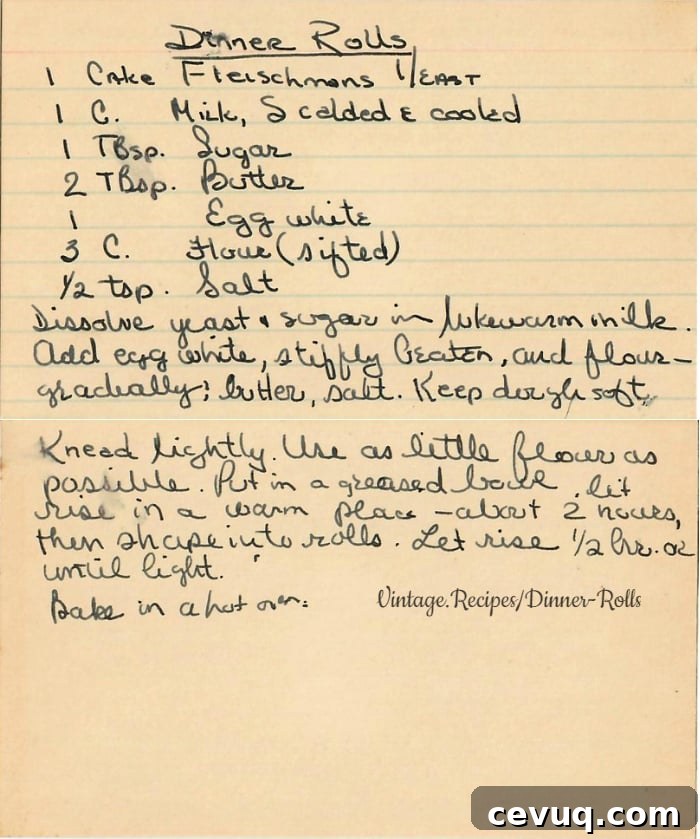
1 cake Fleischmann’s yeast
1 cup milk, scalded and cooled
1 tablespoon sugar
2 tablespoons butter
1 egg white
3 cups all-purpose flour, sifted
1/2 teaspoon salt
Method
This classic homemade yeast roll recipe yields light, tender rolls with a delicate crumb. Follow these steps for reliable results and a soft, golden finish.
1. Activate the yeast: Crumble the cake of Fleischmann’s yeast into a small bowl. Pour the lukewarm milk over the yeast and add the tablespoon of sugar. Stir gently until the yeast is dissolved and let it sit for a few minutes until it begins to foam slightly. This indicates the yeast is active.
2. Prepare the dough: In a large mixing bowl, combine the sifted flour and salt. Make a well in the center and add the foamy yeast mixture. Add the egg white, beaten until stiff, and the softened butter. Mix gradually, incorporating the flour until a soft dough forms. The dough should be soft but manageable; avoid adding more flour than necessary to keep the rolls tender.
3. Knead lightly: Turn the dough out onto a lightly floured surface and knead lightly just until the dough is smooth and elastic, about 4 to 6 minutes. Over-kneading can make the rolls dense, so handle the dough gently.
4. First rise: Place the dough in a greased bowl, turning it once to coat the top. Cover the bowl with a clean kitchen towel or plastic wrap and let it rise in a warm, draft-free place until doubled in size, about 2 hours. The exact time will vary with room temperature; the dough is ready when it has visibly expanded and feels pillowy.
5. Shape the rolls: Punch the dough down gently to release excess air. Divide the dough into equal portions and shape each portion into a roll. Arrange the rolls on a greased or parchment-lined baking sheet or in a baking pan, leaving space between them so they can expand during the second rise.
6. Second rise: Cover the shaped rolls and let them rise again in a warm place until light and puffy, about 30 minutes. They should feel soft and spring back slowly when touched.
7. Bake: Preheat the oven to 400°F (approximately 200°C). Bake the rolls in the preheated oven until they are golden brown on top and sound hollow when tapped, about 12 to 18 minutes depending on size. Remove from the oven and transfer to a wire rack to cool slightly before serving.
Tips for Best Results
– Milk temperature: Use lukewarm milk for activating the yeast. It should feel warm to the touch but not hot, as excessive heat can kill the yeast.
– Butter: For a richer flavor, use room-temperature butter so it incorporates evenly into the dough.
– Egg white: Beating the egg white until stiff and folding it into the dough contributes to a lighter texture. If you prefer a richer roll, you can substitute a whole egg instead of the white.
– Minimal flour: Use as little extra flour as necessary when kneading to keep the rolls soft. A slightly sticky dough generally results in a more tender crumb.
Variations and Serving Suggestions
– Sweet option: Brush warm rolls with melted butter and sprinkle a little sugar or cinnamon for a sweet treat.
– Savory option: Add a pinch of garlic powder or herbs to the dough for savory dinner rolls that pair well with soups and roasts.
– Serving: Serve rolls warm with butter, jam, or honey. They also make excellent sandwich bases when split and filled.
Storage
Store cooled rolls in an airtight container at room temperature for up to two days. For longer storage, freeze cooled rolls in a sealed freezer bag for up to one month. Reheat from frozen in a moderate oven until warmed through.