
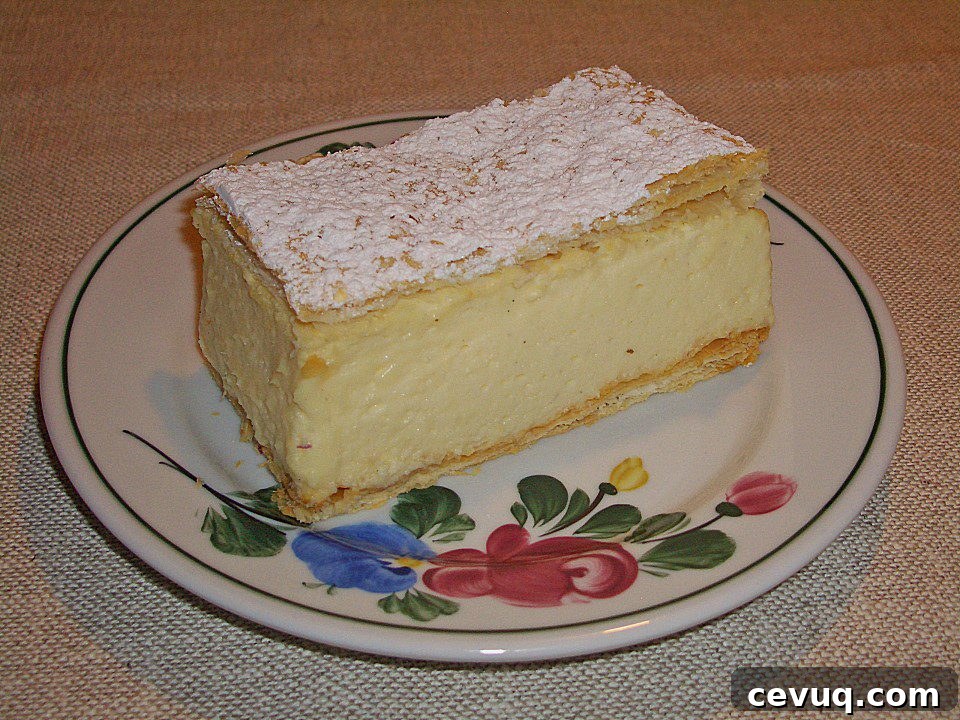
The classic Cremeschnitten recipe uses filo (phyllo) pastry filled with a smooth vanilla cream. These delicate, creamy slices are a beloved German bakery specialty and can be found in bakeries across Germany. The pastry layers provide a crisp, flaky contrast to the rich, velvety filling, making this dessert a favorite for special occasions and everyday indulgence.
Ready-made filo dough is convenient and widely available. Brands sold at major grocery stores are generally suitable, but for best results use filo specifically labeled for pastries. The filling in this recipe relies on a firm vanilla pudding base strengthened with gelatin, then lightened by folding in whipped cream to create a stable yet airy texture.
If you prefer to skip filo dough, there is an alternative version that uses a different base. This filo-based Cremeschnitten recipe is better suited to experienced bakers due to the delicacy of the pastry sheets and the care required when assembling the layers. Beginners may wish to try the non-filo version first. Happy baking!
Ingredients for Cremeschnitten
2 packages filo dough for pastries
800 ml milk
200 g sugar
1–2 tsp pure liquid vanilla or 1 package vanilla sugar
2 packages vanilla pudding mix (or prepare homemade vanilla pudding)
7 sheets unflavored, transparent gelatin or an equivalent amount of gelatin powder (for example, one tablespoon powdered gelatin per sheet as a guideline)
500 ml heavy cream (double cream)
4 tbsp dark rum or rum flavoring (optional)
A rectangular cake ring or similarly shaped baking form
German Baking Mix for a Streusel Crumble Cake (brand examples may be available in specialty stores)
Baking Instructions for Cremeschnitten
1. Preheat the oven. Unroll a sheet of filo dough and place it on a baking tray. Prick the dough lightly with a fork in several places to prevent large air pockets while baking.
2. Bake the filo at a moderate temperature until it becomes light golden brown and crisp. Repeat with the second sheet of filo dough. Allow both baked sheets to cool completely on a wire rack.
Filling
1. Prepare the vanilla pudding according to the package instructions or make a homemade vanilla pudding and cook until thickened.
2. Soak the gelatin sheets in cold water until they soften, then gently squeeze out excess water and dissolve the gelatin into the hot pudding, or sprinkle powdered gelatin over a small amount of cold water, let bloom, and then stir into the hot pudding until fully dissolved.
3. Stir in the rum (or rum flavor) and vanilla extract to the warm pudding. Place the bowl in an ice bath and stir occasionally until the pudding cools to lukewarm or slightly cooler; it should thicken but remain pourable.
4. Whip the heavy cream to stiff peaks.
5. Once the pudding is sufficiently set by the gelatin, fold the whipped cream gently into the pudding to create a light, uniform cream.
6. Position a rectangular cake ring around one baked filo sheet set on a suitable base (a shallow baking tray or a flat board works if it fits inside the ring). If needed, trim the filo to fit neatly inside the ring.
7. Spread the vanilla cream evenly over the filo base inside the ring.
8. Trim the second baked filo sheet into rectangles that match the dimensions of the cake ring top (for example, divide into 14 even rectangles or to suit your preferred serving size). Arrange these rectangles over the cream to form the top layer.
9. Refrigerate the assembled cake for several hours or overnight until the cream is fully set and the cake holds its shape. This chilling time allows the gelatin to stabilize the cream so the cake can be removed from the ring cleanly.
10. Before serving, dust the top lightly with powdered sugar and slice with a sharp knife into individual portions. Chilling the knife briefly in hot water and wiping it dry between cuts will help achieve clean slices.
How to Make Filo Dough (Overview)
Homemade filo is made by combining flour, water and a small amount of oil, then repeatedly rolling and stretching the dough into extremely thin sheets. The process requires patience and practice; many home bakers prefer store-bought filo for convenience and consistency.
Photo Source: Chefkoch (reference to original photo source)