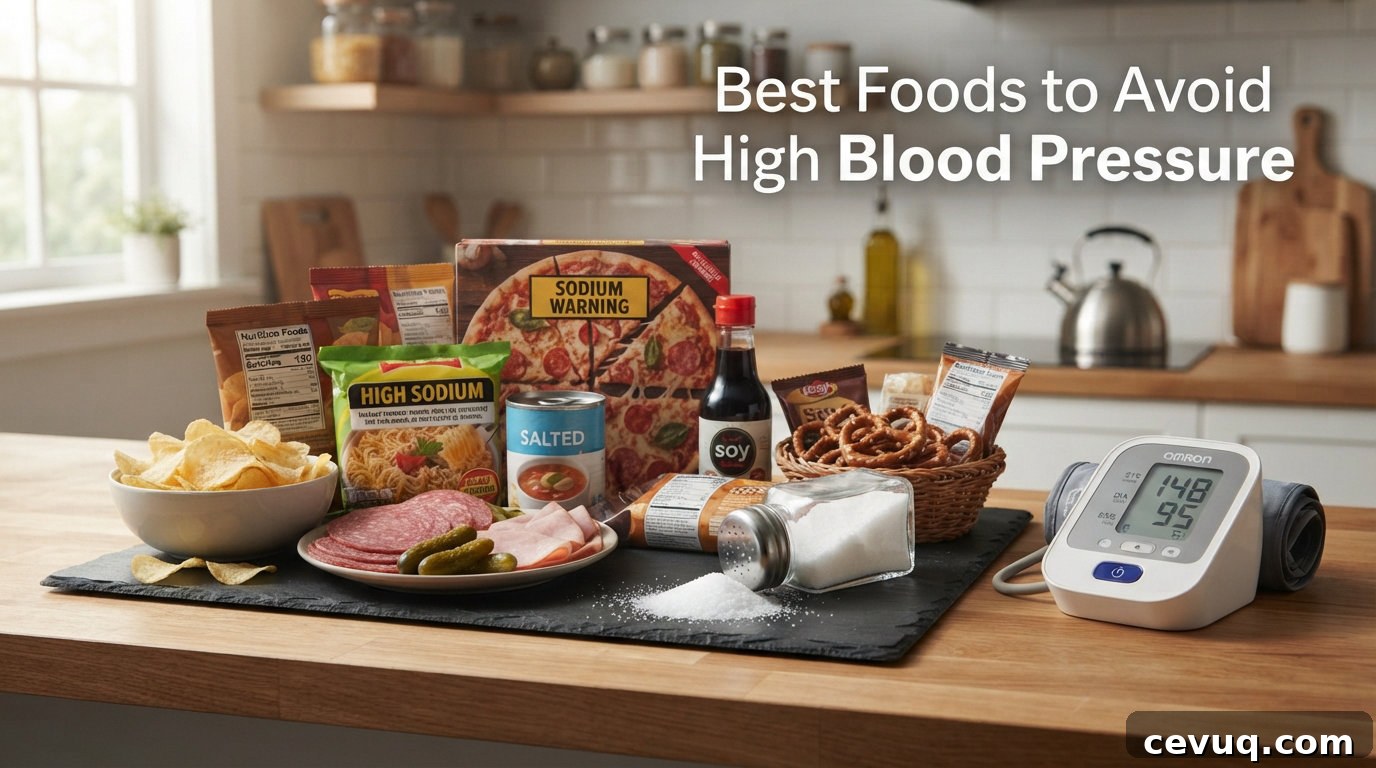
Managing blood pressure doesn’t require giving up every favorite food. The key is to limit items that add large amounts of sodium, saturated fat, added sugars, or alcohol while providing little nutritional value. For most people, “limit” is a more realistic and sustainable approach than “never.”
The DASH (Dietary Approaches to Stop Hypertension) eating plan emphasizes vegetables, fruit, whole grains, low-fat dairy, fish, poultry, beans, nuts, and vegetable oils, while reducing sodium, saturated fat, and sugary drinks. Your clinician may recommend a specific sodium or fluid target, particularly if you have kidney disease, heart failure, diabetes, or take medicines that affect fluid balance.
Why Sodium Matters for High Blood Pressure
Excess sodium can raise blood pressure in many people. DASH commonly suggests a limit near 2,300 milligrams per day, and lowering to about 1,500 milligrams daily may reduce blood pressure further for some. Individual needs vary, so follow the guidance from your health-care team.
Most dietary sodium comes from packaged, prepared, and restaurant foods rather than the saltshaker. Read the Nutrition Facts label to check sodium per serving, confirm how many servings you actually eat, and compare brands. Be aware that “reduced sodium” only means less than the original product and may still be relatively high.
20 Foods to Avoid or Limit With High Blood Pressure
1. Deli Meat and Cold Cuts
Ham, salami, bologna, turkey slices, and many deli meats are often cured or seasoned with substantial sodium. A sandwich can combine sodium from meat, bread, cheese, and condiments. Favor freshly cooked chicken, turkey, tuna, egg, or no-salt-added beans, and compare labels when buying deli meats.
2. Bacon, Sausage, and Hot Dogs
Processed meats tend to be high in both sodium and saturated fat. Eat them only occasionally and look for lower-sodium versions. “Uncured” does not necessarily mean low sodium. Eggs, leftover roasted chicken, or a bean-and-vegetable breakfast are good alternatives.
3. Canned Soup and Packaged Broth
A bowl of regular canned soup can use a large portion of the day’s sodium allowance. Opt for low-sodium or no-salt-added soups and broths, and boost flavor with herbs, garlic, pepper, lemon, or vinegar. Check serving sizes because many cans contain more than one serving.
4. Instant Noodles
The seasoning packet is often the biggest sodium source. If you use instant noodles, add only part of the packet, drain the cooking liquid, and include vegetables plus egg, tofu, or chicken. Whole-grain noodles with a homemade sauce give you more control over sodium.
5. Frozen Dinners
Frozen pizzas, pasta dishes, pot pies, and complete microwave meals vary widely in sodium content. Compare labels rather than assuming “light” or “low-calorie” means low sodium. Add plain vegetables to a frozen meal, but know this does not remove sodium already in the entrée.
6. Pizza
Pizza combines several sodium sources: dough, sauce, cheese, and processed toppings. Choose a smaller portion, add vegetables, skip processed meats, or make homemade pizza with lower-sodium sauce and a modest amount of cheese.
7. Fast Food and Takeout
Burgers, fried chicken, tacos, curries, and many noodle dishes from restaurants can contain more sodium than expected. Review nutrition information when available, request sauces on the side, choose grilled items, and avoid automatically adding extra salt.
8. Salty Chips, Crackers, and Pretzels
These snacks are easy to overeat. Try unsalted nuts, fruit with plain yogurt, air-popped popcorn seasoned with herbs, or vegetables with a lower-sodium dip. If you choose chips or crackers, portion them into a small bowl and compare sodium across brands.
9. Soy Sauce, Teriyaki Sauce, and Bottled Stir-Fry Sauce
A small amount of regular soy sauce adds a lot of sodium. Use reduced-sodium varieties sparingly, dilute them with citrus or rice vinegar, or flavor food with ginger, garlic, scallions, or chili. Remember that “reduced sodium” is not salt-free.
10. Ketchup, Barbecue Sauce, and Bottled Dressing
Condiments can quietly add sodium and sugar, especially when poured without measuring. Serve them on the side or make a simple dressing with olive oil, vinegar, mustard, herbs, and lemon. Compare labels because recipes differ widely.
11. Pickles, Olives, and Pickled Vegetables
Traditional pickling uses a lot of salt. Enjoy small portions for flavor rather than treating pickles or olives as unlimited vegetables. Fresh cucumber, tomato, radish, or a vinegar-dressed slaw provide crunch with much less sodium.
12. Processed and Spreadable Cheese
Cheese slices, spreads, and processed cheese sauces may be high in sodium and saturated fat. Use a smaller amount of a flavorful natural cheese, compare labels, or replace some cheese with avocado, hummus, herbs, or roasted vegetables.
13. Smoked, Salted, or Cured Fish
Smoked salmon, salt cod, and some canned seafood have more sodium than fresh fish. Choose fresh or no-salt-added canned fish when possible. When using canned tuna or salmon, drain it and compare brands.
14. Rotisserie Chicken and Seasoned Poultry
Store-bought rotisserie chickens and poultry labeled “seasoned,” “enhanced,” or “injected” may contain a sodium solution. Check ingredient lists and Nutrition Facts. Plain chicken cooked at home with herbs and spices gives you better control.
15. Boxed Rice, Pasta, and Stuffing Mixes
Flavor packets are often the main sodium source in these convenience foods. Cook plain brown rice, quinoa, pasta, or couscous and season them yourself. If using a boxed mix, add only part of the packet and bulk it with unsalted vegetables or beans.
16. Regular Canned Vegetables and Beans
Canned vegetables and beans can fit a blood-pressure-friendly diet if you choose no-salt-added or low-sodium varieties. Draining and rinsing regular canned items reduces some sodium. Frozen plain vegetables are another convenient option.
17. Fatty and Processed Red Meat
Fatty cuts and processed red meats add saturated fat and often extra sodium. Choose fish, skinless poultry, beans, lentils, or tofu more frequently. When eating red meat, pick lean cuts and keep portions moderate.
18. Butter, Heavy Cream, and Large Amounts of Coconut Oil
These are high in saturated fat. The DASH pattern favors unsaturated vegetable oils and low-fat or fat-free dairy. Olive or canola oil, plain low-fat yogurt, and avocado can replace some saturated fat while keeping meals flavorful.
19. Sugar-Sweetened Drinks
Sodas, sweet tea, energy drinks, and many fruit beverages add calories and sugar without much satiety. Water, sparkling water, or unsweetened tea are better daily choices. If caffeine affects your blood pressure or causes palpitations, discuss limits with your clinician.
20. Excess Alcohol
Alcohol can raise blood pressure and may interact with medications. If you don’t drink, there’s no reason to start. If you do drink, ask your clinician whether alcohol is safe for you and what limit applies; some people should avoid it completely.
What to Eat Instead
A blood-pressure-friendly diet focuses on the foods you add, not only the foods you remove. The DASH pattern highlights foods rich in fiber, potassium, calcium, magnesium, and lean protein. Favor:
- Fresh or frozen vegetables without salty sauces
- Whole fruit rather than sweetened juice
- Oats, brown rice, quinoa, barley, and whole-grain bread
- Beans, lentils, fish, skinless poultry, tofu, and eggs
- Low-fat or fat-free dairy or properly fortified alternatives
- Unsalted nuts and seeds
- Olive, canola, and other unsaturated vegetable oils
A Simple Lower-Sodium Day
Breakfast
Plain oatmeal cooked with milk, topped with berries and unsalted walnuts.
Lunch
Chicken-and-quinoa bowl with cucumber, tomatoes, leafy greens, and a lemon-olive oil dressing.
Snack
Fresh fruit with plain yogurt or raw vegetables with a no-salt-added bean dip.
Dinner
Baked salmon or tofu with roasted broccoli and a potato, seasoned with garlic, pepper, dill, and lemon.
How to Reduce Sodium Without Bland Food
- Use lemon, lime, vinegar, garlic, ginger, fresh herbs, pepper, paprika, and salt-free spice blends.
- Cut sodium gradually so your taste adjusts over time.
- Compare similar products; sodium content can vary widely between brands.
- Drain and rinse canned beans and vegetables to lower sodium.
- Ask restaurants for sauces and dressings on the side.
- Taste food before adding salt at the table.
Potassium-based salt substitutes may help some people but are not safe for everyone. Kidney disease and certain medications can cause potassium to rise to unsafe levels. Talk with your clinician or pharmacist before using a salt substitute.
Frequently Asked Questions
What is the number one food to avoid with high blood pressure?
No single food determines blood pressure. Focus on your overall sodium pattern, especially from packaged, prepared, and restaurant foods. Deli meats, canned soups, pizza, fast food, sauces, and salty snacks are common contributors.
Are eggs bad for high blood pressure?
Plain eggs are low in sodium and can fit into a balanced eating plan. Added sodium typically comes from bacon, sausage, cheese, salted butter, or restaurant preparation.
Can I eat canned food with high blood pressure?
Yes—choose no-salt-added or lower-sodium options, compare labels, and drain and rinse beans or vegetables. Canned fruit packed in water or juice is generally low in sodium.
Is sea salt better than table salt for blood pressure?
No. Sea salt and table salt both contribute sodium. The total amount used matters more than the type of salt.
Should I increase potassium?
Potassium-rich foods can support blood-pressure management, but higher potassium is not safe for everyone. People with kidney disease or on certain medications should follow their clinician’s advice.
Conclusion
The main foods to avoid with high blood pressure are those that repeatedly raise sodium, saturated fat, added sugars, or alcohol intake. Compare labels, cook more meals from basic ingredients, and make gradual, maintainable swaps. Diet supports blood-pressure care but does not replace prescribed medication or regular medical follow-up.
Sources: NHLBI DASH Eating Plan; American Heart Association guidance on sodium and heart-healthy diets.