
If you haven’t discovered the Instant Pot yet, here’s a secret: it’s fantastic. The Instant Pot is an electric multicooker that functions as a pressure cooker, slow cooker, rice cooker, steamer, yogurt maker, sauté pan and warming pot. It’s one of the most versatile and useful tools you can add to your kitchen.
I bought an Instant Pot originally to replace my slow cooker, and I couldn’t be happier. It excels as a slow cooker, but its pressure-cooking function is the feature I use most. It removes the anxiety that comes with traditional stovetop pressure cookers: no concerns about sealing or venting manually, no listening for rattles or counting whistles. The modern electric pressure cooker manages pressure automatically and safely, so you can set it and walk away.
The Instant Pot lets you brown or sauté ingredients directly in the inner pot, then switch to the pressure-cooking mode and let it do the rest. Make sure the vent is set to “sealing” before pressure cooking so it can come to pressure properly. After the program finishes, the cooker usually switches to “keep warm” and allows the pressure to release naturally. Depending on the recipe, you can wait for natural release (commonly 15–20 minutes) or use the quick-release method by turning the vent to “venting.” Choosing the right release method depends on your dish and desired result.
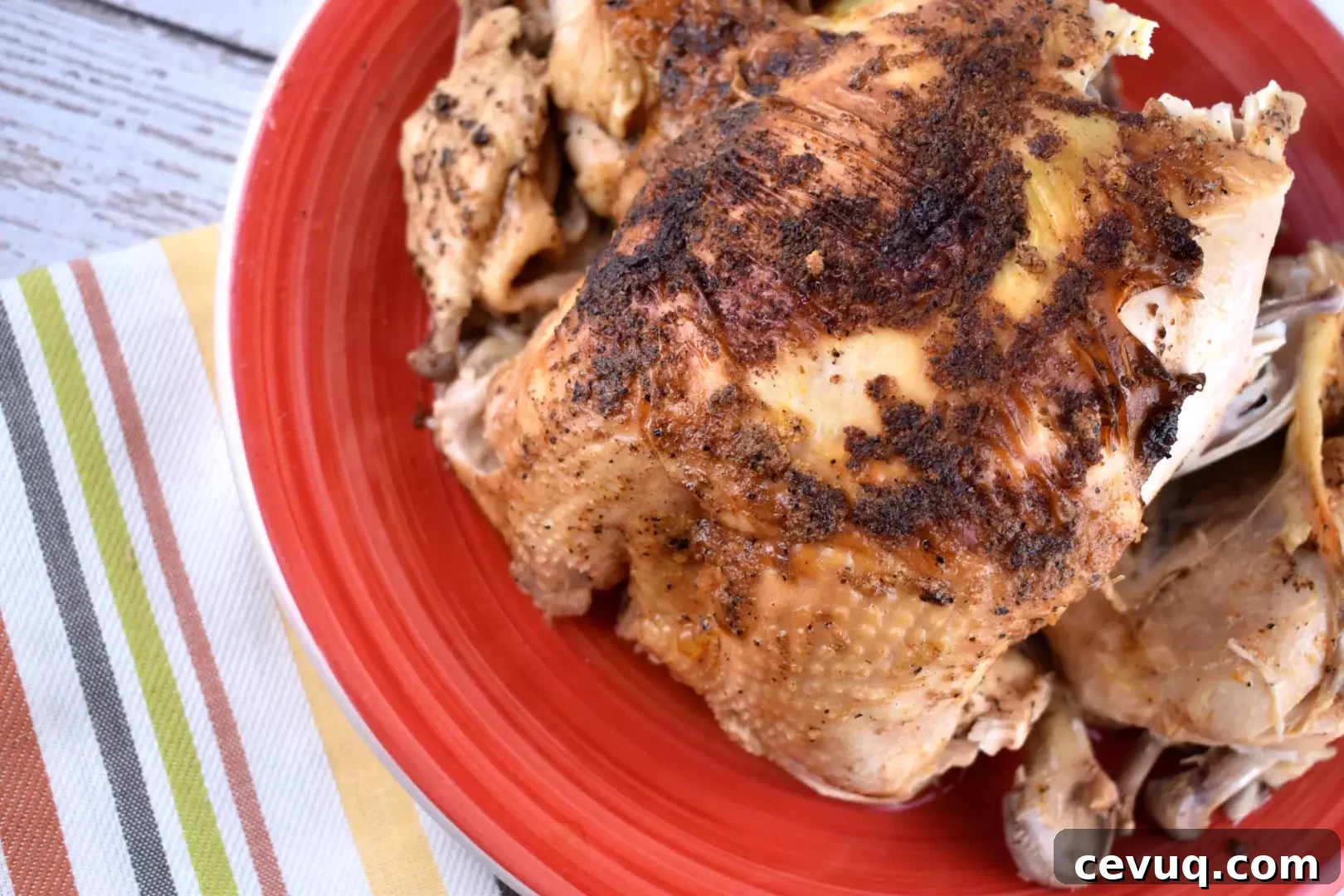
Pressure cooking dramatically reduces cooking time while preserving the depth of flavor you’d expect from long simmering. Soups, stews and braises come out rich and developed in a fraction of the time. That’s why I adapted my popular Slow Cooker Rotisserie Chicken for the Instant Pot. The result is a juicy, tender whole chicken with minimal hands-on time and maximum flavor.
This Instant Pot rotisserie-style chicken takes only a few minutes to prepare and less than an hour total to cook. After rinsing and seasoning, you brown the chicken on the sauté setting for a crisp exterior, then pressure-cook it until perfectly tender. The meat becomes so tender it practically falls off the bone, making carving unnecessary. We often eat the chicken as-is for dinner, or shred it and save the meat for salads, sandwiches or other recipes throughout the week. It’s a simple, flexible main dish that’s great for busy evenings or meal prep.
Keep in mind that nutritional values and point systems will vary depending on which parts of the chicken you eat. Breast meat has fewer calories and fat compared with thigh meat. The nutrition information provided with the recipe is based on the whole chicken with the skin removed and serves as an average guide.
More Instant Pot Chicken Recipes
Instant Pot Chicken Enchilada Soup
Instant Pot Chicken and Rice
Instant Pot Rotisserie Chicken Recipe
Carbohydrates: 1 g
Fat: 8 g
Protein: 30 g
Ingredients
6 servings
- 1 4 lb whole chicken
- 1 cup fat free chicken broth or water
- 1 ½ tsp salt
- 1 tsp pepper
- ½ tbsp granulated garlic
- ½ tbsp onion powder
- ½ tbsp paprika
- 1 ½ tbsp avocado oil or coconut oil
Instructions
-
Remove any giblets and parts from the chicken cavity. Rinse the bird and pat it dry with paper towels.
-
In a small bowl, mix the salt, pepper, granulated garlic, onion powder, paprika and oil to form a paste. Rub the spice paste evenly over the entire chicken, covering both the outside and under the skin where possible for deeper flavor.
-
Set the Instant Pot to “Sauté” on the normal setting and let it heat. Place the chicken breast-side down in the hot inner pot and brown for 3–4 minutes so the skin crisps and develops color. Carefully flip the chicken and crisp the other side for 2–3 minutes.
-
Turn off the Sauté function. Pour in the chicken stock or water, taking care to avoid washing off the seasoning. Secure the lid and lock it. Set the Instant Pot to Manual/High Pressure and cook for 25 minutes. After cooking, allow the pressure to release naturally for about 15 minutes before opening the valve.
-
Remove the lid, transfer the chicken to a platter and spoon some of the cooking juices over the bird to keep it moist. Let the chicken rest a few minutes before serving or shredding.
Notes
The recipe yields approximately six servings. A serving is roughly 1/6 of the chicken with the skin removed.
Nutritional values will vary depending on which parts of the chicken you eat. The figures provided are an average based on the whole chicken with skin removed. If you plan to eat primarily breast meat, expect lower fat and calorie counts than a serving that includes dark meat.
After cooking, the broth and drippings are flavorful—reserve them for gravy, soup base or to moisten shredded chicken for other dishes like tacos, salads or casseroles.