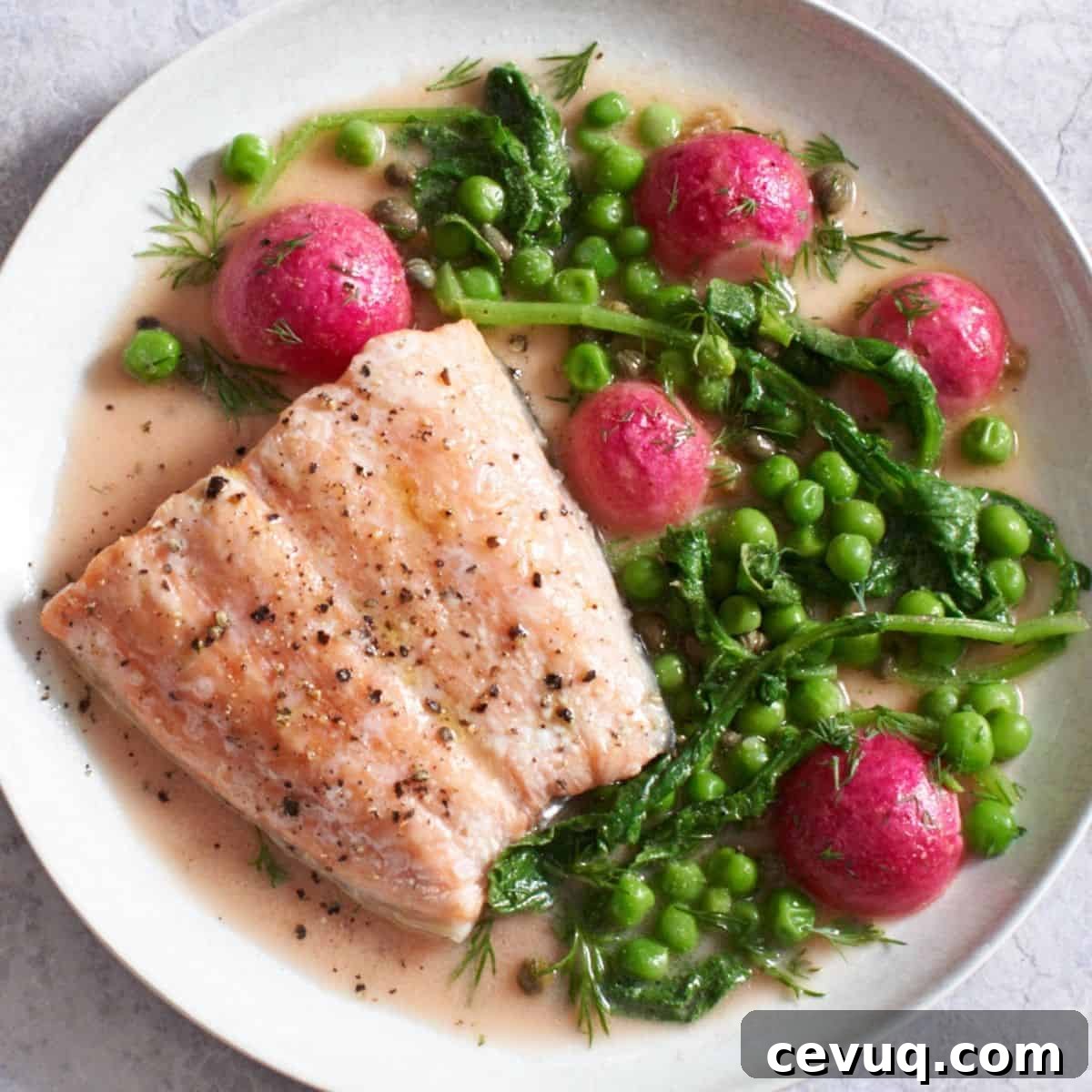
This roasted salmon with peas and radishes is finished in a bright, light white wine sauce with capers and Dijon mustard for a little zing. It’s an ideal way to showcase early spring produce—radishes, their tender greens and peas—while keeping dinner simple. The whole meal comes together quickly, cooking in roughly 20 minutes, so it’s perfect for a weekday supper.
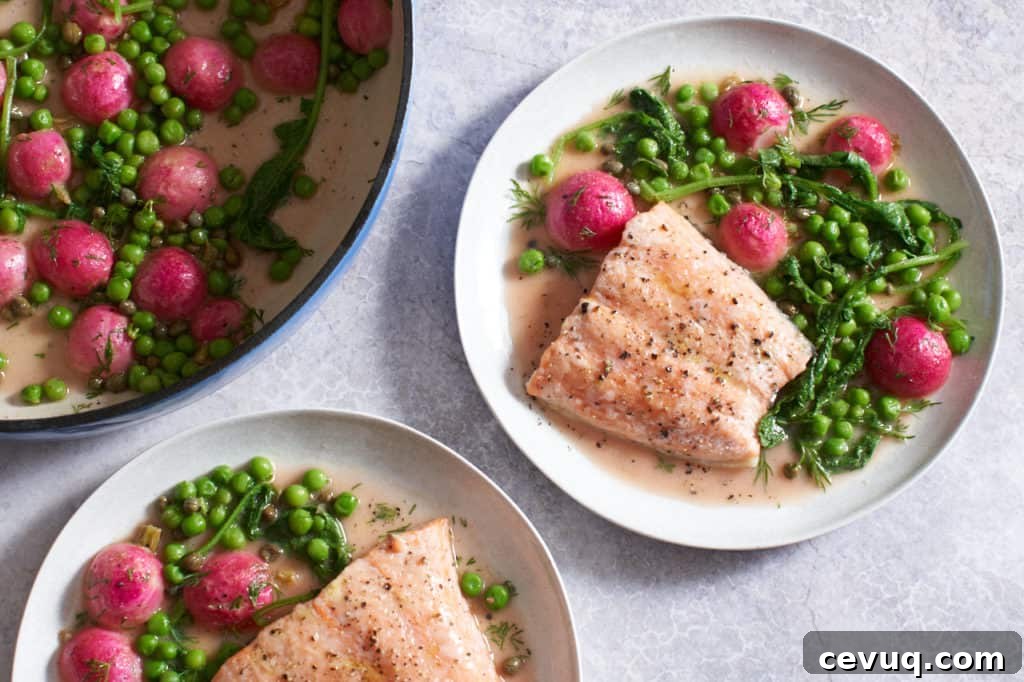
Salmon is an adaptable fish that pairs well with many flavor profiles, and here it takes a simple, French-inspired preparation with a white wine sauce brightened by mustard, capers and fresh dill. The vegetables cook quickly on the stove while the salmon roasts, so you can serve a homey, elegant plate with minimal hands-on time.
Ingredients you’ll need
- Salmon: Choose filets of similar size and thickness so they cook evenly. If needed, ask your fish counter to trim or portion the fillets for you.
- Peas: Fresh peas are lovely if you have them, but frozen peas work very well and are convenient to keep on hand.
- Radishes and radish leaves: Use classic red radishes or colorful varieties—slice the radishes in half and reserve the greens to wilt into the sauce.
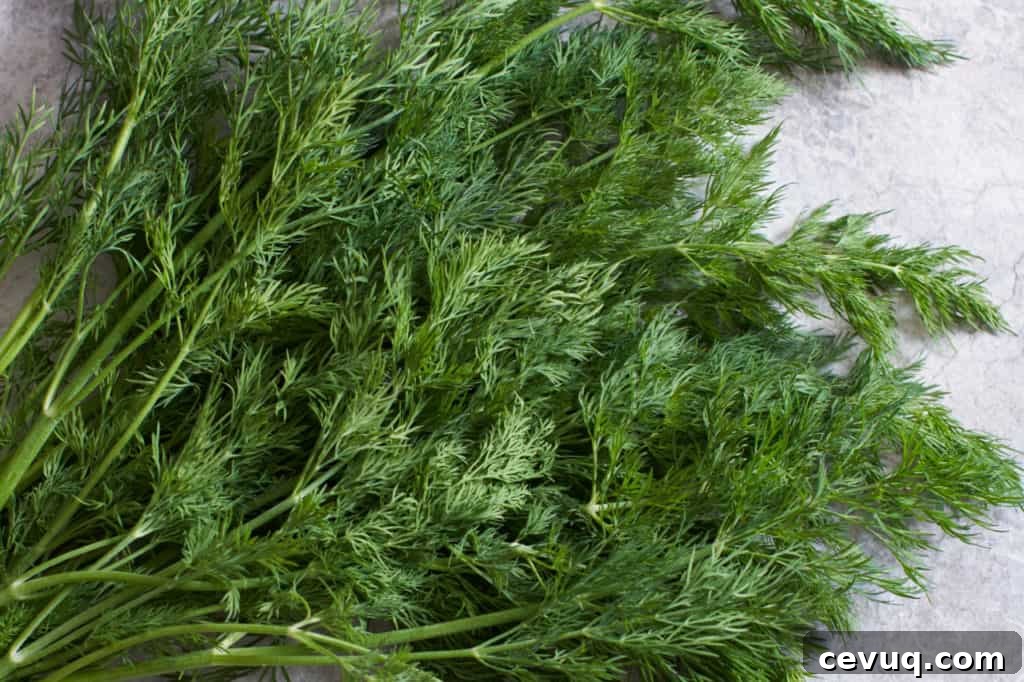
- White wine, capers, Dijon mustard, fresh dill: These ingredients create a light but flavorful sauce. Use a dry white wine you enjoy drinking; it doesn’t need to be expensive.
Ingredients with exact measurements are listed in the recipe card below.
How to make baked salmon with white wine sauce
This is a straightforward recipe that combines oven-roasted salmon with a quick stovetop pan sauce and sautéed vegetables.
Step 1: Thaw the frozen peas
Microwave the frozen peas for about one minute, just until thawed, then set them aside while you prepare the other components.
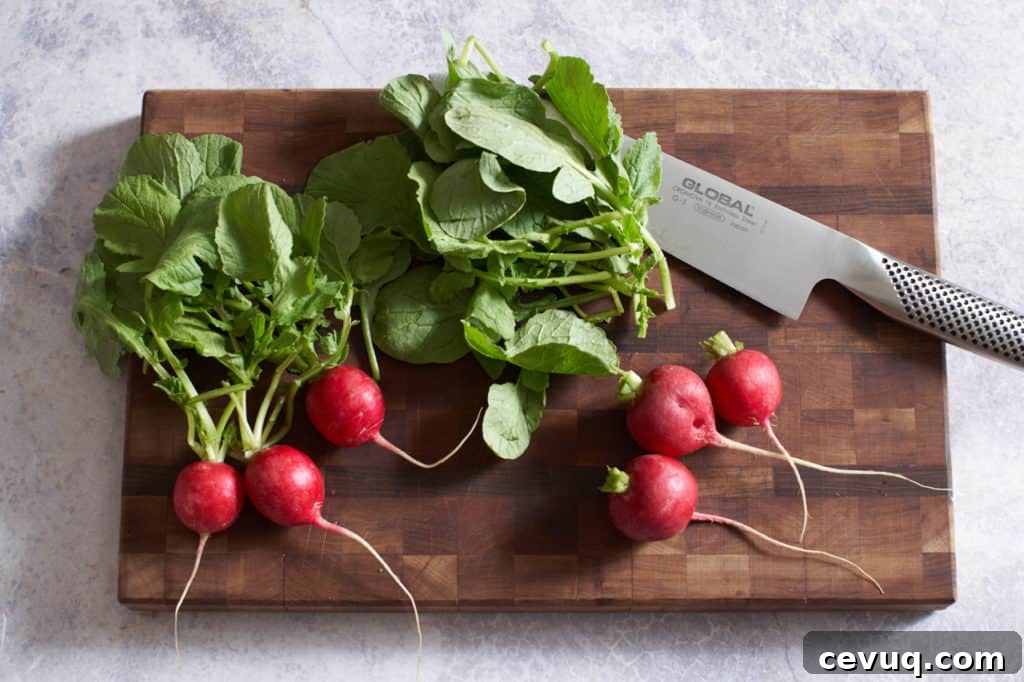
Step 2: Prep the radishes
Trim the greens from the radishes and keep them aside for the final stage. Slice each radish in half so they cook evenly and gain a tender interior while retaining a little bite.
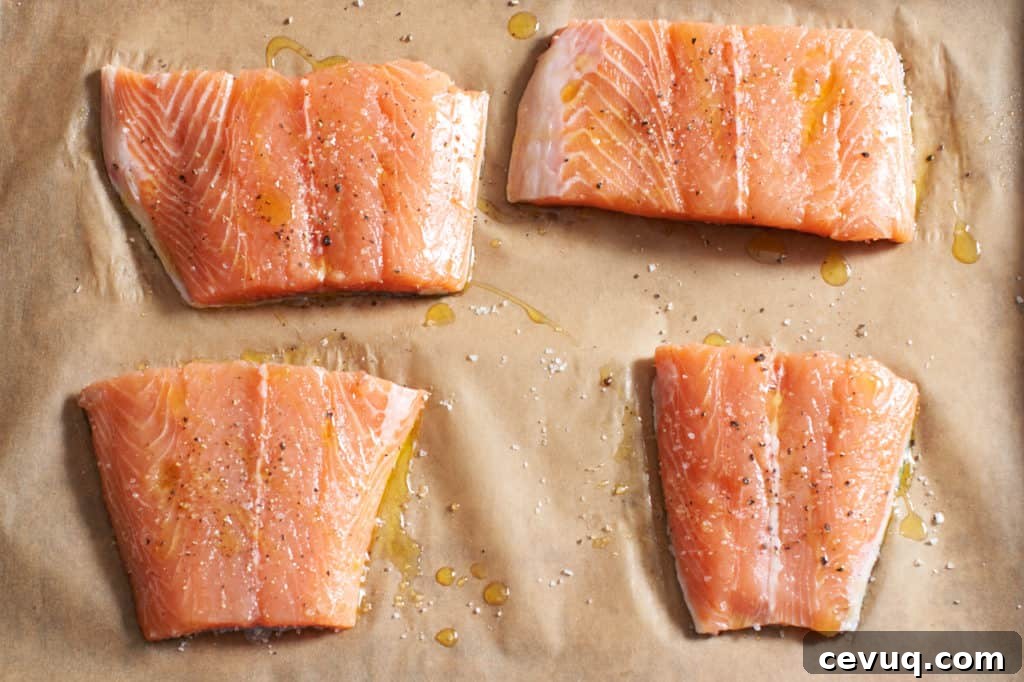
Step 3: Bake the salmon
Preheat the oven to 425°F. Line a baking sheet with parchment paper. Drizzle a little olive oil on both sides of the salmon fillets and season with salt and pepper. Bake until the salmon reaches your preferred doneness, usually 8–12 minutes depending on thickness.
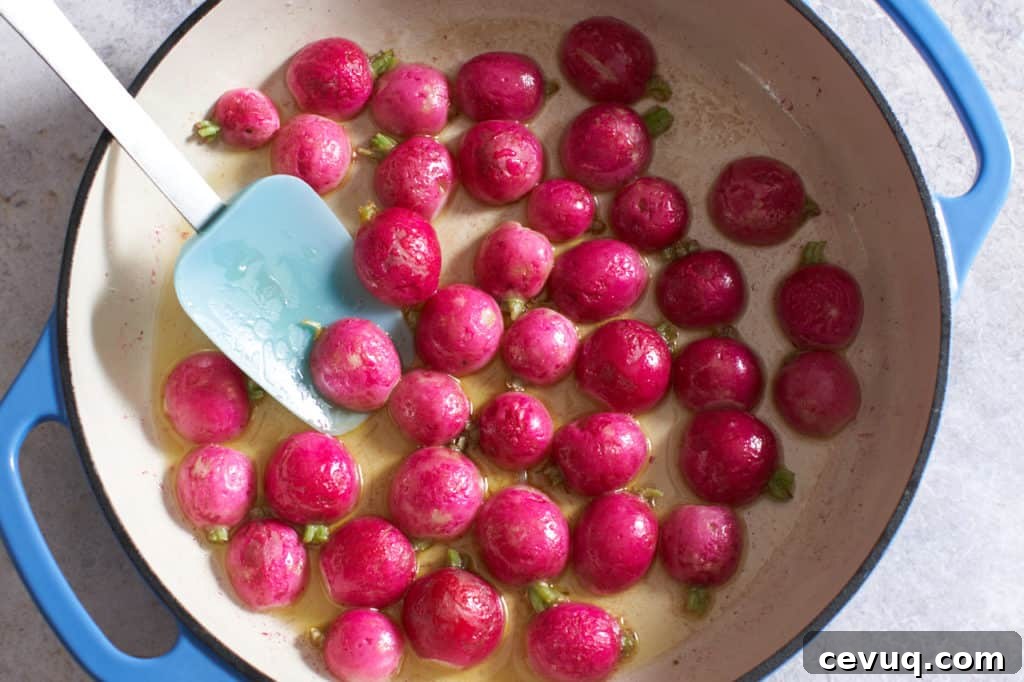
Step 4: Cook the radishes
While the salmon roasts, melt 1 tablespoon of butter with the olive oil in a large skillet over medium heat. Add the halved radishes, season with salt and pepper, and sauté until they are tender and slightly caramelized, about 8 minutes.
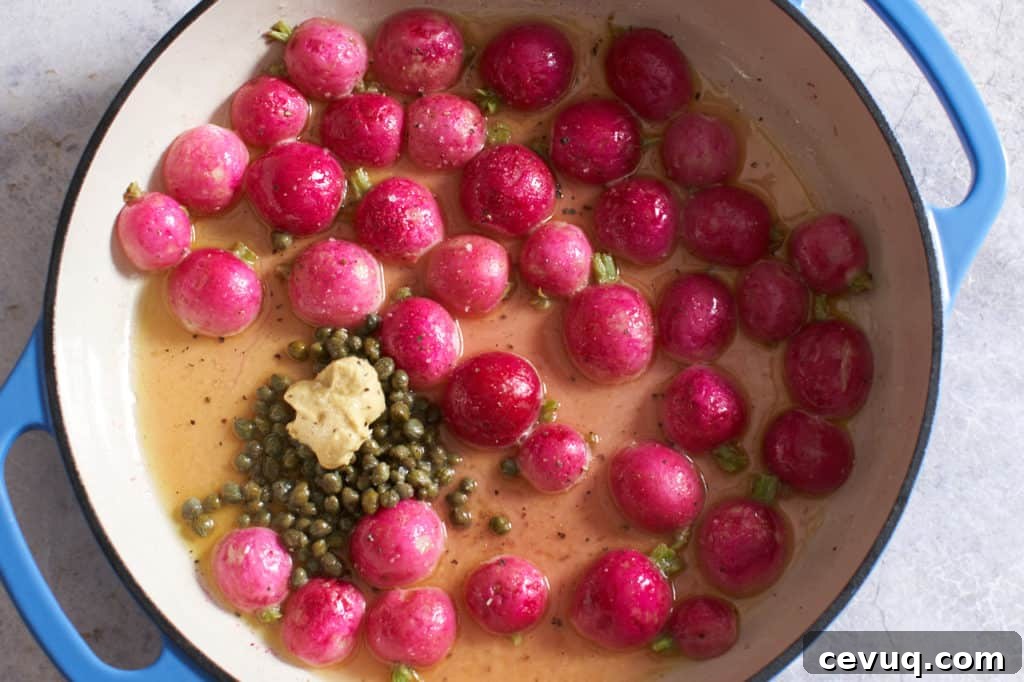
Step 5: Make the white wine sauce
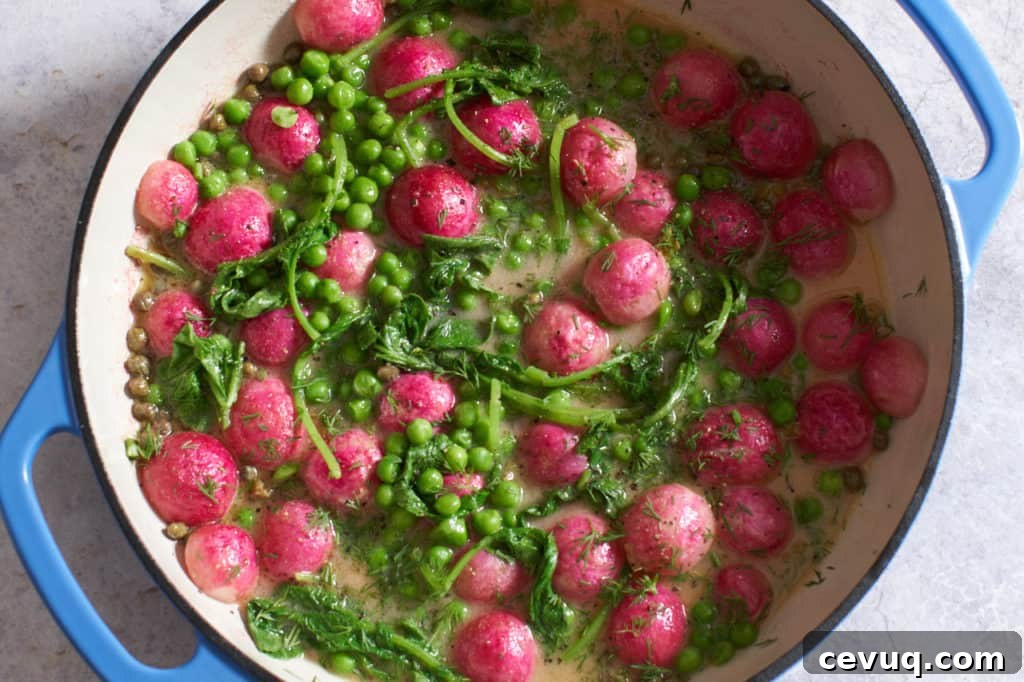
Whisk the white wine and Dijon mustard together in the skillet, then stir in the drained capers and water. Add the remaining butter, lower the heat to medium and simmer the mixture for about 2 minutes to meld the flavors and slightly reduce the sauce.
Step 6: Add the peas and serve
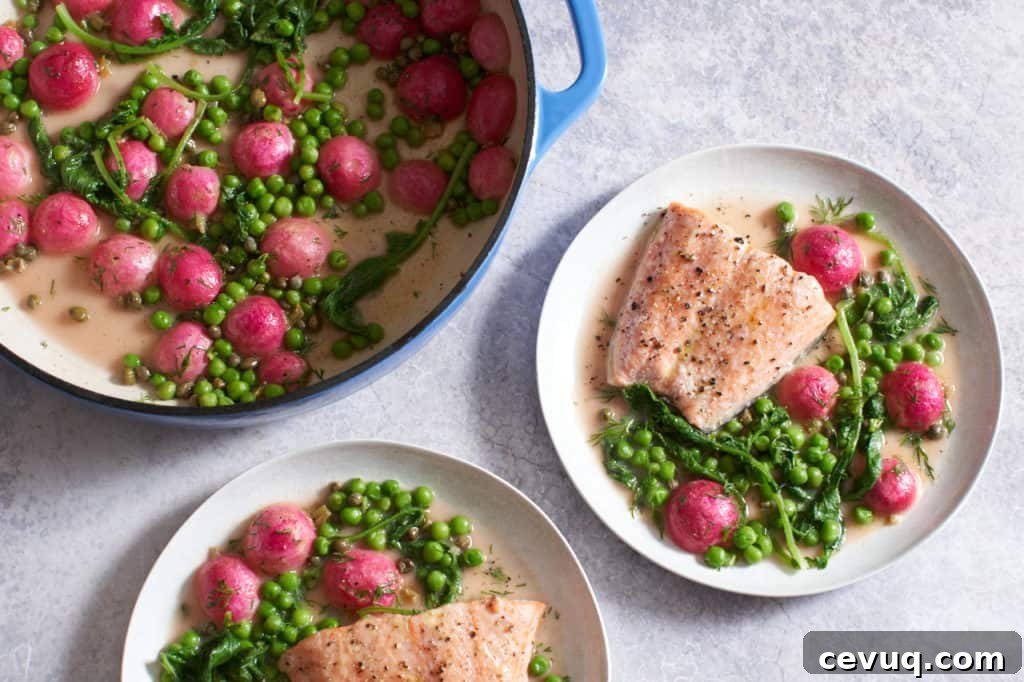
Add the thawed peas, chopped dill and the reserved radish leaves to the pan. Cook just until the greens wilt and the peas are warmed through—this keeps the vegetables bright and fresh-tasting. Taste and adjust seasoning if needed. Divide the roasted salmon among plates and spoon the vegetables and pan sauce over or alongside each portion. Garnish with additional fresh dill if you like.
Expert tips
- Prep everything first: Measure and have all ingredients ready before you start. The recipe moves quickly once you begin cooking.
- Watch the vegetables closely: Remove the pan from the heat as soon as the radish greens are wilted and the peas are warmed to preserve their color and texture.
- Herb swaps: If you prefer a different herb, fresh parsley or mint are good alternatives to dill.
FAQ
Yes. Radishes can be sautéed, roasted or braised. Cooking mellows their peppery bite and brings out a subtle sweetness, making them a versatile vegetable that can be used like carrots or new potatoes in many dishes.
Yes. Radish greens are edible and nutritious. They can be wilted like spinach and incorporated into sauces, sautés or salads.
More salmon recipes
- Oven Baked Salmon with Roasted Tomatoes and Basil Yogurt Sauce is a bright summer option.
- Oven Roasted Salmon with Citrus Herb Salsa Verde highlights orange and lemon for a citrus-forward finish.
Debra’s Details: Quick, easy, spring flavors!
- Quick prep: Trim radish greens and halve the radishes.
- Only a handful of ingredients required.
- Make the sauce while the salmon roasts and dinner is ready in about 20 minutes.
- The light, tangy white wine sauce lets the main ingredients shine.
- Radishes and peas offer vibrant spring flavor and color.
- Gluten-free.
Recipe
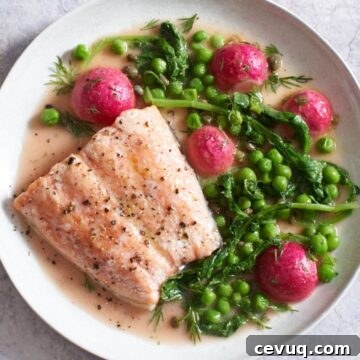
Roasted Salmon with Peas and Radishes
Ingredients
- 24 oz salmon — four fillets, about 6 oz each
- 2 bunches radishes
- 3 tablespoons unsalted butter
- 1/4 cup olive oil
- 1 1/2 cups frozen peas, thawed
- 1/4 cup white wine
- 2 1/2 teaspoons Dijon mustard
- 2 tablespoons drained capers
- 3/4 cup water
- 1/4 cup chopped fresh dill
- Kosher salt and freshly ground pepper, to taste
Instructions
- Preheat the oven to 425°F.
- Heat the frozen peas in the microwave about one minute until just thawed; set aside.
- Trim and reserve the radish greens, then halve the radishes.
- Line a baking sheet with parchment. Drizzle 2 tablespoons olive oil on both sides of the salmon, season with salt and pepper and bake 8–12 minutes, until cooked to your liking.
- While the salmon bakes, melt 1 tablespoon butter with the remaining 2 tablespoons olive oil in a large skillet over medium heat. Add the radishes, season with salt and pepper, and cook until tender, about 8 minutes.
- Add the white wine and Dijon mustard and whisk to combine. Stir in the capers and water, then add the remaining butter. Reduce heat and simmer for about 2 minutes.
- Add the peas, dill and radish leaves and cook just until the greens wilt and the peas are warmed through. Taste and adjust seasoning.
- Divide the salmon among four plates, spoon the vegetables and pan sauce over each portion, and garnish with extra dill if desired. Serve immediately.
Notes
- Get all ingredients measured and ready before you start; the recipe moves quickly once you begin.
- Remove the pan from the heat as soon as the radish greens are wilted and the peas are warmed to keep the vegetables bright and tender.
- If you prefer, swap parsley or mint for the dill.
Nutrition
Nutrition information is an estimate and should be used as a guide.