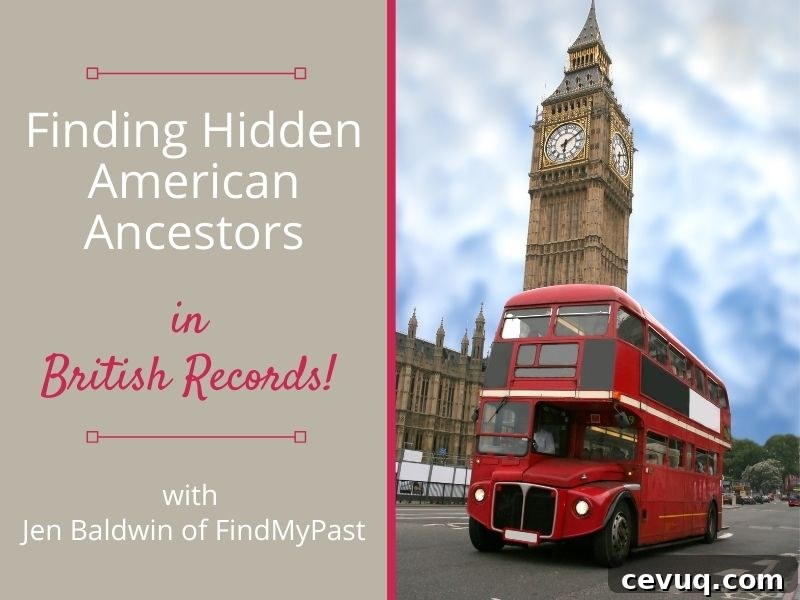
Should you search overseas records for your American ancestors? Yes. Discover how British records can reveal “hidden” American ancestors.
Recently I spoke with Jen Baldwin of FindMyPast about locating American ancestors in British records. It’s an excellent reminder that when researching family history, expanding your search across borders can uncover important clues and connections.
If you missed our live chat, the replay is embedded at the end of this post so you can watch it anytime.
Jen’s Best Tip for Using FindMyPast To Find Your American Ancestors
I have strong British roots and use FindMyPast regularly in my genealogy research. Lately I’ve realized I hadn’t taken full advantage of its collections. One of Jen’s first—and most important—tips is to “think like a Brit” when working in British records.
Genealogists must understand the historical relationship between the United States and Great Britain and know what records the British created and why. This context shapes where and how records were kept, and it directly affects how you search for ancestors.
Before diving into record searches, take time to learn which records exist for a particular place and period, and the reasons behind their creation. That upfront effort saves time and makes your research far more effective.
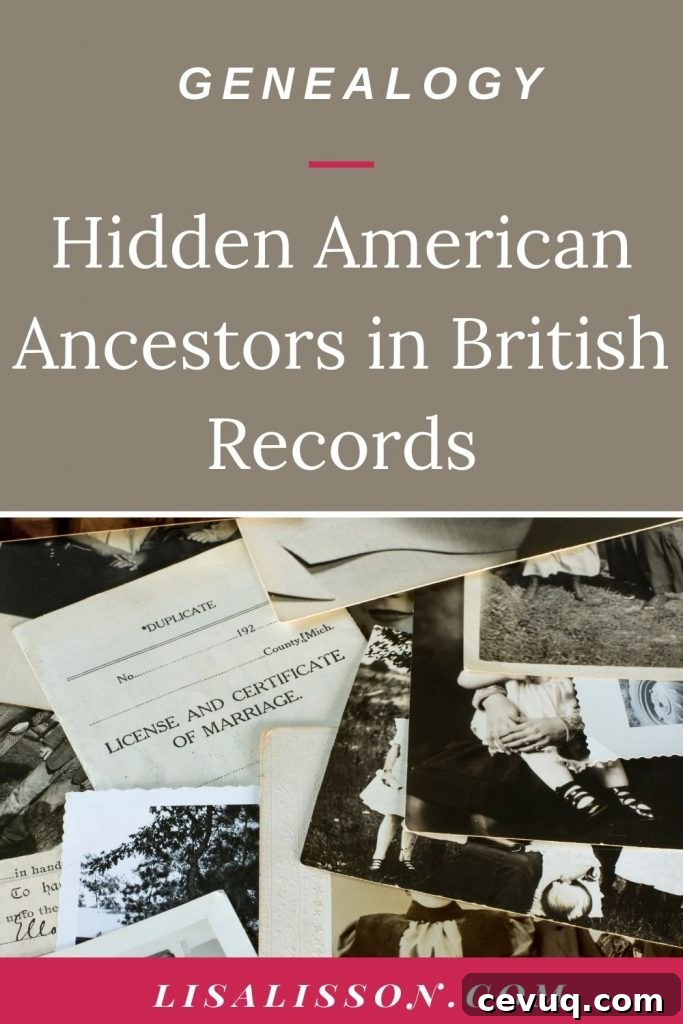
FindMyPast Record Collections Mentioned in the Livestream
In our live chat Jen and I covered several British record collections useful to American genealogists. Below is a summary of the key collections we discussed and practical ideas for searching them.
- Registers of Licenses to Pass Beyond the Seas — These records can reveal travelers and emigrants who left Britain for the Americas.
- British POWs, 1715–1945 — Prisoner lists and related documents may include people connected to colonial conflicts or later military movements involving America.
- British Army Service Records — Service records often include origins, next of kin, and postings that tie individuals to migration or transatlantic service.
- Prisoners of War, 1715–1945 — When browsing, use keywords such as “America,” “Canada,” or specific colonies or provinces to narrow results; early records may refer to regions before the United States existed.
- US Servicemen in North Devon, England 1945 — Even if your family isn’t in the list, these records offer context about American presence in Britain and may provide leads or background details.
- The Catholic Heritage Archive — A growing collection of Catholic records that can be valuable for family history research, especially where civil records are sparse.
- Newspapers — British newspapers sometimes reported on events, emigration, shipping, and legal matters related to America. They can be a surprising source of transatlantic news and personal notices.
Best Practices for Finding Your Hidden American Ancestors in British Records
When you begin searching British collections, keep these practical recommendations in mind:
- Search multiple name variations and spellings. Names were recorded inconsistently, so broaden spellings and try initials, phonetic variants, and common transcription errors.
- Breadth matters for newspapers. Look beyond a single town or county; newspapers from a wider area may include shipping lists, legal notices, or transatlantic news that mention your ancestors.
- Interpret records in historical context. Understand the time frame and terminology used in the period you’re researching—countries, colonies, and place names change over time.
- Recognize alternate names for America. Records might refer to “America,” “United States,” “United States of America,” or the “colonies,” depending on the era.
Listen to Our Full Conversation
The full video conversation is embedded below. It covers detailed examples, search demonstrations, and tips for working with FindMyPast’s collections.