
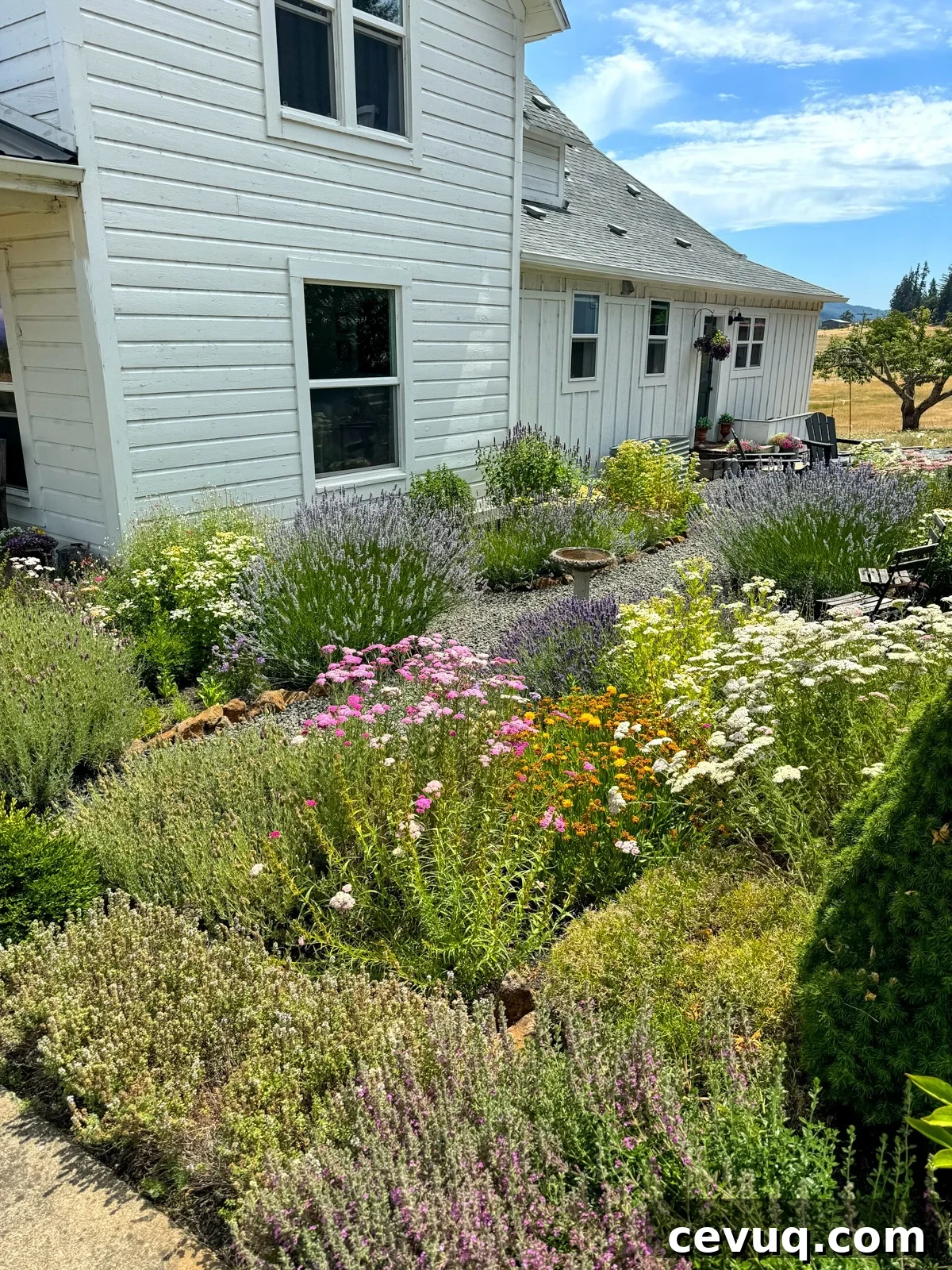
See how we grew our farmhouse herb and flower garden over four years into a peaceful, low-maintenance sanctuary that largely keeps deer away. Below I share before-and-after photos, our simple DIY watering system, and the maintenance routine that keeps this garden thriving.
Some links in this article are affiliate links and if you click on them I will receive a small commission at no cost to you.
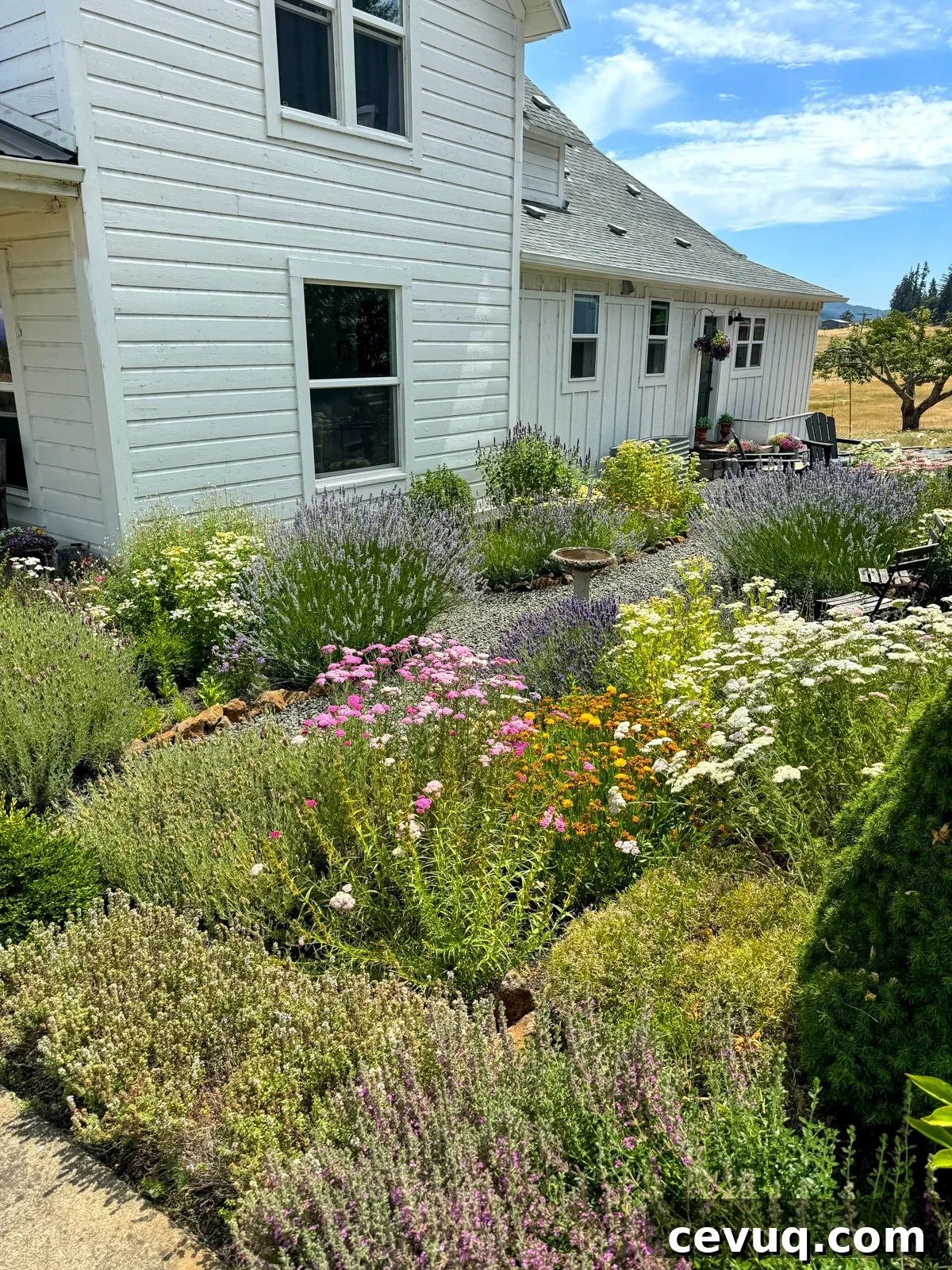
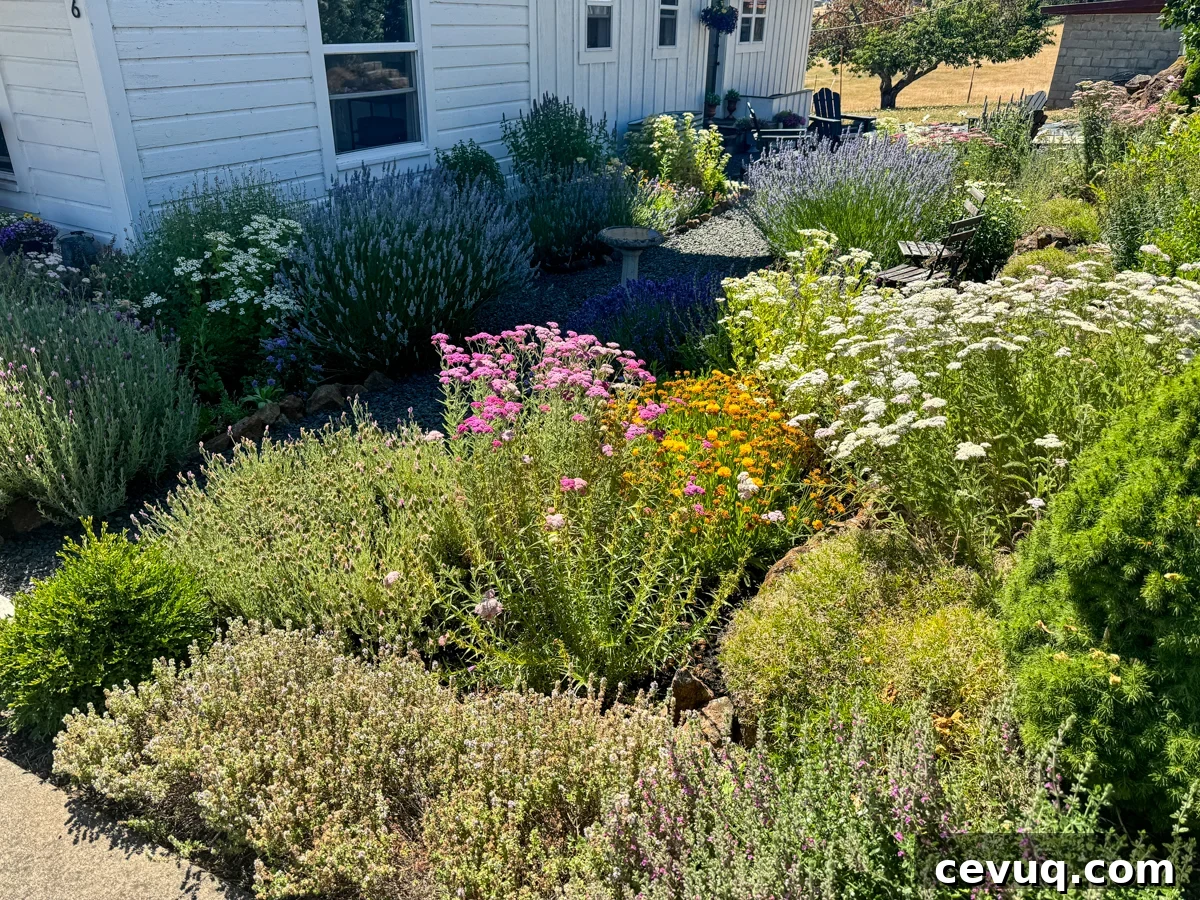
Four years after planting my deer-resistant herb and flower garden, it’s fuller and healthier than I expected. We live in a deer-heavy area—these animals eat almost everything—so I planned this space around plants deer tend to avoid, focusing on aromatic herbs and sturdy perennials. The result is a garden that looks lovely while demanding minimal daily attention.
I call this the Sunken Garden because it sits a step down from the farmhouse. The area started as an excavation site after installing a permanent foundation, so we had lots of rock to contend with. Over time we built raised beds with the excavated stones, improved the soil, and staged the garden work as the house renovation progressed.
The Garden’s Beginnings
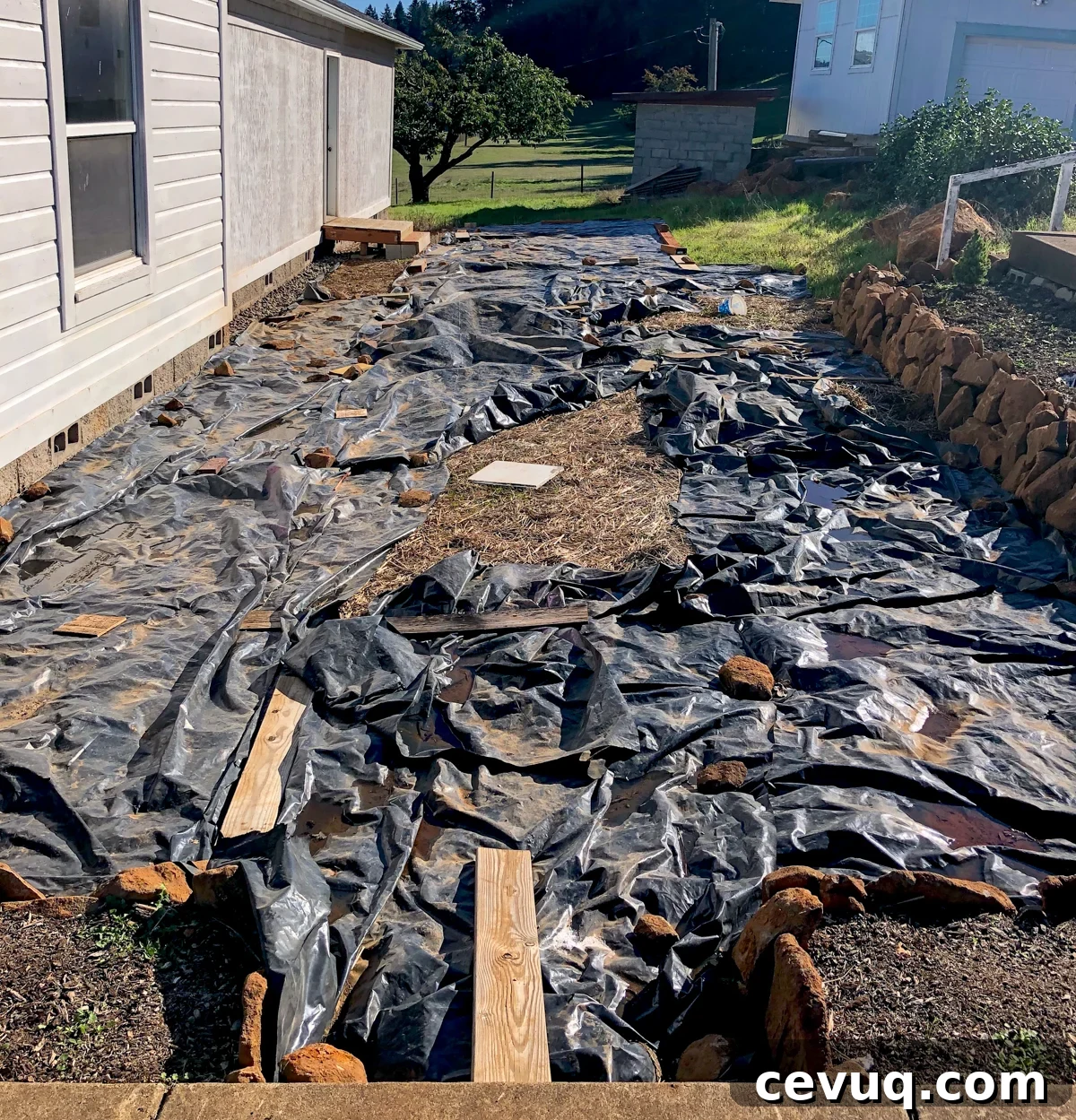
Before: After the foundation work this side yard was a rocky, excavated slope. We used rock to build taller beds along the edges and covered the exposed soil with plastic while continuing other renovation tasks.
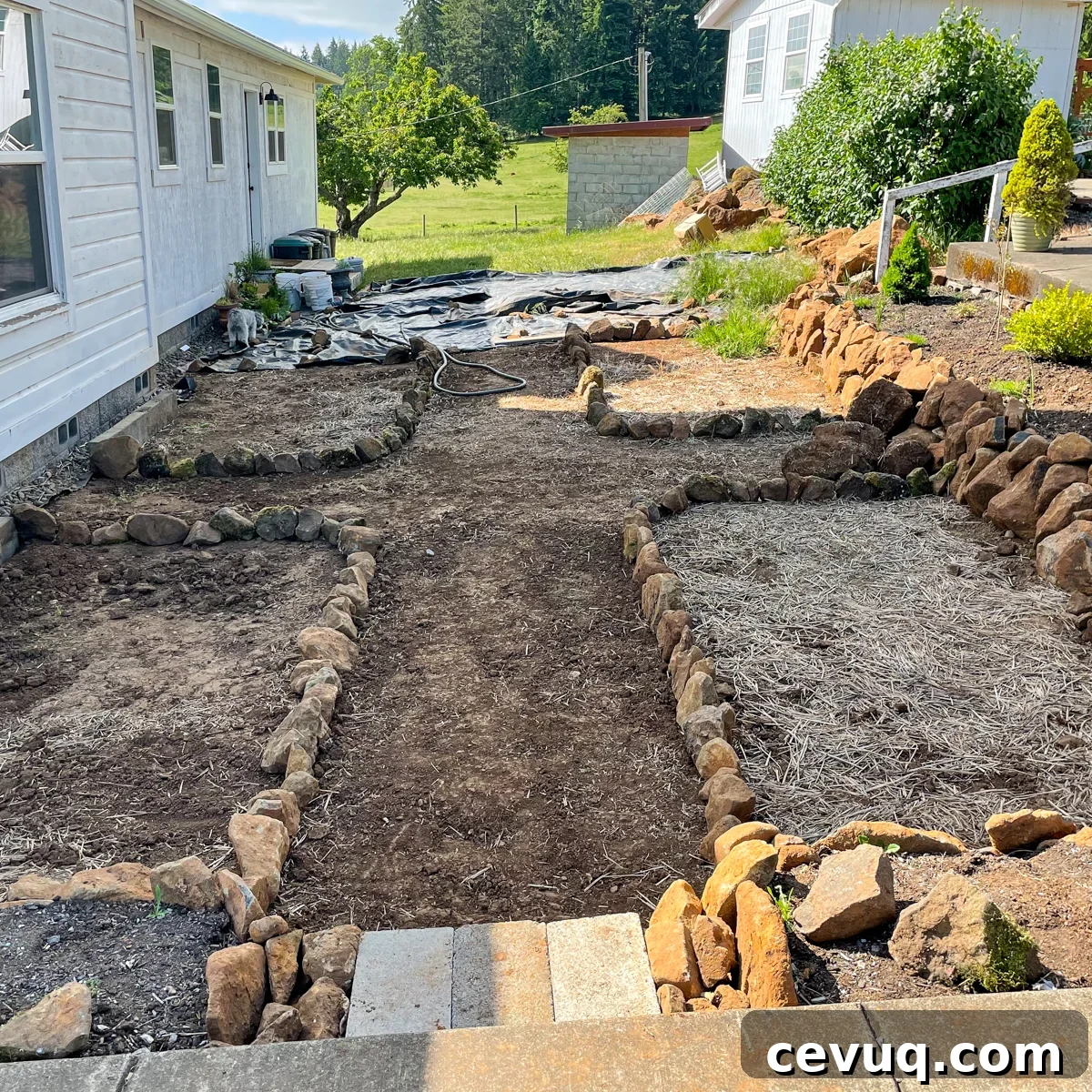
During: In spring 2021 I outlined beds with rocks based on a plan from my garden notebook. Work happened in phases—some sections still had plastic down while we finished walkways and other hardscaping.
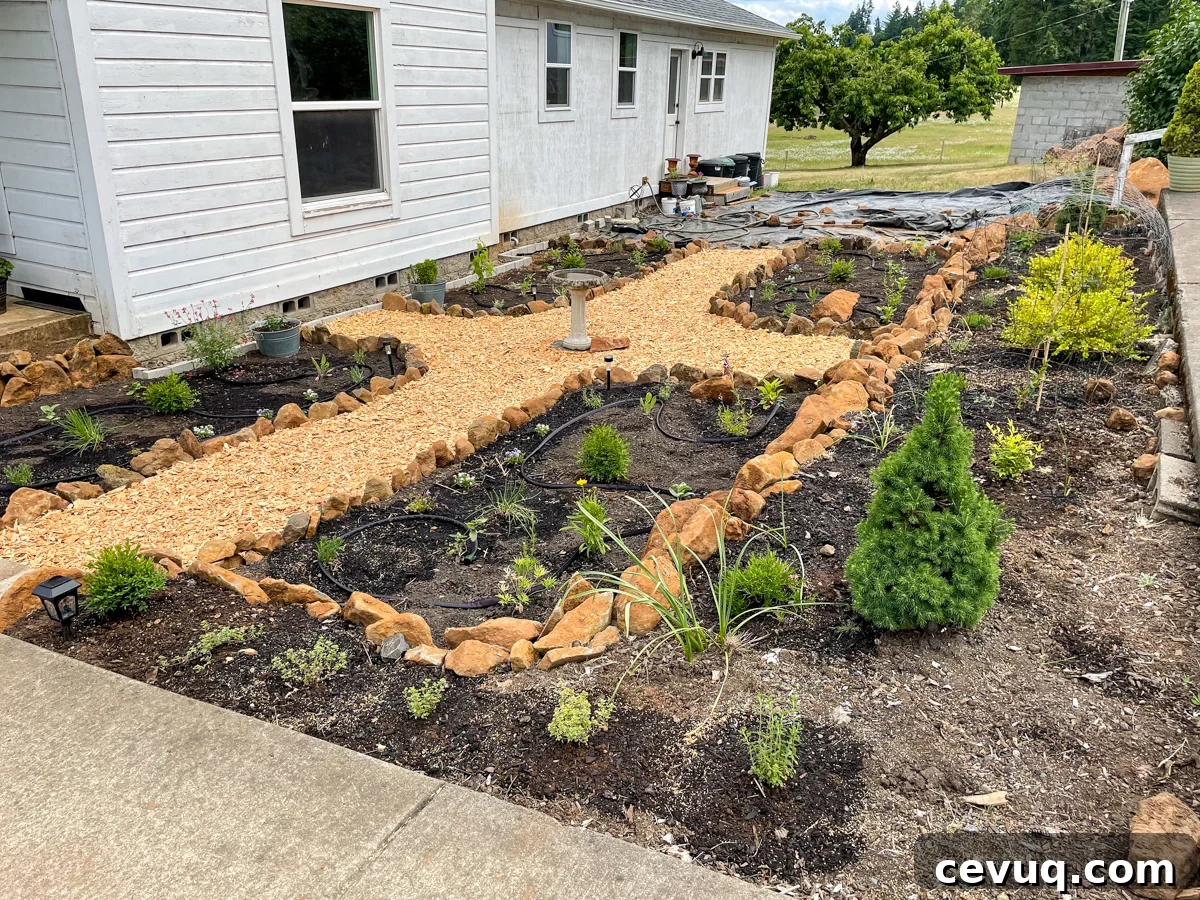
First planting, June, Year One: We built up soil in the beds and planted deer-resistant herbs and flowers—lavender, rosemary, thyme, salvia, penstemon, coneflower, and others. To keep costs down while filling a large area, I used inexpensive small herb starts and 6-packs of annuals to establish color and cover ground quickly.
Paths were initially wood chips until we completed the cement walkway and fire pit area. I topped beds with compost mulch, laid soaker hoses, and let the plants settle in. Within a few months the area filled in nicely, proving that patient planting and good soil building pay off.
The Garden at 2.5 Years
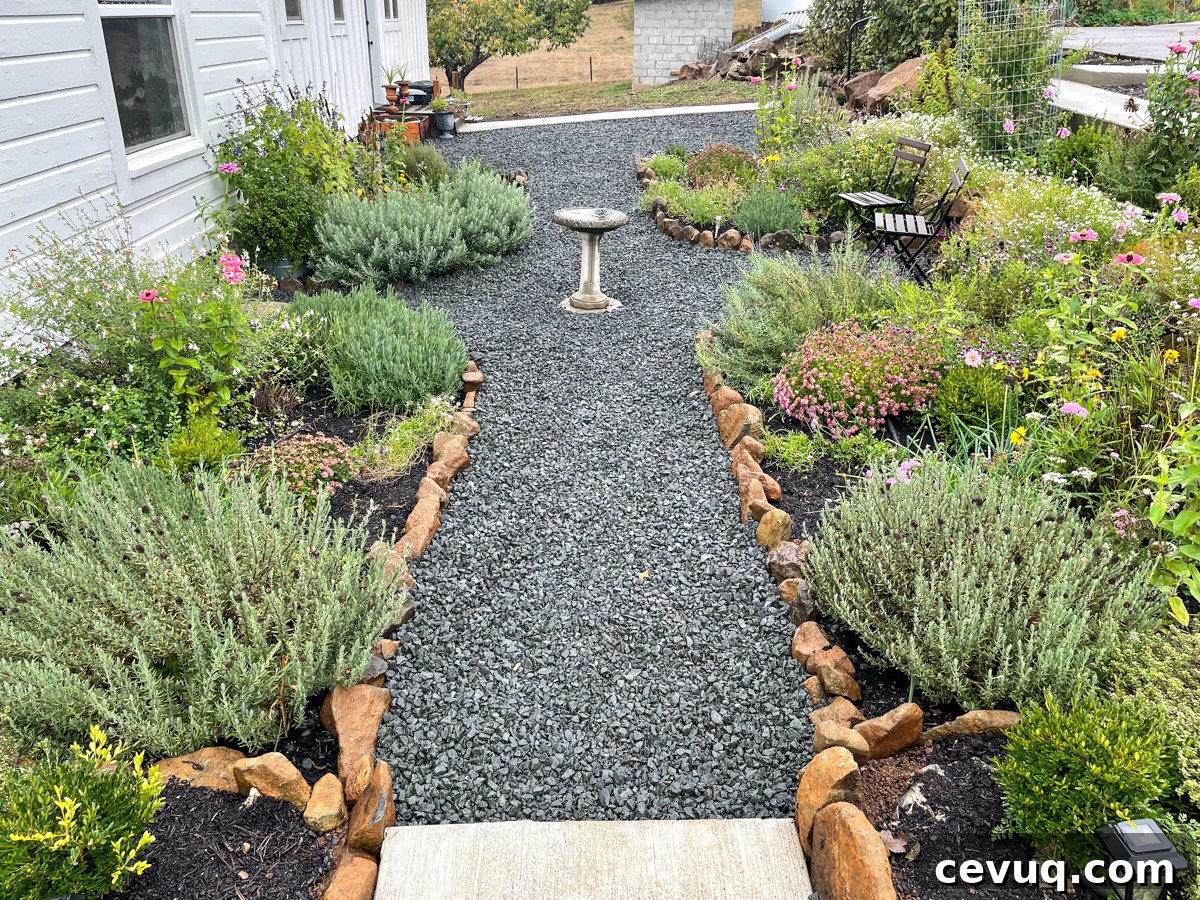
By two and a half years the beds had filled in and we replaced the wood chip path with gravel to match the fire pit area. I continued adding a few plants each season, replacing any losses after winter and supplementing with fall-blooming varieties as needed.
The Garden at 4 Years + Tips
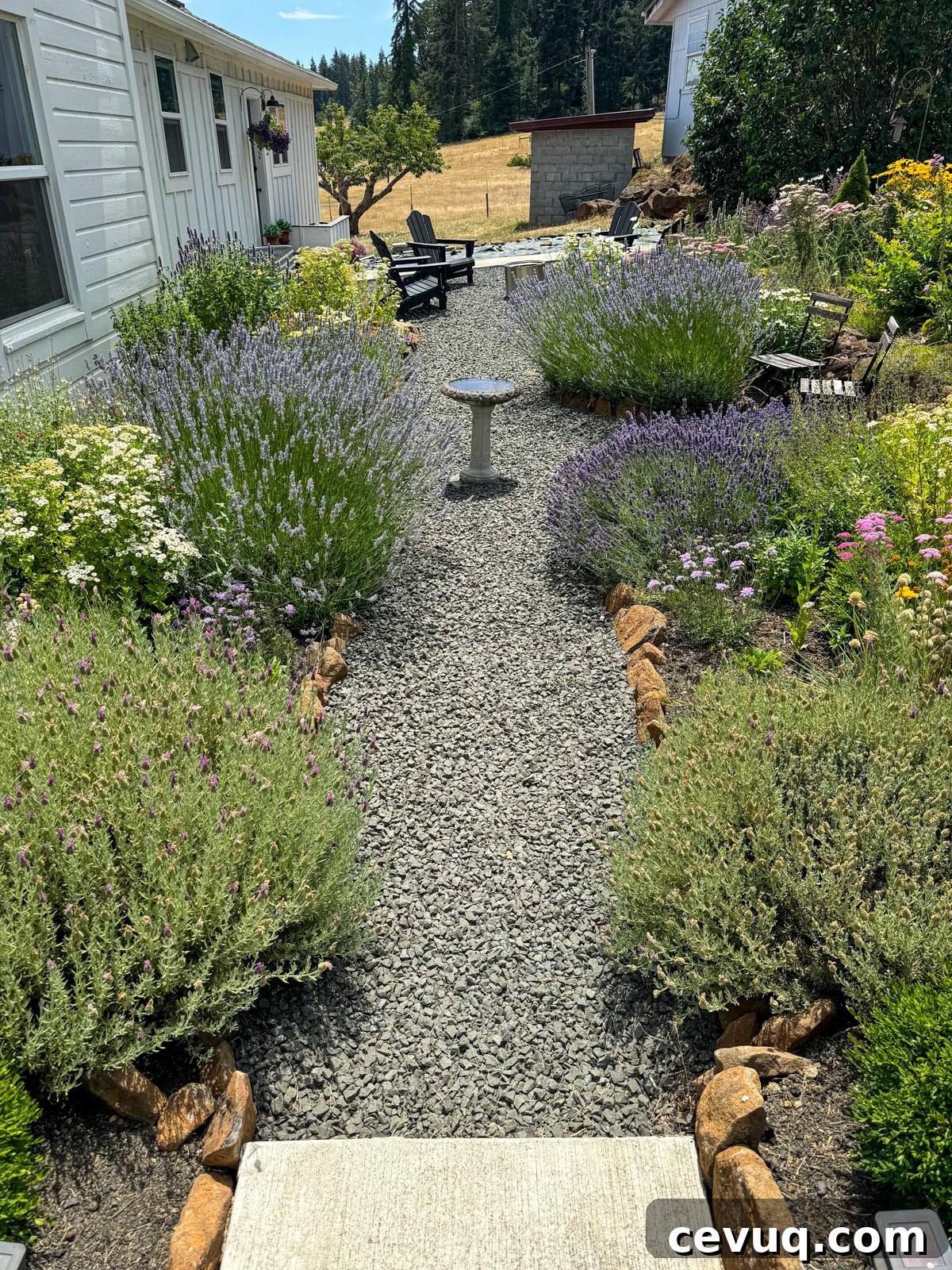
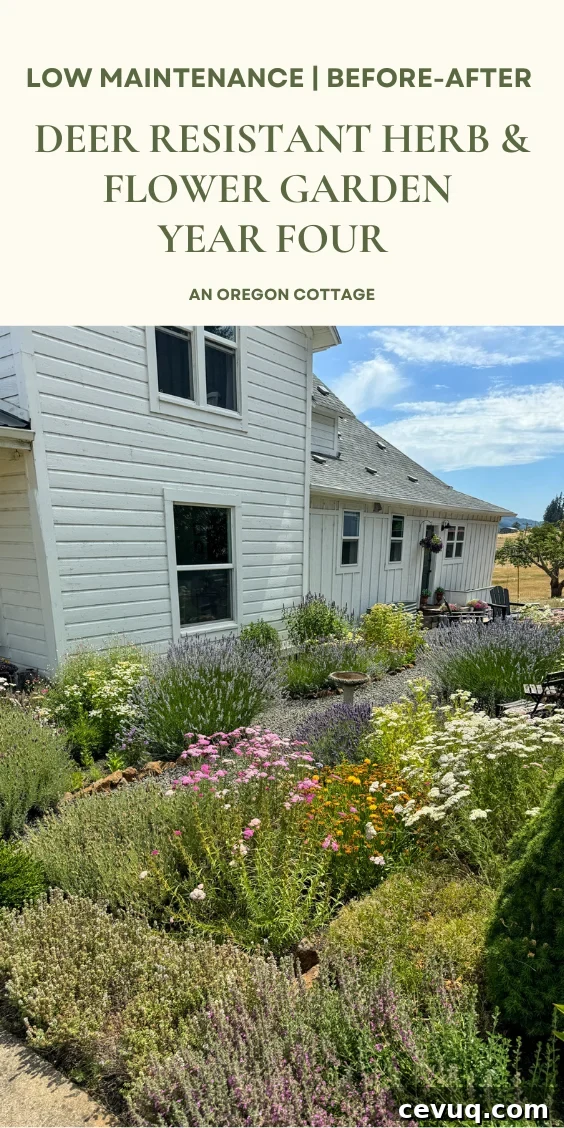
At four years the garden is dense and thriving. Lavender has been a standout success—especially the taller Provence variety, which survives our winters best and stays lush with minimal pruning. I began with several lavender varieties and found that Spanish lavender, Provence, and a shorter English lavender have been the most reliable.
There’s a trade-off: Provence lavender gets quite tall and can overwhelm smaller plants, while English lavender stays neater but looks untidy until late spring. I’m still deciding whether to keep the Provence for its hardiness or replace it with more English varieties for a tidier look.
We still have a section covered in black plastic where grass failed; that area will become additional planting beds and gravel pathways once it’s prepped.
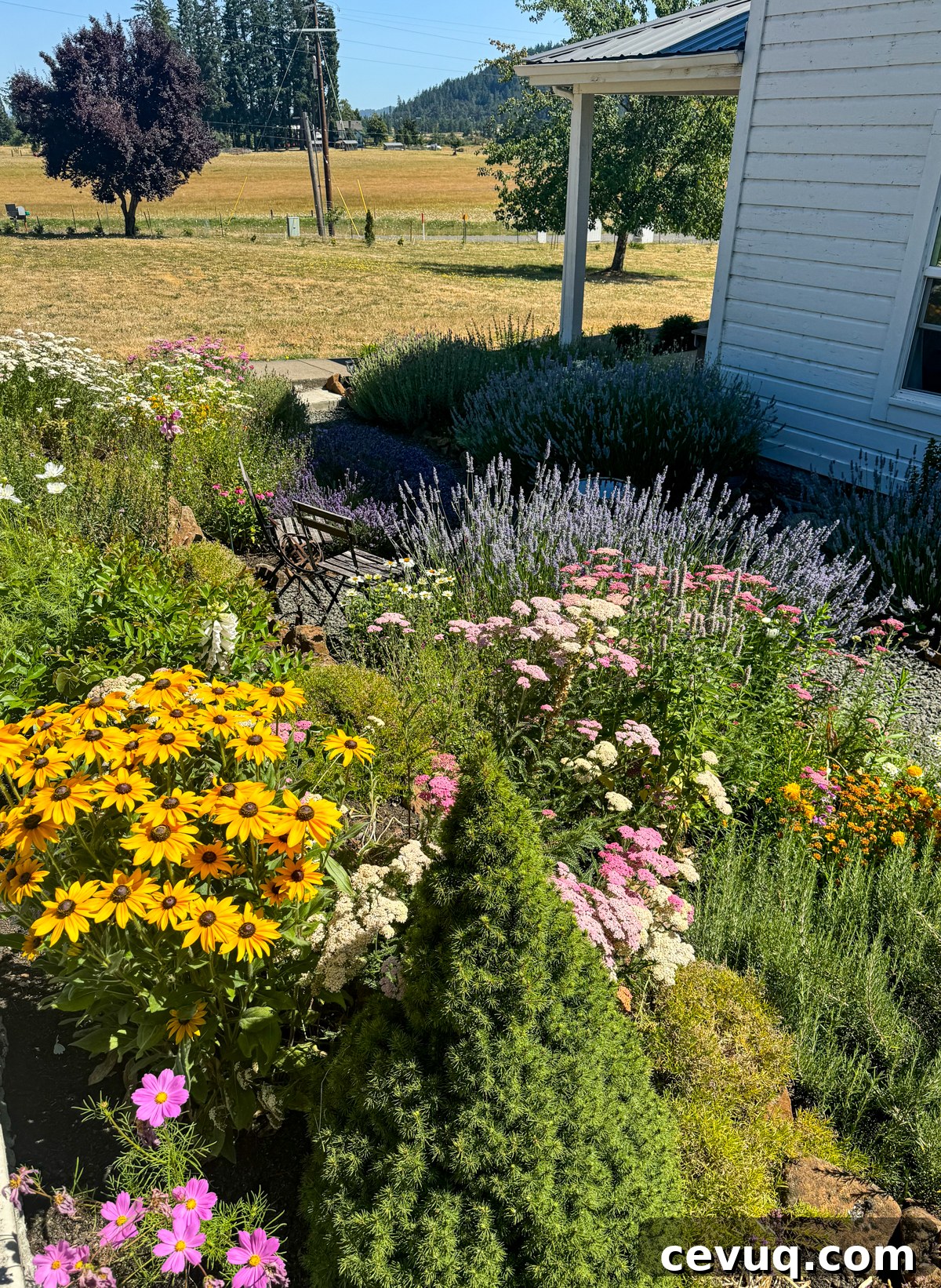
Overall, deer leave most of these plants alone without the need for constant repellents or motion-activated deterrents. If you’re starting a similar garden, here are a few practical takeaways:
- Embrace the early garden look: Young, smaller plants are affordable and establish well. A garden that grows into itself saves money and can look fresh and intentional during the first seasons.
- Use inexpensive herbs and annuals as fillers: These provide instant interest and help suppress weeds while perennials get established.
- Phase the project: Build beds and paths in stages. Use temporary materials like wood chips or plastic while deciding on permanent hardscape or patios.
- Enjoy the process: Gardening is an evolving project—small changes over time lead to a rich, layered garden.
Easy DIY Watering System
We installed a PVC-and-soaker-hose watering system similar to one used for our vegetable beds. It allows simple manual control or easy attachment to a timer so the beds get consistent moisture with minimal effort.
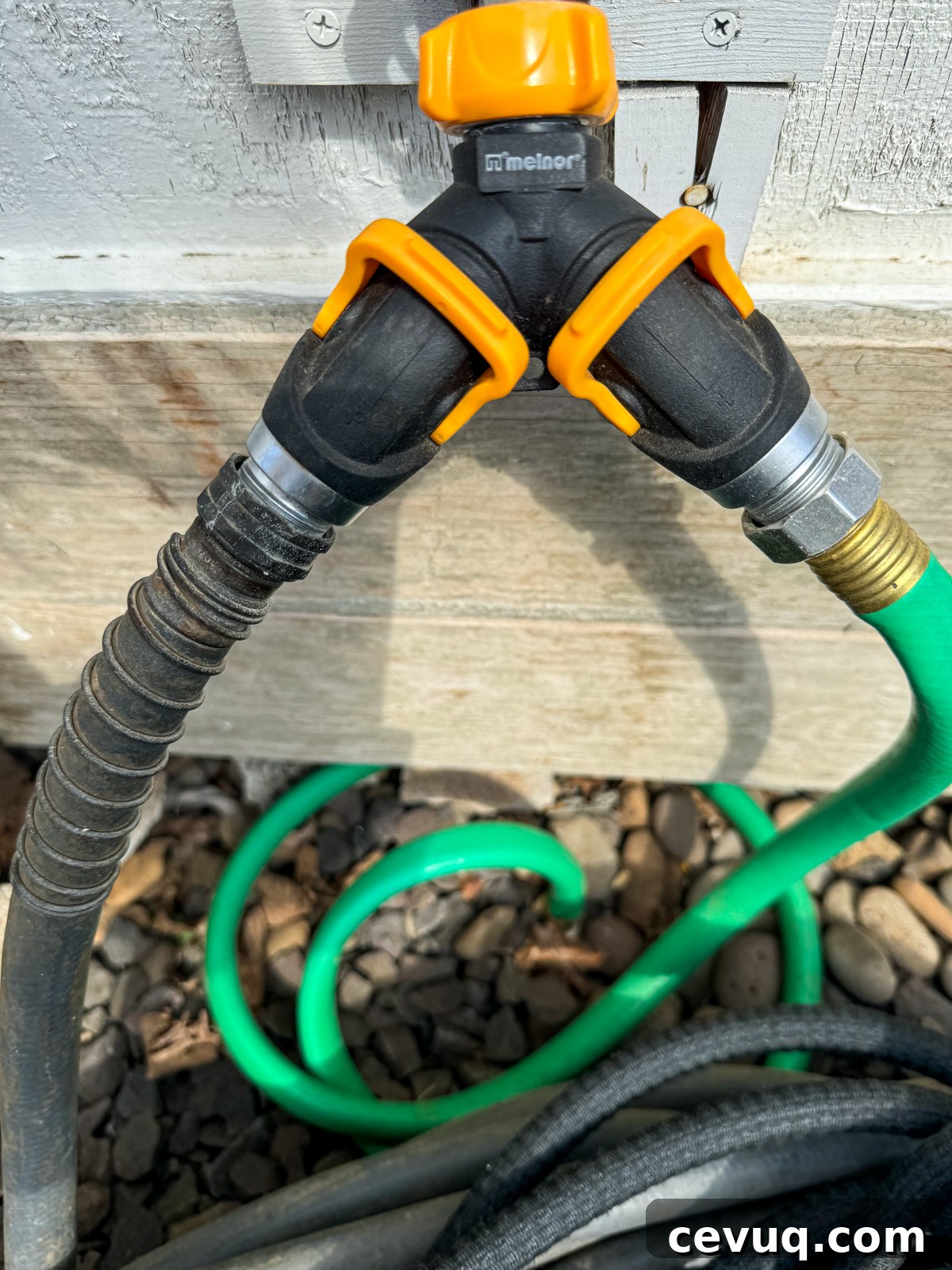
Hose hookup: A two-way hose valve lets one side serve a regular hose for hand-watering and the other feed a short hose that connects to the underground PVC network.
PVC underground pipes: Trenches were dug to each bed, PVC glued and joined, and elbows positioned lower to reduce visibility. We painted exposed pipe fittings brown to blend with the soil.
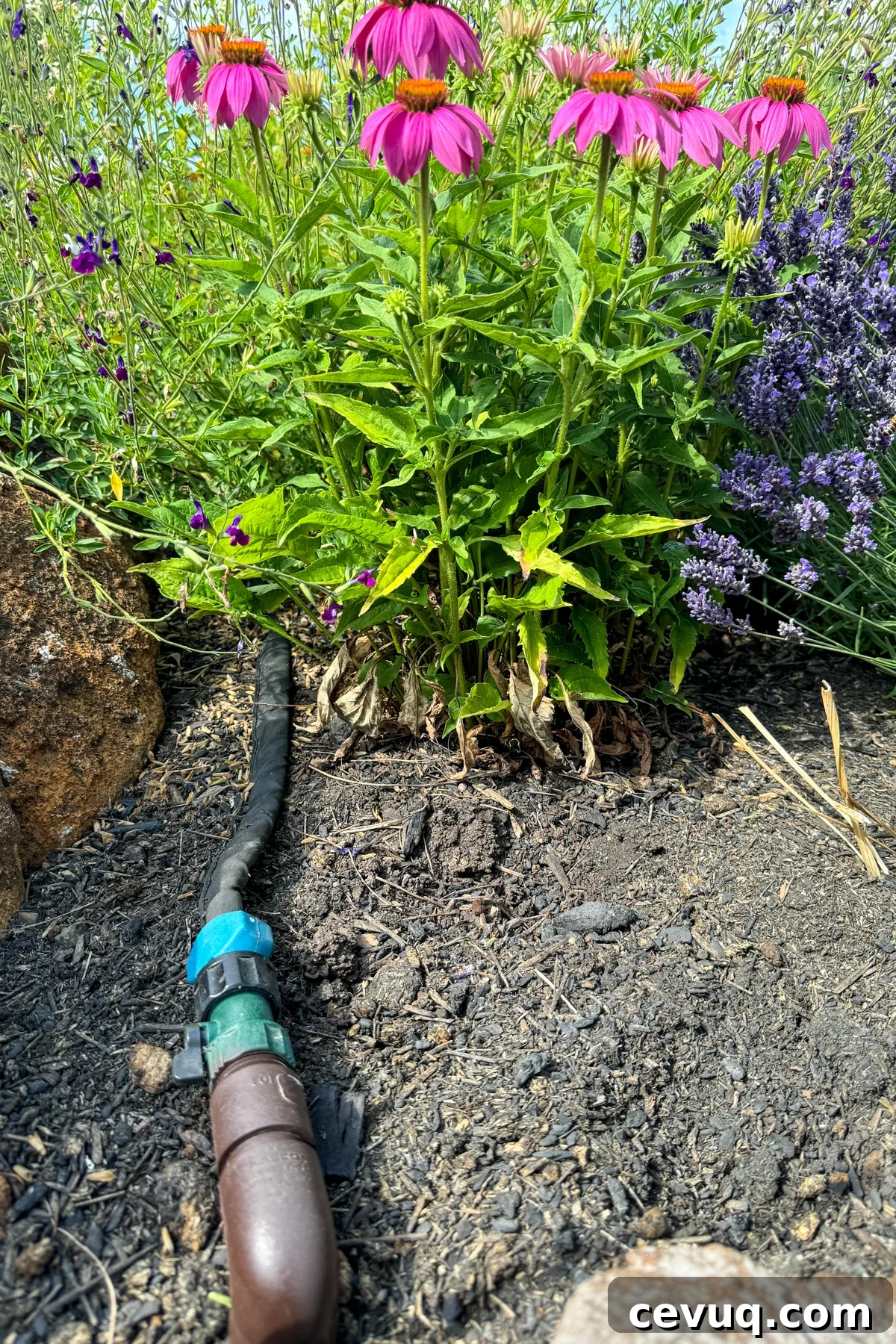
Soaker hoses: Cloth soaker hoses have worked best in these beds; they’re easy to lay and move as plantings shift. We connect them to the PVC runs with simple on-off valves so sections can be isolated when needed. These hoses have lasted multiple seasons even when left outdoors for winter.
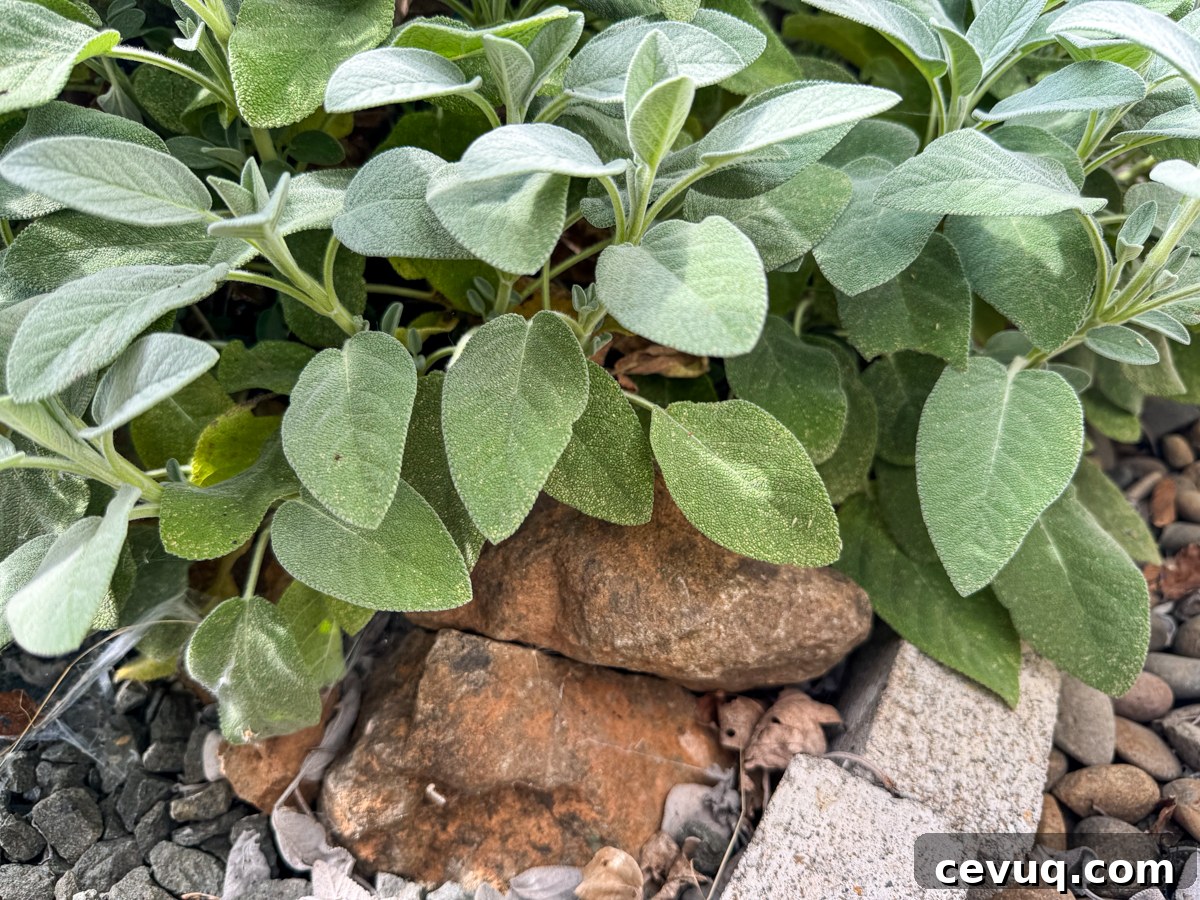
Once plants mature, most hose connections are concealed. This sage completely hides a fitting.
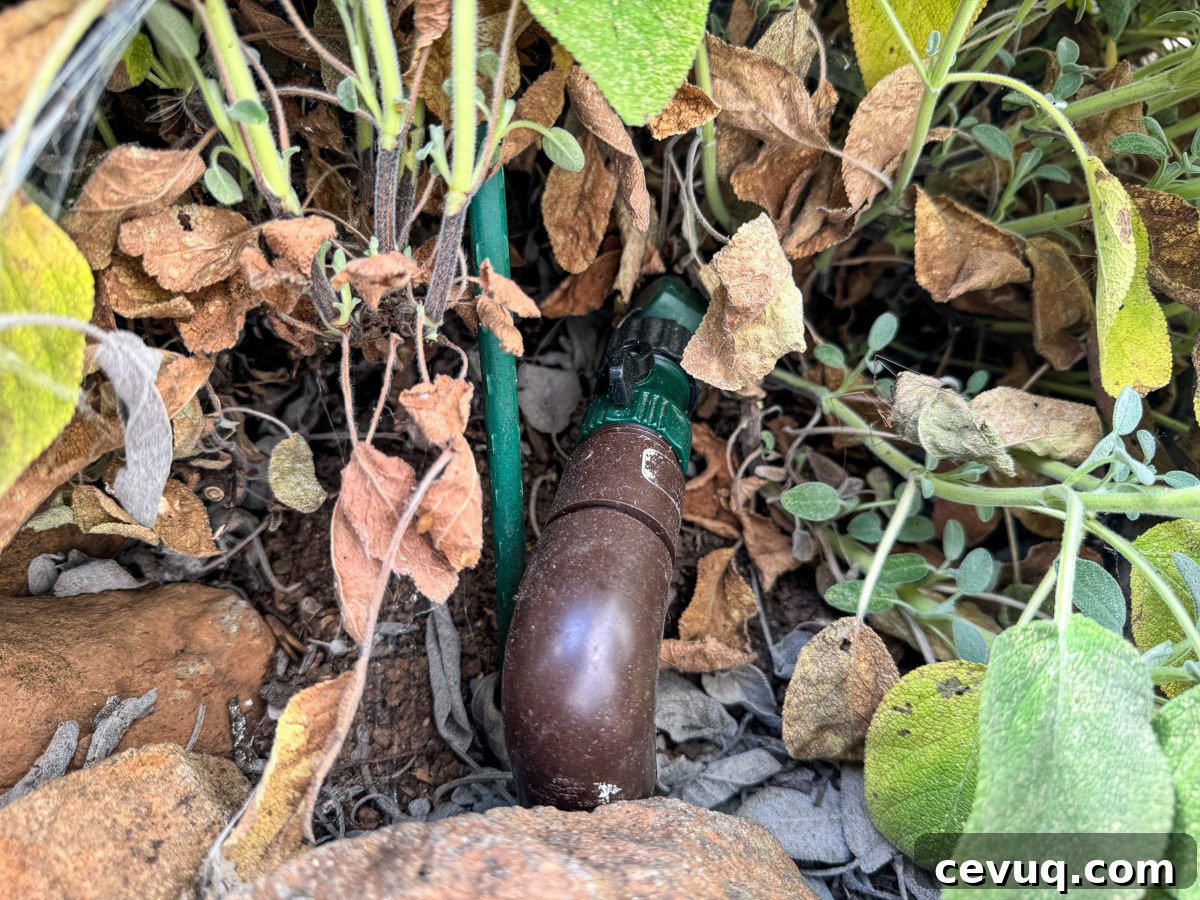
With foliage pulled back you can access connections easily for maintenance or winterizing.
Low Maintenance Tips
Besides the watering system, several choices have kept upkeep simple:
- Paper and mulch weed suppression: Using paper with a mulch layer for the first few years helped suppress weeds until beds matured. Once plants filled in I switched to just compost mulch.
- Choose low-trim varieties: Select plants that don’t require frequent pruning. For evergreen structure I planted dwarf boxwoods that stay compact and require minimal shaping.
- Make paths and patios permanent: Wide paths and a defined patio area reduce maintenance and help define the garden layout.
- Use proper gravel and plastic underlay: Laying 6-mil black plastic under clean 3/4″ gravel prevents many weed problems. Avoid gravel with fines or sand and skip landscape fabric—sharp gravel edges help perforate the plastic for drainage so water doesn’t pool.
What maintenance is needed for a garden like this?
- Late winter or early spring: cut back perennials and tidy beds with a hedge trimmer or shears.
- Spring: add a layer of compost mulch to feed the soil; I haven’t needed to add synthetic fertilizer in these beds.
- Trim bulbs after bloom, and add annuals if desired.
- Deadhead through the season as you like—this helps rebloom but isn’t essential.
- Fall cleanup is optional; leaving seed heads and stems benefits birds. I usually wait until late winter or early spring to do major clean-up.
Bonus: Simple monthly chore checklists make seasonal work easier and help you stay on top of tasks without stress.
I hope this update on the Sunken Garden shows that with thoughtful plant choices, phased installation, and a basic irrigation system you can create a beautiful, deer-tolerant, low-maintenance garden. It’s been a rewarding project that continues to evolve and improve each year.
Disclosure: affiliate links in this article may earn commission based on sales but do not change your price.